









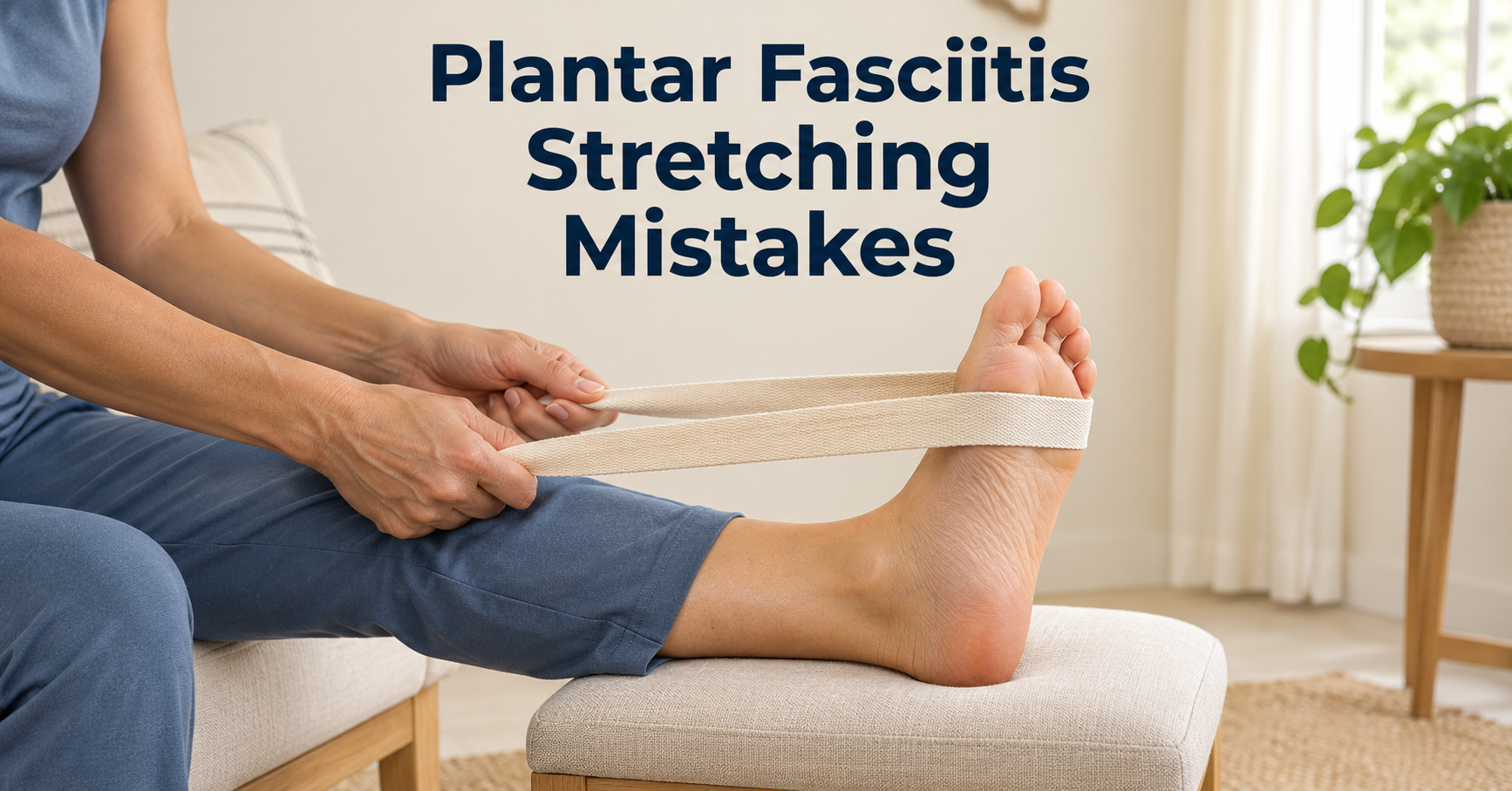
Stretching is one of the most recommended home treatments for plantar fasciitis, and for good reason. When it is done correctly, it can ease the first-step morning pain, improve ankle flexibility, and take strain off the thick band of tissue under your foot. But here is the problem: many people stretch every day and still wake up with stabbing heel pain. In most cases, the stretching itself is not the issue. The way it is being done is.
In this guide, you will learn the nine most common plantar fasciitis stretching mistakes, why each one backfires, and exactly what to do instead. You will also get a simple daily routine you can start today.
Quick Answer
The biggest stretching mistakes are skipping the calf muscles, stretching into sharp pain, bouncing, skipping the stretch before your first morning steps, holding for too short a time, stretching cold, being inconsistent, rolling too aggressively, and relying on stretching alone. Fixing these usually makes the same stretches far more effective.
First, Understand What You Are Stretching
The plantar fascia is a strong, fibrous band that runs from your heel bone to the base of your toes. It works like a bowstring, supporting the arch of your foot every time you stand, walk, or run. In plantar fasciitis, this band becomes irritated and overloaded, usually near the heel, which causes that familiar sharp pain with the first steps after rest.
Because the calf muscles, Achilles tendon, and plantar fascia all pull on the same heel bone, tightness in one area can increase stress on the others. That is why a good stretching plan has to cover more than just the bottom of the foot.
Mistake 1: Stretching Only the Foot and Ignoring the Calves
Many people pull their toes back and stop there. That helps, but it only addresses part of the problem. Tight calf muscles limit how far your ankle can bend upward, which forces the arch and plantar fascia to take extra load with each step.
How to fix it: Add two calf stretches to your routine. Stretch the larger calf muscle with your back knee straight, and the deeper calf muscle with your back knee slightly bent. Both matter.
Mistake 2: Pushing Through Sharp Pain
“No pain, no gain” is bad advice for plantar fasciitis. An irritated tissue that is yanked hard can become more inflamed, not less. If a stretch causes sharp, stabbing, or burning pain, it is too intense.
How to fix it: Think of your stretch intensity as a 3 or 4 out of 10. You should feel a steady pull, and you should be able to breathe normally and relax your shoulders while holding it.
Mistake 3: Bouncing or Jerking During the Stretch
Bouncing makes the muscle and tendon tighten defensively instead of relaxing. With an already sensitive plantar fascia, quick jerky movements can cause micro-irritation right where you are trying to heal.
How to fix it: Move slowly into the stretch, pause at the point of gentle tension, and hold still. Release just as slowly.
Mistake 4: Taking Your First Steps Before Stretching
Overnight, your foot rests in a relaxed, pointed position, which allows the plantar fascia to shorten slightly. When you jump out of bed and put weight on it, the tissue gets suddenly stretched under full body weight. This is the classic cause of that sharp first-step heel pain.
How to fix it: Before you stand up, sit on the edge of the bed and do a few gentle ankle circles, flex and point your foot, and perform the plantar fascia stretch described later in this article. Many people find it helpful to keep a towel or a pair of supportive slippers beside the bed so they are never barefoot on a hard floor first thing in the morning.
Mistake 5: Holding for the Wrong Length of Time
Quick two-second stretches barely change the tissue. On the other hand, forcing a very long, painful hold does not give extra benefit and may irritate the area.
How to fix it: Use time ranges that are commonly recommended for each type of stretch:
- Plantar fascia stretch: hold about 10 seconds, repeat about 10 times.
- Calf stretches: hold about 30 seconds, repeat 2 to 3 times per leg.
Mistake 6: Using Poor Calf Stretch Technique
The wall calf stretch is simple, yet it is often done incorrectly. The two biggest errors are letting the back heel lift off the floor and letting the back foot turn outward. When the heel lifts, the calf is no longer being stretched, and the strain shifts to the arch.
How to fix it: Stand facing a wall with your hands on it. Step one foot back, keep that leg straight, press the heel down, and point your toes straight ahead. Lean forward until you feel a pull in the upper calf. For the deeper calf muscle, bring the back foot in slightly and bend the back knee while keeping the heel down.
Mistake 7: Doing the Plantar Fascia Stretch Incorrectly
The targeted plantar fascia stretch only works if the toes are pulled back far enough to tension the arch. Many people just wiggle their toes or lightly tug on them.
How to fix it:
- Sit in a chair and cross the painful foot over the opposite knee.
- Hold the base of your toes and gently pull them back toward your shin.
- Check by running your thumb along your arch. You should feel the band tighten like a guitar string.
- Hold for about 10 seconds, release, and repeat about 10 times.
Mistake 8: Stretching a Cold, Stiff Foot
Going straight into a deep stretch when your foot has been inactive for hours, or on a cold morning floor, increases the chance of irritation.
How to fix it: Warm up first. Take a warm shower, do a few minutes of gentle ankle circles, or walk slowly in supportive footwear before doing your longer calf stretches. The very first morning stretch should be gentle and short. Save the deeper holds for later in the day when your foot is warm.
Mistake 9: Being Inconsistent and Giving Up Too Soon
Plantar fasciitis does not respond to a one-day effort. People often stretch hard for three days, feel no change, and quit. Others do it only when the pain flares up.
How to fix it: Treat stretching like brushing your teeth: small, regular, and part of your routine. Most people need several weeks of steady effort before they notice clear improvement, and full recovery often takes months.
Bonus Mistakes That Undermine Your Stretching
Rolling the Arch Too Aggressively
Rolling your foot over a ball or frozen bottle can feel good, but pressing hard directly into the sore heel spot can make irritation worse. Use gentle pressure and focus on the middle of the arch rather than the most tender point at the heel.
Relying on Stretching Alone
Stretching is only one part of the solution. If you walk barefoot on hard floors all day, wear worn-out shoes, or suddenly increase your walking or running, the tissue keeps getting re-injured faster than stretching can help it heal. Supportive shoes with a cushioned heel and good arch support, appropriate insoles, reducing high-impact activity for a while, and managing body weight can all work together with your stretching plan. Some people also use a night splint to keep the foot gently flexed during sleep, which may reduce morning pain.
Stretching on Top of Increasing Pain
If your pain is getting worse day after day despite gentle, correct stretching, do not just stretch harder. Back off and get the foot assessed.
Your Safe, Simple Starting Routine
Here is a beginner-friendly routine you can follow once or twice a day:
- Ankle circles: 10 slow circles in each direction while sitting.
- Plantar fascia stretch: pull the toes back and hold about 10 seconds, repeat about 10 times.
- Straight-knee wall calf stretch: hold about 30 seconds, repeat 2 to 3 times.
- Bent-knee wall calf stretch: hold about 30 seconds, repeat 2 to 3 times.
- Towel stretch (optional): sit with your leg straight, loop a towel around the ball of your foot, and gently pull it toward you for about 30 seconds.
Keep the intensity at a gentle 3 to 4 out of 10, move slowly, and stop if pain spikes.
How Long Until You Feel Better?
Every person is different, but plantar fasciitis is usually a slow-healing condition. Some people notice less morning pain within a few weeks of doing the right stretches consistently, while many need several months. The majority of people improve with conservative care over time, but it takes patience. Doing the right amount consistently beats doing too much occasionally.
When to See a Doctor or Foot Specialist
Home stretching is appropriate for typical plantar fasciitis, but you should get professional advice if:
- Your pain is severe or getting worse despite a few weeks of correct care.
- You see significant swelling, bruising, redness, or warmth in your heel.
- You have numbness, tingling, or burning in the foot.
- You cannot put weight on your foot.
- You have diabetes or circulation problems, or you are unsure of your diagnosis.
A specialist can confirm the diagnosis, rule out other causes of heel pain, and suggest options such as physical therapy, custom orthotics, or other treatments.
Frequently Asked Questions
Should plantar fasciitis stretches hurt?
A mild to moderate pulling sensation is normal. Sharp, stabbing, or lingering pain is not. If it hurts more after stretching, reduce the intensity and hold time.
How often should I stretch for plantar fasciitis?
Most routines suggest stretching a few times a day, including once before your first steps in the morning. Short and frequent sessions are usually better than a single long one.
Can stretching make plantar fasciitis worse?
Yes, if it is done too forcefully, with bouncing, or on a cold, irritated foot. Correct, gentle technique is what helps.
Is it better to stretch before or after walking?
Both can help. A gentle stretch before getting out of bed reduces the shock of the first steps, and a longer stretching session after your foot is warm is more comfortable and effective.
Do I need to stretch both feet?
If one foot hurts, it is wise to stretch both. Tightness is often present on both sides, and treating both can help prevent the other foot from becoming a problem.
Final Thoughts
Plantar fasciitis stretching is not complicated, but small technique errors can quietly keep your heel pain going for months. Start by stretching your calves as well as your arch, keep the intensity gentle, move slowly, stretch before your first morning steps, and stay consistent. Combine this with supportive footwear and sensible activity levels, and you give your foot the best chance to recover.
Disclaimer: This article is for general information only and is not a substitute for professional medical advice, diagnosis, or treatment. If your heel pain is severe, persistent, or accompanied by other symptoms, please consult a qualified healthcare professional.