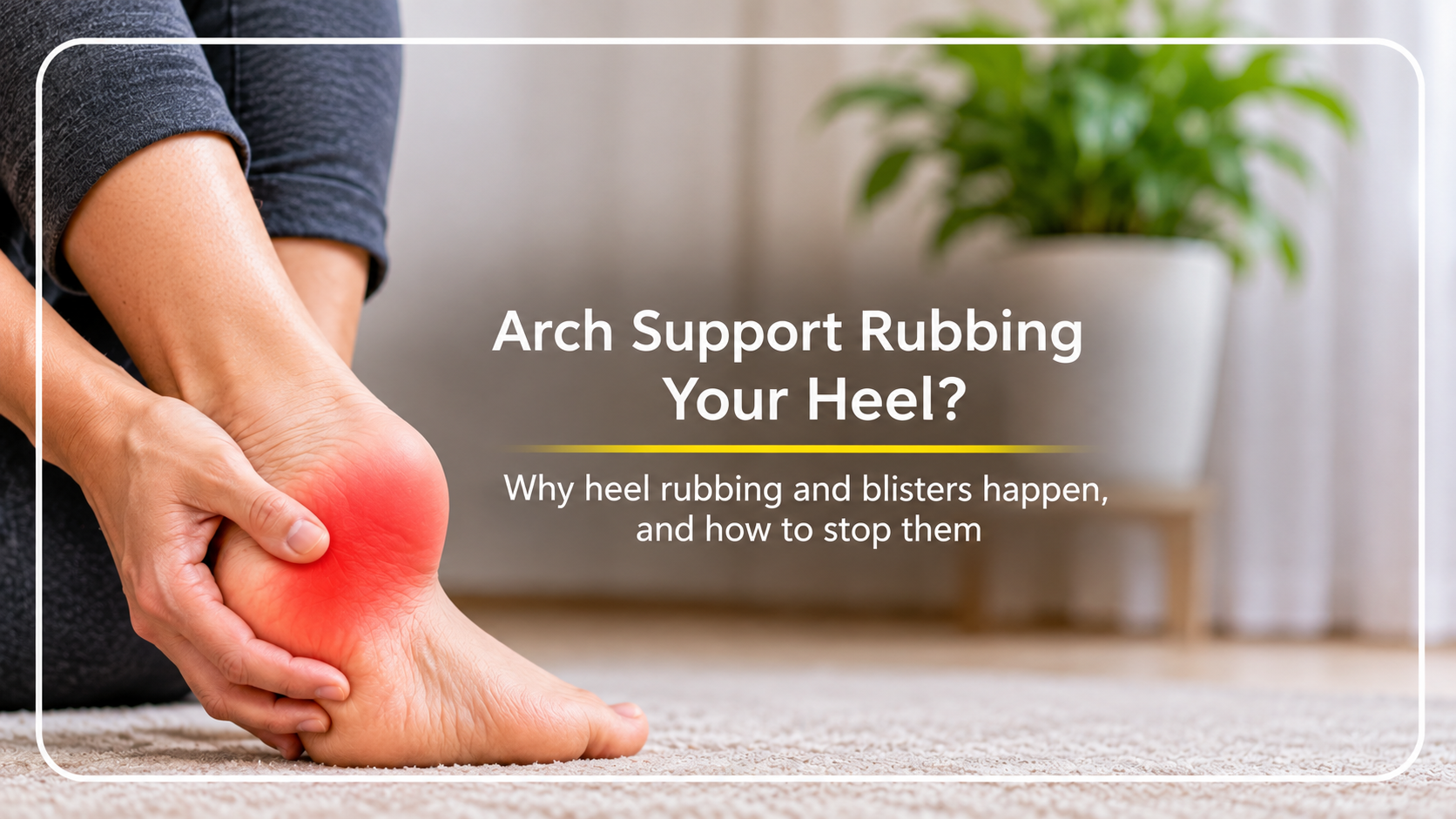
You add arch support to your shoes for comfort, but after a few hours your heel is red, raw, or blistered. If your arch support is rubbing your heel, the problem is usually not the support itself. It is most often a fit issue between the insert, your foot, and the shoe.
This guide explains why heel rubbing happens, how to recognize the signs, and the practical steps that stop it, so you can keep the benefits of arch support without the pain.
Why Does Arch Support Rub the Heel?
Heel rubbing is caused by friction. Friction occurs when your heel moves up and down or side to side inside the shoe. Arch support can increase that movement in several ways, mainly by changing how high your foot sits and how snugly it fits.

Main Causes of Arch Support Rubbing Your Heel

1. The Insole Raises Your Foot Too Much
Thick or high-profile arch supports lift your heel closer to the top edge of the shoe. The collar of the shoe then presses and rubs against the back or sides of the heel. This is the most common cause.
2. The Insole Is the Wrong Size
If the insert is too short, it slides forward or backward as you walk. If it is too long or too wide, it bunches and shifts. Either way, your heel moves and friction builds.
3. The Shoe Heel Is Too Wide
Extra room in the heel area lets the foot slide. Adding arch support does not fix that space. It may even make the foot move more because the raised arch changes how your weight rolls forward.
4. A Stiff or Poorly Shaped Heel Counter
The heel counter is the firm cup at the back of the shoe. When it is hard, new, or shaped differently from your heel, it can dig into the skin, especially when the foot sits higher.
5. Poor Socks or Moisture
Thin socks, thick seams, or damp feet increase friction. Sweat softens skin and makes blisters more likely.
6. Sudden All-Day Wear
Wearing new arch support for a full day without a break-in period can overstress the heel area. Skin and tendons need time to adjust to the new foot position.
Signs of Heel Rubbing to Watch For
- Red or warm patches on the back or sides of the heel
- Blisters or peeling skin
- Pain at the back of the heel or Achilles area
- Heel slipping out of the shoe as you walk
- Sore spots that return each time you wear the shoes
Treat redness early. Continuing to wear the same shoes can turn irritation into painful blisters or open sores.
How to Stop Arch Support From Rubbing Your Heel

1. Choose a Lower-Profile Arch Support
Switch to a slimmer insert, especially if the shoe has a snug fit. Low or medium support is often enough for comfort and leaves more room around the heel.
2. Remove the Shoe’s Original Insole
Many shoes already come with a removable insole. Replacing it with your arch support, instead of stacking one on top of the other, reduces height and keeps your heel lower in the shoe.
3. Use Heel Grips or Heel Cushions
Adhesive heel grips add a soft, slightly tacky layer at the back of the shoe. They reduce slipping, fill extra space, and protect the skin. Apply them at the part of the shoe where the rubbing occurs.
4. Try the Heel Lock Lacing Method
Use the top eyelets of your shoe to create a loop on each side. Thread the opposite lace through the loop and pull snug before tying. This locks the heel back and limits movement. It works best on sneakers and walking shoes.
5. Check the Insole Length
Lay the insole beside the shoe sole. The ends should match without curling. Trim only if the manufacturer provides trim lines, and make sure the edges lie flat.
6. Choose Better Socks
Wear seamless, moisture-wicking socks that fit snugly. Cotton socks hold moisture, so synthetic blends or merino wool are often more comfortable.
7. Protect the Skin
Before wearing your shoes, cover sore spots with a blister bandage or moleskin. If a blister forms, keep it clean and covered, and do not wear the same shoes until the area heals.
8. Break In Slowly
Wear your shoes with the arch support for one to two hours at first, then gradually increase. Give both shoes and feet time to adapt.
9. Try a Different Shoe Size or Shape
If nothing works, the shoe may not be right for insoles. Look for shoes with a removable insole, a secure heel counter, and enough depth for added support.
How to Choose Shoes and Arch Support That Do Not Rub
- Test with the insert installed. Try shoes while wearing the same arch support and socks you plan to use.
- Look for a snug heel. Your heel should not lift more than a tiny amount as you walk.
- Check the shoe depth. Deeper shoes handle thicker inserts better.
- Pick a padded collar. Soft padding around the ankle opening reduces rubbing.
- Match support to your arch. Overly high support increases heel lift.
When to See a Podiatrist
See a foot specialist if heel pain continues after adjusting your shoes and inserts, if blisters keep returning, or if you notice swelling, signs of infection, or pain along the Achilles tendon. People with diabetes or poor circulation should seek advice quickly, since small skin problems can become serious. A podiatrist can recommend custom orthotics or suitable footwear.
Frequently Asked Questions
Why does my heel slip out when I use arch support?
The insert raises the foot higher in the shoe, so the heel sits near the collar and can lift out more easily. A thinner insert or heel grips usually fixes this.
Can arch support cause heel blisters?
Yes, if it is too high, the wrong size, or used in shoes that do not fit well. Proper fit and a gradual break-in lower the risk.
Should I stop using arch support if my heel rubs?
Not necessarily. First adjust the fit, add heel protection, and try different socks. Stop wearing the shoes if skin is broken or painful.
Do heel grips really work?
They help many people by reducing slip and adding cushioning, but they work best alongside correct shoe and insert sizing.
How can I tell if the shoe or the insert is the problem?
Try the shoes without the insert. If rubbing stops, the insert is likely too thick or poorly fitted. If rubbing continues, the shoe heel itself may not suit your foot.
Final Thoughts
Arch support rubbing your heel is common and usually easy to solve. Focus on keeping your heel secure and low in the shoe by choosing a slimmer insert, getting the size right, using heel grips, locking your laces, and wearing suitable socks. A few small changes can turn uncomfortable shoes into a comfortable, supportive fit.
Disclaimer: This article is for general information only and is not a substitute for professional medical advice. If you have severe or persistent foot or heel pain, consult a qualified healthcare provider.