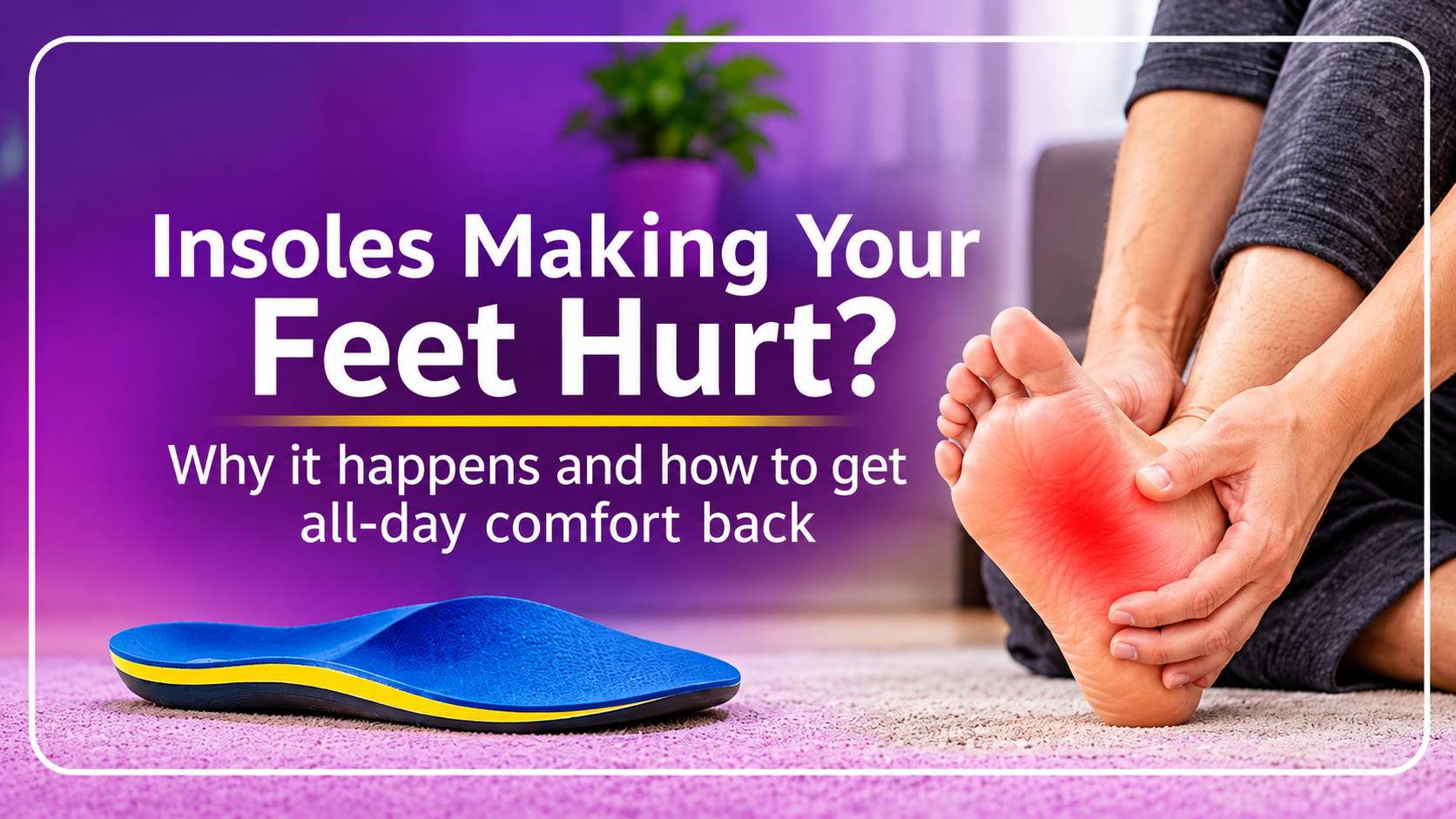
Insoles are supposed to make walking and standing more comfortable. So when insoles make your feet hurt, it feels confusing and frustrating. Many people spend money on cushioned, supportive, or orthotic inserts only to end up with sore arches, aching heels, or burning toes.
The good news is that insole pain usually has a clear cause, and most of the time it can be solved without giving up on insoles. This guide explains why insoles hurt, what is normal and what is not, and exactly how to fix the problem.
Is It Normal for Insoles to Hurt at First?
A little awareness or mild soreness during the first several days can be normal. Your feet are used to a certain shape and pressure, and a new insole changes how your weight is distributed. Muscles and tendons need time to adapt.
However, pain is not normal when it is sharp, gets worse each day, creates blisters, or causes numbness. That is a sign the insole does not suit your foot or shoe.

9 Reasons Insoles Make Your Feet Hurt
1. Wearing Them All Day Right Away
This is the most common mistake. Jumping straight into full-day use overloads feet that have not adapted yet. A gradual break-in prevents most early pain.
2. The Insole Does Not Fit Your Shoe
An insole that is too long curls at the toes, and one that is too wide buckles at the edges. Bunching creates pressure points that feel like lumps under your foot.
3. Not Enough Room in the Shoe
Insoles add height. In snug shoes they push the foot upward, squeeze the toes, and rub the top of the foot. This causes toe pain, numbness, and blisters. Remove the original insole before adding a new one whenever possible.
4. Wrong Arch Height
Support that is higher than your natural arch presses into the sole and can strain the arch and inner foot. Support that is too low may not help at all.
5. Wrong Type of Insole for Your Needs
A soft gel insole will not stabilize overpronating feet, while a rigid orthotic can feel harsh on sensitive feet. The right style depends on your foot shape and daily activity.

6. Hard or Unforgiving Materials
Dense plastic or stiff foam can feel uncomfortable on the ball of the foot and heel, especially on hard floors.
7. Worn-Out or Flattened Insoles
Cushioning breaks down over time. A compressed insole stops absorbing shock and can leave your feet more tired than before. Replace insoles about every 6 to 12 months, or sooner if they look flat or cracked.
8. Heat, Sweat, and Moisture
Non-breathable insoles trap sweat, which causes friction, blisters, and burning sensations. Moisture-wicking materials help keep feet drier and more comfortable.
9. An Underlying Foot Condition
Plantar fasciitis, bunions, neuromas, heel spurs, arthritis, and nerve problems can all react differently to insoles. A generic insole may not suit these conditions.
Signs Your Insoles Are the Wrong Choice
- Pain that increases instead of improving after two weeks
- Blisters, red marks, or hot spots
- Numbness or tingling in toes
- Pain in the knees, hips, or lower back that started after using insoles
- Foot feels pushed forward or crowded in the shoe
- Insole slides, bunches, or curls
How to Fix Insoles That Hurt Your Feet

Step 1: Check Shoe Fit and Space
Take out the original insole and place the new one inside. Wear the shoe and make sure you can wiggle your toes and the heel stays secure. If the shoe feels tight, try a thinner insole or a roomier shoe.
Step 2: Use a Break-In Schedule
Wear insoles for one to two hours on the first day and add one to two hours daily. Most people feel comfortable within one to two weeks. If pain appears, return to the previous time and progress more slowly.
Step 3: Make Sure the Insole Fits Properly
Trace the insole outline onto paper and compare it to the shoe. Trim only along the manufacturer’s cutting guides. Ensure it lies flat with no wrinkles.
Step 4: Choose the Right Thickness and Firmness
For sensitive feet, choose moderate cushioning with gentle support. For athletic use, pick a responsive but stable design. Avoid extremely thick or rigid options unless advised by a professional.
Step 5: Try Moisture-Wicking Socks
Good socks reduce friction and heat. Choose seamless, breathable materials, especially when wearing insoles for long hours.
Step 6: Support Recovery at Home
- Stretch your calves and the bottom of your feet daily
- Roll your foot over a ball for a few minutes
- Rest and elevate your feet after long days
- Apply a cold pack for sore spots
Step 7: Replace or Switch the Insole
If you tried the steps above and pain continues, the insole is probably not right for your feet. Choose a different type, shape, or firmness instead of forcing it.
How to Choose Insoles That Will Not Hurt
- Identify your arch type (flat, normal, or high) before buying.
- Match the insole to your activity: walking, running, work boots, or dress shoes.
- Check the size range and trim guides for your shoe size.
- Look for a deep but comfortable heel cup that keeps the heel centered.
- Select breathable, durable materials.
- Choose a generous return policy in case the fit is not right.
When to See a Podiatrist
Book an appointment if you have severe pain, swelling, persistent numbness, difficulty walking, or if you have diabetes or circulation problems. A foot specialist can assess your gait and foot structure and recommend custom orthotics designed for you.
Frequently Asked Questions
Why do my feet hurt more after using insoles?
Common reasons include rapid full-day use, poor fit in the shoe, the wrong arch height, or worn-out material.
How long should it take to adjust to new insoles?
Typically one to two weeks with gradual wear. Longer or worsening pain means you should reassess the choice.
Can insoles cause foot problems?
Poorly matched insoles can create pressure, blisters, and strain. The right insole properly fitted usually reduces discomfort.
Should I stop wearing insoles if they hurt?
Reduce wear time or stop temporarily if the pain is more than mild. Check fit and type, and seek professional advice if it continues.
Are expensive insoles always better?
No. Fit and suitability for your foot matter more than price. Custom insoles can help certain conditions but are not necessary for everyone.
Final Thoughts
If your insoles are making your feet hurt, do not give up immediately. In most cases the solution lies in better fit, a slower break-in, and a more suitable type of insole. Pay attention to where the pain occurs, adjust one thing at a time, and choose comfort over aggressive support. With the right match, insoles can make every step easier.
Disclaimer: This article is for general information only and is not a substitute for professional medical advice. If you have severe or persistent foot pain, consult a qualified healthcare provider.