




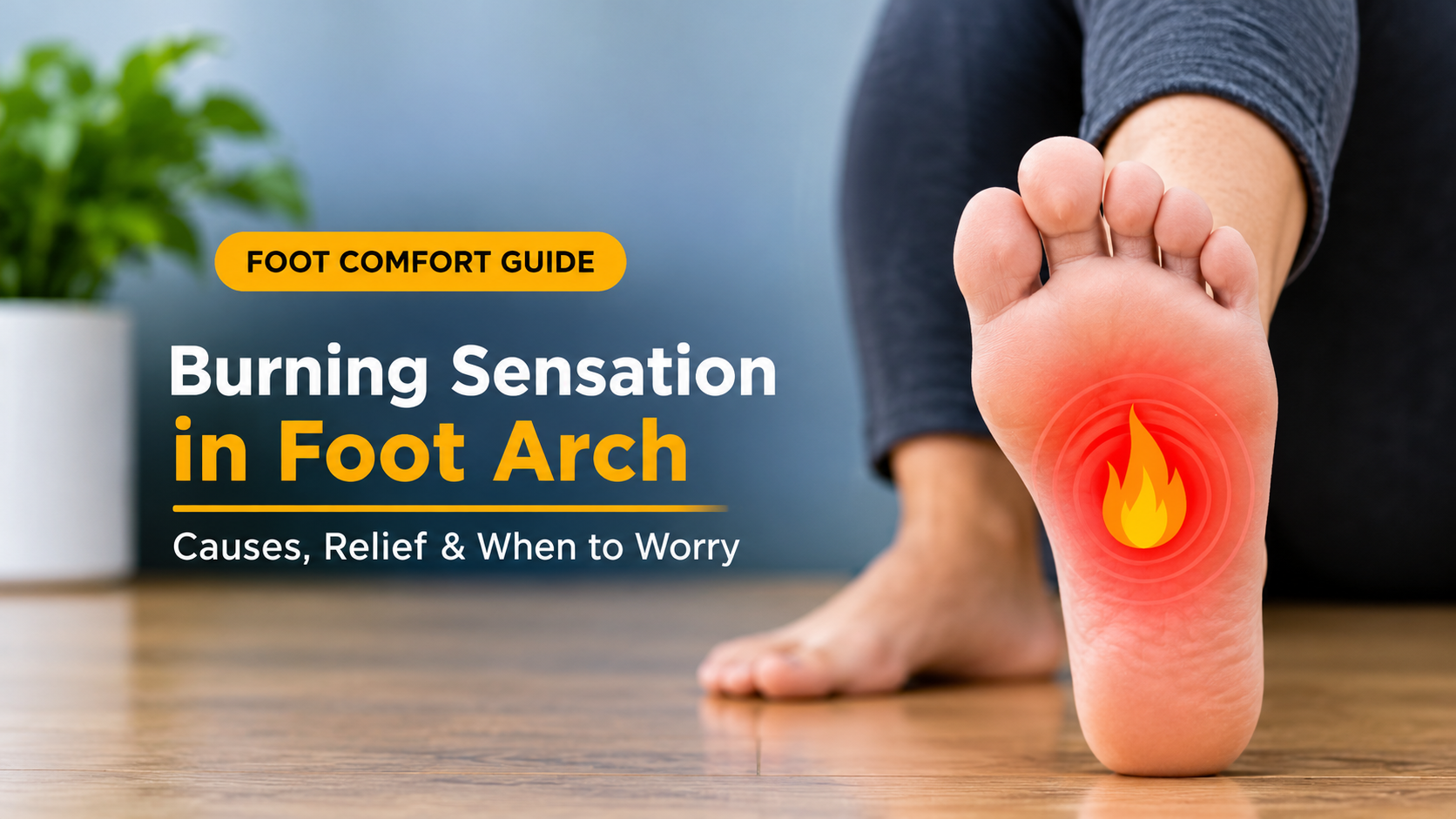
A burning feeling in the arch of your foot can be unsettling. It may feel like heat, stinging, or a fiery ache that appears after standing, at night, or even for no obvious reason. Unlike a dull ache or a sharp stab, burning often points to irritation of the tissues or nerves in the foot, though skin problems, shoes, and circulation can also play a part. The good news is that many causes are manageable. This guide explains the most common reasons for a burning sensation in the foot arch, what you can do at home, and when it is time to see a doctor.
What Does a Burning Sensation in the Foot Arch Mean?
The arch contains bones, ligaments, muscles, tendons, nerves, and blood vessels. Pain from muscles and tendons usually feels like aching, soreness, or stabbing. Nerves, on the other hand, often send signals that feel like burning, tingling, pins and needles, or electric shocks. That is why a burning feeling can be a clue that a nerve is irritated, though strained tissue can also feel hot or burning.
Because several different problems can feel similar, it helps to notice when the burning happens, what makes it better or worse, and whether you have other symptoms.

Common Causes of Burning in the Foot Arch

1. Plantar Fasciitis
Irritation of the thick band of tissue along the bottom of the foot is a common cause of arch and heel pain. Some people describe the pain as sharp or aching, while others feel a burning sensation, especially after long periods of standing or walking.
2. Tarsal Tunnel Syndrome
The tarsal tunnel is a narrow passage along the inside of the ankle through which a nerve travels to the sole of the foot. When the nerve is squeezed or irritated, it can cause burning, tingling, or numbness in the arch and sole, sometimes with shooting sensations.
3. Peripheral Neuropathy
Damage to the nerves in the feet can cause burning, tingling, numbness, or sensitivity to touch. Diabetes is a well-known cause, but vitamin deficiencies, excessive alcohol use, certain medicines, and other medical conditions can also contribute. Neuropathy often affects both feet and may be worse at night.
4. Flat Feet, Overuse, and Strain
When the arch is overworked, the muscles and supporting tissues can become fatigued and inflamed. A lower arch, a sudden increase in activity, or long hours on hard floors can lead to a burning, tired feeling.
5. Unsuitable or Worn-Out Shoes
Shoes that are too tight, too narrow, or too flat can compress nerves and strain the arch. Shoes made from non-breathable materials trap heat and moisture, which can make feet feel like they are burning. Worn-out shoes lose cushioning and support.
6. Friction, Heat, and Skin Problems
Rubbing from shoes, socks, or insoles can irritate the skin and cause a burning feeling. Skin conditions such as athlete’s foot, which is a fungal infection, can cause burning, itching, redness, and peeling, often between the toes or on the sole.
7. Pressure on Nerves From the Back or Leg
Sometimes the problem starts higher up. A pinched nerve in the lower back or irritation along the leg can cause burning that is felt in the foot, usually along with back pain or symptoms in the leg.
8. Circulation Problems
Reduced blood flow can cause the feet to ache, feel cold, or sometimes burn, especially with walking or at night. This needs medical assessment.
9. Less Common Causes
Other possibilities include nerve growths, inflammatory conditions, or rare disorders that cause burning pain in the feet. If the cause is not clear, a professional can look into these.
Burning Arch Patterns and What They May Suggest
| What You Notice | Possible Reason |
|---|---|
| Burning after long standing or walking, with heel or arch ache | Plantar fascia irritation or overuse |
| Burning and tingling along the inner ankle and sole | Tarsal tunnel syndrome |
| Burning in both feet, worse at night, with numbness | Peripheral neuropathy |
| Burning with itching, redness, or peeling skin | Fungal infection or skin irritation |
| Burning that starts in a tight or non-breathable shoe | Friction, heat, or nerve compression from footwear |
| Burning with back pain or leg symptoms | Nerve irritation higher up |
What You Can Do at Home
For mild burning without warning signs, these steps may help. They are not a substitute for medical care if symptoms are persistent or concerning.

Rest and Reduce Load
Give your foot a break from long walks, standing, and high-impact activity. Put your feet up when you can.
Cool the Foot Gently
A cool, damp cloth or a cool foot soak for a short time may feel soothing. Avoid very cold ice directly on the skin, and avoid hot soaks, since heat can make burning worse in some people. Take extra care if you have reduced feeling in your feet, because you may not notice if the temperature is too cold or too hot.
Change Your Shoes
Choose shoes with enough width and depth, a roomy toe box, a cushioned sole, and breathable material. Make sure laces are not too tight across the top of the foot. Replace worn-out shoes.
Wear Better Socks
Smooth, moisture-wicking socks keep the skin drier and reduce friction. Change socks if they become damp.
Check Your Insoles
If you use arch supports or insoles, make sure they fit properly and are not pressing too hard into the arch. A support that is too high, rigid, or tight in the shoe can irritate tissue and nerves. Try a softer or lower-profile option, or take them out for a while to see whether the burning changes.
Stretch Gently
Calf stretches against a wall, plantar fascia stretches, and gentle arch rolling can ease tension in strained tissue. Stop if any stretch makes the burning or tingling worse.
Look at the Skin
Check between the toes and across the sole for redness, scaling, cracking, or blisters. Keep feet clean and dry. If you suspect athlete’s foot, a pharmacist can advise on suitable treatments.
Pain Relief
Some people use over-the-counter pain relief for short periods. If you are unsure what is safe for you, ask a pharmacist or doctor.
When to See a Doctor

A doctor or foot specialist can examine your feet, test for nerve problems, check circulation, and arrange tests if needed. If you have diabetes, regular foot checks are important, and new burning, numbness, or tingling should be reported promptly.
How Is the Cause Found?
A professional will usually ask about your symptoms, medical history, footwear, and activities, and examine your feet and walking pattern. Depending on what they find, they may suggest blood tests, nerve tests, imaging, or a referral to a specialist. Treatment depends on the cause and may include exercises, footwear changes, orthotics, medicines, or treatment of an underlying condition.
How to Help Prevent Burning in the Arch
- Wear well-fitting, supportive, breathable shoes and replace them when worn
- Choose moisture-wicking socks and change them if they get damp
- Build up activity gradually rather than making sudden increases
- Keep calves and arches flexible with regular stretching
- Check your feet regularly, especially if you have diabetes
- Manage underlying health conditions with your healthcare provider
- Maintain a healthy weight to reduce load on the feet
Common Mistakes to Avoid
- Ignoring burning that comes with numbness or tingling
- Using hot soaks or heating pads on feet with reduced sensation
- Wearing tight, non-breathable shoes for long hours
- Assuming all arch pain is plantar fasciitis
- Using arch supports that are too high or rigid
- Waiting too long to get symptoms checked when they keep returning
Frequently Asked Questions
Why does my foot arch burn at night?
Nerve-related conditions often feel worse at night, partly because there are fewer distractions and less movement. Neuropathy and tarsal tunnel syndrome are examples. If it happens regularly, get it checked.
Is a burning arch plantar fasciitis?
It can be, but plantar fasciitis more often causes stabbing or aching pain, especially with the first steps in the morning. Burning, tingling, or numbness may suggest a nerve problem instead.
Can arch supports cause a burning feeling?
They can if they are too high, too hard, or too tight in the shoe, or if they rub the skin. Poorly fitting insoles may irritate tissue and nerves. Try a softer, lower option or check the fit.
Can diabetes cause burning in the feet?
Yes. Nerve damage related to diabetes is a common cause of burning, tingling, or numbness in the feet. If you have diabetes or are at risk, see a doctor promptly for new symptoms.
Can tight shoes cause burning in the arch?
Yes. Tight shoes can squeeze nerves and strain the arch, and non-breathable materials can trap heat and moisture, making the feet feel hot or burning.
Will a burning arch go away on its own?
Mild cases linked to shoes or overuse often improve after rest and changes. If the burning keeps returning or lasts more than a week or two, a professional assessment is a good idea.
Should I be worried about burning in both feet?
Burning in both feet can point to a systemic cause such as neuropathy, so it is worth having it checked, especially if it is accompanied by numbness or tingling.
Final Thoughts
A burning sensation in the foot arch can come from strained tissue, irritated nerves, unsuitable shoes, or skin problems, and sometimes from conditions that need medical attention. Start with simple steps: rest, supportive and breathable shoes, clean dry socks, and gentle stretching. Pay close attention to warning signs such as numbness, tingling, swelling, skin changes, or burning in both feet. When in doubt, or if the burning continues, get it checked so you can find the cause and treat it properly.
Disclaimer: This article is for general information only and is not a substitute for professional medical advice. If you have ongoing foot pain, burning, numbness, diabetes, or circulation problems, please consult a qualified healthcare professional.