

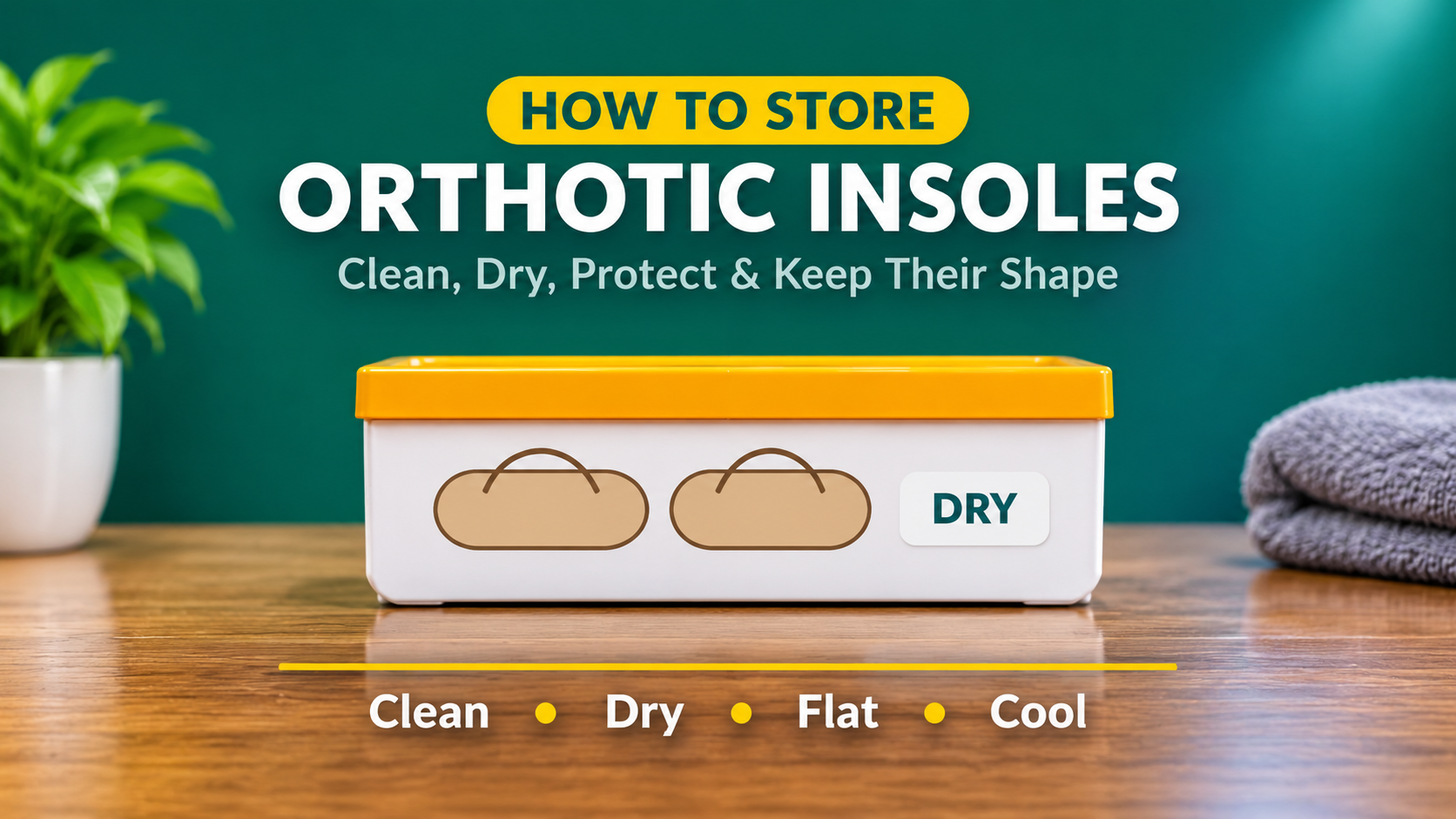

How to Store Orthotic Insoles: The Complete Guide to Keeping Them in Shape
Orthotic insoles are an investment in your foot health, whether you bought them off the shelf or had them custom made. But how you store them when they are not in your shoes matters more than most people realize. Moisture, heat, pressure, and poor airflow can warp the arch, break down materials, and cause odor, which can shorten the life of your orthotics and reduce the support they give.
This guide explains exactly how to store orthotic insoles, what to do before putting them away, the best and worst storage spots, how to handle seasonal changes and travel, and the mistakes that quietly ruin orthotics.
Table of Contents
- Why Proper Storage Matters
- Prepare Your Orthotics Before Storing
- Best Places to Store Orthotics
- Places to Avoid
- Choosing a Storage Container
- Storing Orthotics Between Daily Wears
- Long-Term Storage
- Seasonal and Travel Storage Tips
- Storing Orthotics for Different Activities
- Common Storage Mistakes
- Signs Your Orthotics Were Stored Badly
- Frequently Asked Questions
- Final Thoughts
Why Proper Storage Matters
Orthotics are made from materials such as foam, gel, EVA, polypropylene, carbon fiber, and fabric covers. Each reacts differently to heat, moisture, and pressure. Poor storage can lead to:
- Warping or bending of the arch and shell, which changes how the orthotic supports your foot
- Odor and bacteria growth from trapped sweat and moisture
- Mold or mildew in humid, enclosed spaces
- Weakened adhesive that causes the top cover to peel or curl
- Compressed cushioning that loses its bounce
- Shortened lifespan, meaning you replace them sooner than you should
Prepare Your Orthotics Before Storing
Storage starts with clean, fully dry orthotics. Putting damp or dirty insoles away is the fastest way to create odor and damage.

Step 1: Remove Them from Your Shoes
Take your orthotics out of your shoes as soon as you can after wearing them. Left inside, they stay damp and warm, which breeds bacteria and speeds up wear.
Step 2: Wipe Them Clean
Use a soft, damp cloth with a little mild soap to wipe the top and bottom. Avoid soaking, scrubbing hard, or using harsh chemicals, and never machine wash them unless the manufacturer says it is safe.
Step 3: Dry Them Completely
Let them air dry flat at room temperature. Keep them away from direct sun, heaters, hair dryers, and radiators, because heat can warp shells and soften adhesive. Drying can take several hours, so plan ahead.
Step 4: Inspect Them
While they are out, look for cracks, thin spots, peeling covers, and odor. This is a good moment to decide if they are still worth keeping or if it is time to replace them.
Step 5: Choose the Right Storage Spot
Pick a cool, dry, well-ventilated place where the orthotics can rest flat without anything pressing on them.
Best Places to Store Orthotics

A Cool, Dry Drawer or Shelf
A bedroom drawer or closet shelf at room temperature is ideal. Lay the orthotics flat so they keep their shape.
A Breathable Cotton Bag
Cotton or mesh bags protect orthotics from dust while still letting air circulate. They are also great for carrying orthotics to the gym or travel.
A Cardboard Shoe Box
A plain cardboard box is breathable and keeps orthotics flat. Label it if you keep several pairs for different shoes or seasons.
A Ventilated Closet Space
A closet with some airflow works well for long-term storage, especially if you add a moisture absorber nearby.
Places to Avoid
- A hot car or trunk. Heat can permanently warp plastic shells and melt adhesives.
- Near heaters, radiators, or sunny windows. Direct heat and UV exposure damage materials.
- Damp basements or bathrooms. Humidity encourages mold and odor.
- Sealed plastic bags. They trap moisture and cause mildew.
- Under heavy objects. Weight flattens arches and compresses cushioning.
- Inside shoes that stay wet. Damp shoes undo all your drying efforts.
Choosing a Storage Container

The best option is any container that keeps orthotics flat and lets air move. A cotton bag or cardboard box is usually enough. Ventilated plastic containers also work if they have air holes. Avoid sealed bags and airtight boxes unless you add a silica gel packet and the orthotics are completely dry.
Storing Orthotics Between Daily Wears
Most people keep orthotics in their shoes day to day. If you do, a few habits make a big difference:
- Pull them out overnight to dry, especially after sweaty days.
- Loosen the shoe and open the tongue so air can circulate.
- Rotate shoes so each pair has at least a day to dry.
- Keep orthotics in the right shoes. Many are designed for a particular shoe type.
- Use shoe trees or paper inside damp shoes to absorb moisture (remove the orthotic first).
Long-Term Storage
If you will not use your orthotics for weeks or months, such as swapping between seasonal footwear, follow these extra steps:
- Clean and dry fully as described above.
- Store flat in a breathable bag or box, with no folding or stacking.
- Add a moisture absorber such as a silica gel packet in the storage space (not directly pressed on the insole).
- Label the container with the shoe type or date.
- Check every few months for odor, dampness, or changes in shape.
- Re-check before use. Inspect for wear and cleanliness before putting them back in your shoes.
Seasonal and Travel Storage Tips

Summer
Heat is the main danger. Never leave orthotics in a parked car, beach bag in the sun, or near a hot window.
Winter
Wet boots and snowy entryways create damp conditions. Take orthotics out of wet boots and let them dry at room temperature away from direct heaters.
Rainy Season or Humid Climates
Dry them fully after every wear and add moisture absorbers to storage spaces to prevent mildew.
Traveling
Carry them flat in a breathable pouch or place them in your shoes in your luggage. Do not squash them under heavy items, and avoid leaving them in a hot car.
Storing Orthotics for Different Activities
Sports and Gym Orthotics
These get sweaty quickly. Remove them after training, wipe them down, and dry them before storing them in your gym bag. Do not leave them zipped inside a damp bag.
Work Boot and Safety Shoe Orthotics
Take them out of boots at the end of the day to dry. Boots stay warm and damp for hours, which is hard on insoles.
Children’s Orthotics
Kids’ orthotics are small and easy to lose or crush. Keep them in a labeled bag or box, and check that they still fit before using them again.
Dress Shoe Orthotics
Slim orthotics for dress shoes are thin and delicate. Store them flat and avoid bending, as thin materials can crease.
Spare Pairs
If you own two pairs, alternate them. This lets each pair rest and dry and can extend the life of both.
Common Storage Mistakes

- Storing them damp. This causes odor, mold, and material damage.
- Using heat to dry them quickly. This can warp the shape of your orthotics.
- Folding or crushing them. Bends can permanently change the arch.
- Stacking heavy items on top. This compresses cushioning and flattens arches.
- Skipping cleaning. Sweat and bacteria build up in storage and cause odor.
- Using airtight containers without drying first. Trapped moisture is a recipe for mildew.
Signs Your Orthotics Were Stored Badly
When you take orthotics out of storage, check for these warning signs:
- A musty or sour smell that does not go away after cleaning
- Visible spots of mold or discoloration
- A bent, twisted, or flattened arch
- Peeling or curling top covers
- A shell that feels brittle, cracked, or sticky
If you see damage, check with your provider. Warped custom orthotics may no longer give proper support and could need replacement or adjustment.
Frequently Asked Questions
Should I store orthotics inside my shoes?
You can, as long as the shoes are dry and ventilated. For long-term storage, it is better to store them separately and flat.
Can I store orthotics in a plastic bag?
It is not recommended. Plastic traps moisture and encourages mildew. If you must use a bag, make sure the orthotics are fully dry and consider adding a silica gel packet, or choose a breathable bag instead.
Is it okay to leave orthotics in my car?
No. Cars can get very hot or very cold, which can warp shells and damage adhesives and cushioning.
How should I store orthotics when traveling?
Keep them flat in a breathable pouch or inside your shoes in the luggage, and avoid heavy items on top.
How do I keep my orthotics from smelling in storage?
Clean and fully dry them before storing, use a breathable container, and place a moisture absorber nearby. Baking soda in a separate sachet can also help absorb odor.
How long can orthotics be stored?
Clean, dry orthotics stored properly can be kept for many months. Check them for changes before reuse and confirm they still fit.
Can I stack multiple pairs of orthotics together?
Light stacking of dry, flat pairs is usually fine, but avoid heavy stacks. Never fold them or place heavy items on top.
Should I wash orthotics before storing them?
Yes, wipe them gently with mild soap and a damp cloth and let them dry completely before storing.
Final Thoughts
Storing orthotic insoles properly is simple: clean them, dry them completely, keep them flat in a cool, ventilated spot, and protect them from heat, moisture, and pressure. These small habits keep your orthotics supportive, fresh, and comfortable for longer, and help you get the most value from every pair. If you notice damage or your pain returns, speak with a podiatrist or healthcare professional about replacement.
This article is for general information only and is not medical advice. If you have foot pain or a medical condition, consult a podiatrist or healthcare professional.