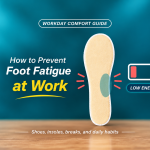
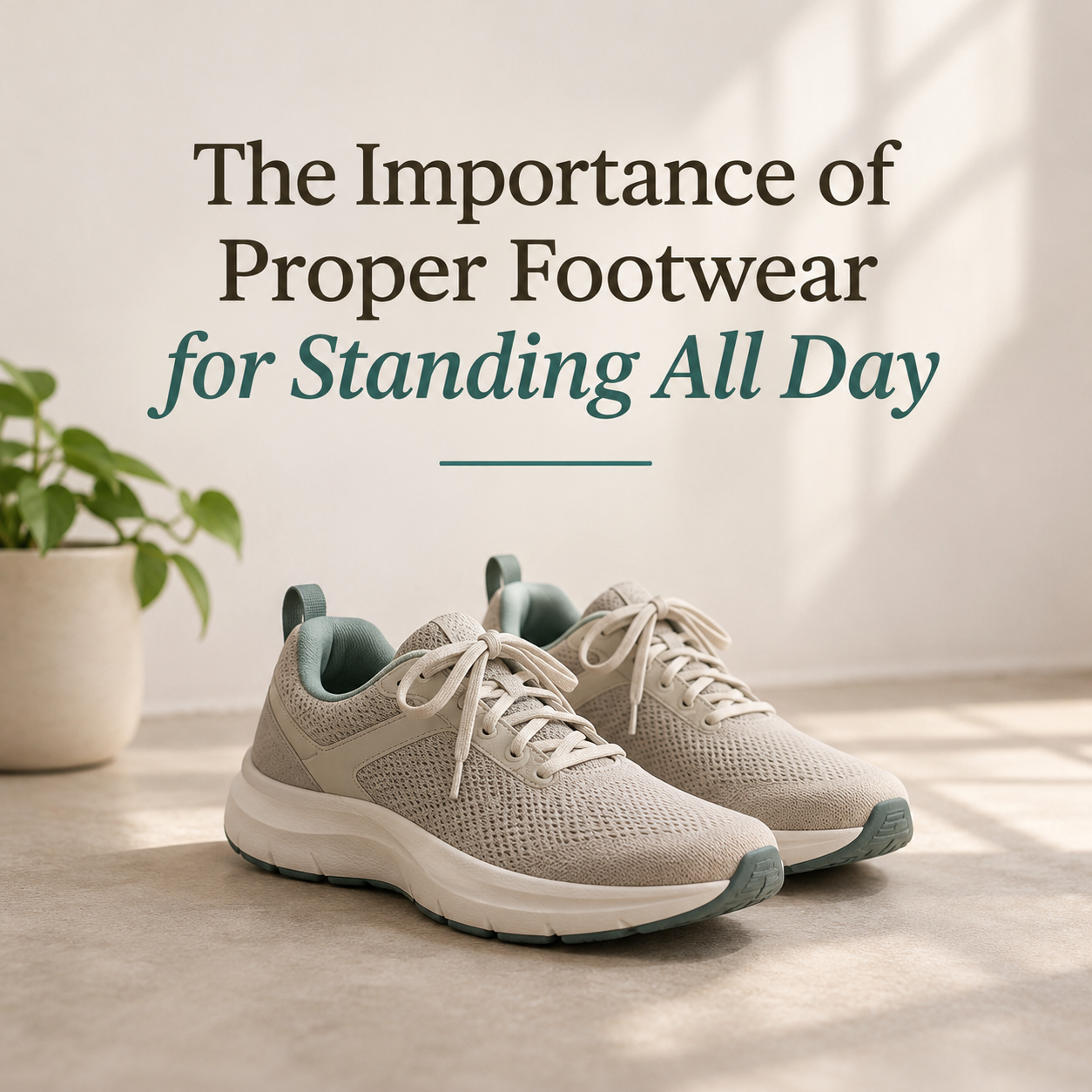
If your job keeps you on your feet for hours, you already know the feeling: aching heels by lunchtime, throbbing arches by mid-afternoon and heavy, swollen feet by the time you get home. Many people accept this as “just part of the job”, but it does not have to be. In most cases, a big part of the problem comes down to one thing: the shoes you wear.
Nurses, teachers, retail staff, chefs, hairdressers, factory workers, security guards and many other professionals spend most of their working day standing. Over weeks and months, wearing the wrong footwear for this kind of workload can affect not only your feet, but also your ankles, knees, hips and lower back. This guide explains why proper footwear matters, what happens when you ignore it and how to choose, fit and care for shoes that truly support you through a long day.
What Happens to Your Body When You Stand All Day?
Standing may look like a low-effort activity, but your body is working continuously. Your muscles stay slightly contracted to keep you upright, and your feet carry your entire body weight for hours without a proper break. Because you are not moving much, blood and fluid tend to pool in the lower legs, which is why feet and ankles often swell by the end of the day.
Hard floors such as concrete, tile and polished stone make things worse. Unlike a soft surface, they do not absorb any impact, so every bit of force travels up through your feet into your joints. Shoes are the only buffer between your body and that hard surface, which is why they matter so much.
Why Proper Footwear Matters So Much
1. It Absorbs Shock and Reduces Fatigue
A good cushioned midsole absorbs a portion of the impact from hard ground. Less impact reaching your muscles and joints generally means less fatigue, so you finish the day with more energy.
2. It Supports the Arch and Keeps Alignment Healthy
The arch works like a spring. When it is not supported for long hours, the foot can flatten or roll inward more than it should, which may strain the ligaments and tendons of the foot and change how force travels up the leg. Proper arch support helps your foot hold a more stable, natural position.
3. It Helps Prevent Common Foot Problems
Poor footwear is associated with several common conditions among people who stand for long periods, including:
- Plantar fasciitis: irritation of the thick band of tissue under the foot, often felt as heel pain, especially with the first steps in the morning.
- Metatarsalgia: pain and soreness in the ball of the foot.
- Heel pain and heel spurs: discomfort from repeated impact on the heel.
- Bunions and hammertoes: narrow or tight shoes can aggravate these toe deformities.
- Corns, calluses and blisters: caused by friction and pressure from poorly fitting shoes.
- Swollen feet and ankles: long periods of standing encourage fluid build-up in the lower legs.
4. It Protects Your Knees, Hips and Lower Back
Your body works as a chain. When the feet are poorly supported, the strain can travel upward, and some people notice knee, hip or lower back discomfort that improves once they change to better footwear. While many things can cause back pain, your shoes are an easy factor to check and fix.
5. It Improves Safety on the Job
The right outsole gives you traction on wet, oily or smooth floors, lowering the risk of slips and falls. In workplaces such as kitchens, hospitals and workshops, slip resistance and protective features can be just as important as comfort.
6. It Keeps You Productive and in a Better Mood
Constant foot pain is distracting and tiring. When your feet feel good, it is easier to concentrate, stay on your feet longer and enjoy your time after work instead of collapsing on the sofa.
Key Features to Look for in Shoes for Standing All Day
Cushioning
Look for a midsole made from materials such as EVA foam or similar cushioning that feels soft yet springy. Very soft shoes can feel great in the shop but may flatten quickly and feel unstable, so aim for a balance of cushioning and support.
Arch Support
Arch shapes differ. People with flat feet often benefit from firm, structured support, while people with high arches usually need extra cushioning and a contoured footbed to spread pressure. If standard insoles do not feel right, a podiatrist can advise on custom orthotics.
Heel Counter and Stability
The heel counter is the firm cup at the back of the shoe. Pinch it: if it collapses easily, the shoe will probably not hold your heel steady through the day. A stable heel helps control motion and reduces strain on the foot.
Toe Box Room
Your toes should be able to spread and wiggle freely. A cramped toe box increases pressure, friction and the risk of blisters, corns and bunion pain. Remember that your feet swell as the day goes on, so you need extra room.
Low or Moderate Heel Height
High heels shift your weight forward onto the ball of the foot and are rarely a good choice for a full day of standing. A low to moderate, slightly cushioned heel is usually more comfortable. Completely flat shoes with thin soles can also be tiring, so a small heel-to-toe drop with good cushioning is often the best compromise.
Outsole Grip and Durability
Choose a rubber outsole with a tread pattern suitable for your environment. If you work around water, oil or other hazards, look for shoes marked as slip-resistant, and check whether your workplace requires safety toe caps or other protection.
Weight and Breathability
Heavy shoes tire your legs faster over thousands of steps. Breathable materials such as mesh or well-ventilated leather help keep feet cooler and drier, which reduces blisters and odour.
Best Types of Footwear for Standing All Day
- Cushioned walking or athletic shoes: a popular choice for nurses, retail workers and teachers because they combine cushioning, flexibility and support.
- Supportive work clogs: common in healthcare and food service thanks to easy-to-clean surfaces and a stable, rocker-style sole. Make sure the heel is secure.
- Work boots: useful for construction, warehouses and industrial jobs, especially those needing protective toes and ankle support.
- Supportive dress shoes or flats: if your job requires a formal look, choose models with real cushioning, arch support and a secure fit instead of thin, flat soles.
- Slip-resistant kitchen shoes: designed for wet and greasy floors, with durable, wipe-clean materials.
How to Get the Right Fit
Even the best shoe will cause trouble if it does not fit properly. Keep these points in mind:
- Shop in the afternoon or evening when your feet are at their largest.
- Measure both feet and fit to the larger one. Sizes can also change over time.
- Leave about a thumb’s width of space between your longest toe and the front of the shoe.
- Check the width. The shoe should not squeeze the sides of your feet or the base of your toes.
- Wear your usual work socks when trying shoes on.
- Walk around for several minutes. A shoe should feel comfortable right away; do not count on “breaking it in” to fix a poor fit.
- Check the heel. It should not slip up and down as you walk.
Socks and Insoles Matter Too
Socks affect comfort more than most people realise. Moisture-wicking socks made from materials such as merino wool or technical synthetic blends help keep feet dry and reduce blisters. Cushioned socks add comfort, and graduated compression socks may help some people with leg swelling, but it is wise to check with a healthcare professional first, especially if you have circulation problems.
Replacement insoles can upgrade a decent shoe by adding cushioning or arch support. Choose insoles that suit your arch type and make sure they fit without making the shoe too tight.
When to Replace Your Work Shoes
Shoes slowly lose their cushioning and support, often before they look worn. For people who stand and walk all day, shoes may need replacing every few months to about a year, depending on the shoe and how much you use it. Replace them if you notice:
- New aches in your feet, knees or back that were not there before
- A midsole that looks compressed or creased, or feels flat
- Uneven wear on the soles or heels
- A heel counter that has collapsed or leans to one side
- Worn-out tread that reduces grip
Rotating between two pairs of shoes can also help, because the cushioning gets time to recover and the shoes dry out between wears.
Healthy Habits That Work Alongside Good Footwear
Shoes are the foundation, but a few daily habits can make a big difference to how your feet feel:
- Shift your weight and change position regularly instead of locking your knees.
- Take short sitting breaks whenever your job allows.
- Stretch your calves, ankles and the bottoms of your feet during the day.
- Use an anti-fatigue mat if you stand in one spot on a hard floor.
- Elevate your feet for 10 to 15 minutes after work to help reduce swelling.
- Stay hydrated and keep your toenails trimmed and your skin moisturised.
When Should You See a Doctor or Podiatrist?
Mild tiredness after a long day is normal, but you should not ignore ongoing pain. Consider seeing a podiatrist or doctor if you have:
- Heel or arch pain that lasts more than a couple of weeks
- Numbness, tingling or burning in your feet
- Swelling that is severe, one-sided or does not go down overnight
- Skin changes, sores or wounds that heal slowly, especially if you have diabetes
- Pain that wakes you at night or gets steadily worse
A professional can check your foot structure, identify the cause of your symptoms and recommend suitable footwear or custom orthotics.
Frequently Asked Questions
What kind of shoes are best for standing all day on concrete?
Choose shoes with a thick, cushioned midsole, good arch support and a stable heel. Concrete is very unforgiving, so shock absorption matters, and an anti-fatigue mat or quality insole can add further comfort.
Are flat shoes good for standing all day?
Not always. Very flat shoes with thin soles and no arch support can strain the feet and calves. Flats are fine if they have cushioning and proper support, but most people do better with a supportive shoe with a small amount of heel lift.
Why do my feet hurt so much after standing all day?
Prolonged standing loads the same structures continuously, reduces circulation in the lower legs and exposes the feet to hard surfaces. Unsupportive or ill-fitting shoes add to the strain. Better footwear, regular movement and some stretching often bring noticeable relief.
Do expensive shoes always work better?
No. Price is not a guarantee of fit or support. The best shoe is the one that fits your foot shape and job demands. Focus on features, fit and comfort instead of brand name or price tag.
How often should I replace shoes I wear every day?
It depends on the shoe and how much you stand and walk, but for heavy daily use, many people need a new pair every few months to a year. Replace them when cushioning feels flat or you notice new aches.
Final Thoughts
Proper footwear is not a luxury for people who stand all day; it is basic protection for your body. The right shoes cushion every step, support your arches, keep your joints better aligned and help you stay safe and comfortable from your first hour to your last. Combine good footwear with a correct fit, suitable socks or insoles, regular breaks and a little daily foot care, and you can make long working days far easier on your body.
If you are still wearing the same worn-out pair or shoes that were chosen for looks alone, consider this your sign to upgrade. Your feet carry you through every shift, so they deserve the best support you can give them.
Disclaimer: This article is for general information only and is not a substitute for professional medical advice. If you have persistent foot pain or a medical condition, please consult a qualified healthcare professional.