
Benefits of Using Toe Separators for Bunions: A Complete, Practical Guide

If you have ever ended a long day on your feet with a sore, throbbing bump at the base of your big toe, you already know how much a bunion can change the way you move, shop for shoes, and even plan your day. The good news is that you do not have to simply put up with the discomfort. One simple, low-cost tool that more and more people are adding to their foot-care routine is the toe separator.
In this guide, you will learn what toe separators are, the real benefits of using toe separators for bunions, what they can and cannot do, how to choose the right type, and how to use them safely. Everything here is written in plain language so you can make a confident, informed decision for your feet.
Quick Answer
- Toe separators can reduce pressure and friction between the big toe and the second toe.
- They may help the big toe sit in a straighter, more comfortable position while you wear them.
- Many people find they ease everyday soreness and make shoes feel better.
- They do not cure a bunion or permanently fix the bone structure. Severe bunions may need professional treatment.
- They work best as part of a bigger plan that includes roomy shoes and gentle foot exercises.
What Is a Bunion?
A bunion, known medically as hallux valgus, is a bony bump that forms on the inside edge of the foot at the base of the big toe. As the problem develops, the big toe gradually angles toward the second toe, while the joint at its base sticks out sideways. Over time that bump can become red, swollen, and painful, especially when it rubs against a shoe.

Bunions are common. Roughly one in four adults is affected, and they become more frequent with age. Women develop them more often than men. Several factors can play a part:
- Family history: The shape and structure of your foot is often inherited.
- Tight or narrow shoes: Pointed toe boxes and high heels squeeze the toes together and add pressure to the big toe joint.
- Flat feet or very flexible joints: These can let the first bone of the foot drift out of its ideal position.
- Arthritis and past foot injuries: Both can change how the joint moves and carries weight.
Common symptoms include a visible bump, pain or burning around the joint, redness, swelling, calluses where the toes rub together, and a stiff or limited big toe. Because bunions usually progress slowly, the early signs are easy to ignore, which is why early, gentle support can matter.
What Are Toe Separators?
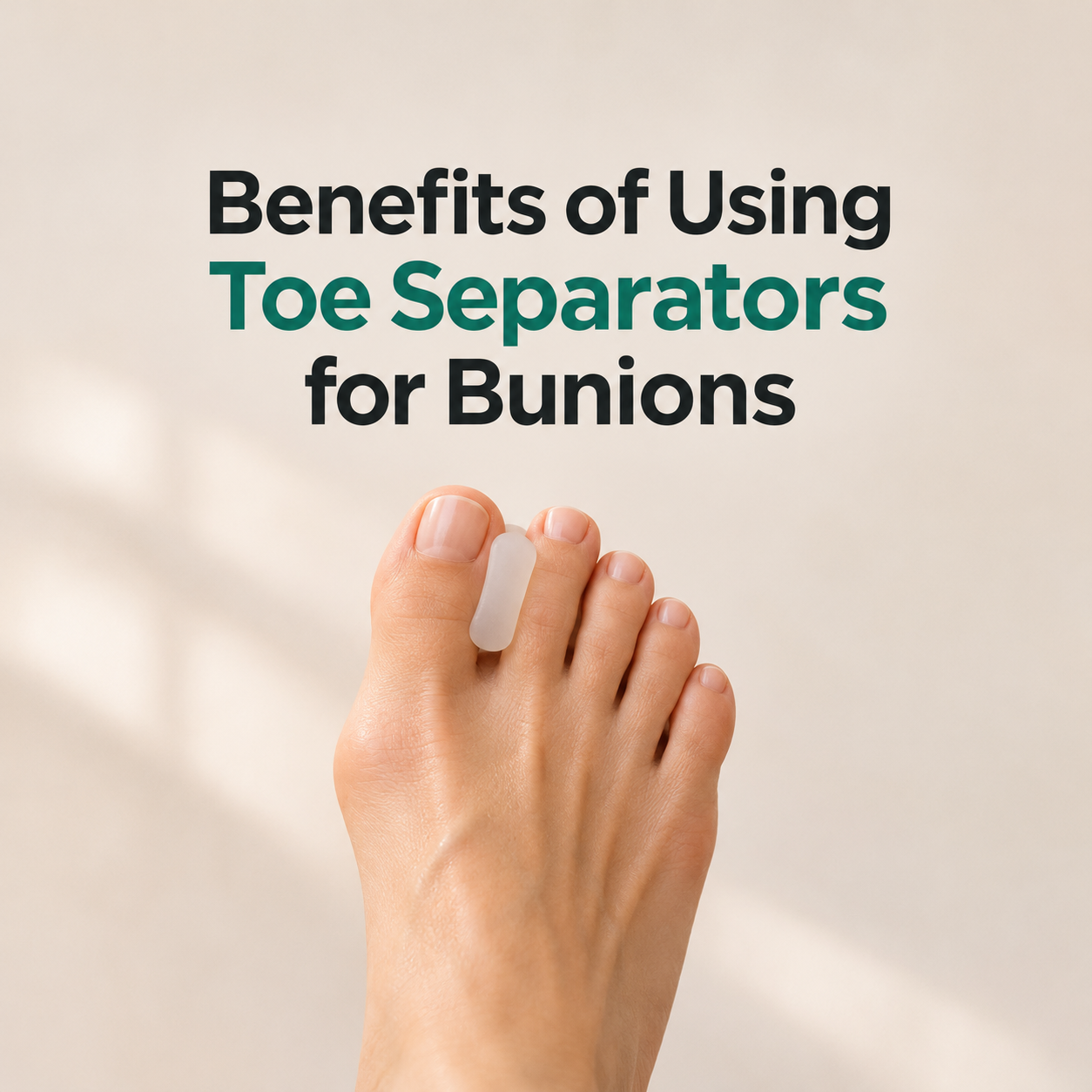
Toe separators, also called toe spacers or toe spreaders, are small devices that fit between your toes. They are usually made from soft, flexible medical-grade silicone, gel, or foam. By holding the toes slightly apart, they restore some of the space that tight shoes and a drifting big toe have taken away.
They come in several shapes. Some are tiny loops or wedges that sit between just the big toe and the second toe. Others are five-toe spreaders that separate every toe. Some bunion sleeves and night splints even have a spacer built into them. All of them share the same basic idea: gentle spacing and support to relieve pressure.
The Benefits of Using Toe Separators for Bunions
Here are the main ways toe separators can help when you are dealing with a bunion.

1. They Reduce Pressure Between the Toes
With a bunion, the big toe often leans into the second toe, creating a pressure point. A soft separator cushions that gap. Less rubbing and squeezing means fewer irritated spots and a calmer, less inflamed joint.
2. They Encourage Better Toe Alignment
While you are wearing it, a toe separator gently nudges the big toe toward a straighter position. This gentle guidance is one of the main reasons people choose them. The effect is mostly temporary, which means the alignment benefit lasts while the device is in place, but it can make daily movement feel more natural.
3. They Ease Everyday Pain and Soreness
Standing, walking, and even resting can aggravate a bunion. By taking pressure off the joint and the neighboring toe, spacers may reduce the dull ache and sharp twinges many people feel. Many users notice that their feet feel more relaxed after a short session, especially at the end of a long day.
4. They Make Shoes More Comfortable
A bunion bump often rubs against the side of the shoe. A slim spacer can reduce the way the big toe presses outward, so roomy, supportive shoes feel better. Keep in mind that thick toe spreaders are usually meant for home use, while slimmer versions are sometimes designed to fit inside wide shoes.
5. They Support Toe Mobility and Natural Spread
Modern shoes squeeze toes into a narrow shape, and over the years the muscles that help toes spread out can become weak and stiff. Wearing spacers while sitting or walking barefoot encourages your toes to fan out the way nature intended, which helps them stay flexible and active.
6. They Fit Easily into Recovery Routines
Toe separators are simple to combine with other care, such as stretching, foot massage, and strengthening exercises. After bunion surgery, some surgeons also recommend soft spacers or splints during healing. Never start using one after surgery unless your surgeon has told you to, because timing and fit matter.
Bonus: Compared with many other bunion treatments, toe separators are low-cost, lightweight, and need no special training. They are reusable, easy to clean, and small enough to keep in a bag, which makes it simple to stay consistent.
Quick tip: Consistency usually matters more than long sessions. Short, comfortable daily use tends to be better than occasional long sessions that leave your toes sore.
Do Toe Separators Actually Fix Bunions?
This is the most important question, so here is an honest answer. A bunion is a change in the position of the bones, and no soft spacer can permanently move bone back into place. Small studies and many users report less pain and a straighter toe position while the device is worn, but strong evidence for lasting correction is limited.
That is why it is best to think of toe separators as a comfort and support tool, not a cure. They can help manage symptoms, reduce friction, and support healthier toe habits. If your bunion is large, rigid, or getting worse quickly, a podiatrist or orthopedic specialist can talk with you about other options, including surgery in more advanced cases.
Types of Toe Separators: Which One Is Right for You?
Different designs suit different needs. Use this table as a starting point.
| Type | Best For | Typical Use | Things to Consider |
|---|---|---|---|
| Single-loop gel spacer | Mild bunions and pressure between the big toe and second toe | At home or inside wide shoes | Slim and discreet, but it can slip if the size is wrong |
| Five-toe silicone spreader | Toe stiffness, crowded toes, and daily foot relaxation | At home, resting or walking barefoot | Too bulky for most shoes |
| Bunion sleeve with built-in spacer | Bump cushioning plus toe spacing in one product | Daily wear, often in roomy shoes | Check the sizing and breathability |
| Foam post-surgery spacer | Recovery after surgery, when advised by a surgeon | As directed by your medical team | Use only on professional advice |
| Night splint with spacer | People who want gentle positioning while resting | Evenings or overnight | Must feel comfortable, never tight |
How to Choose the Best Toe Separator for Bunions
With so many options available, a quick checklist helps you pick wisely:
- Material: Look for soft, medical-grade silicone or gel that is skin-friendly and free from strong odors. If you have sensitive skin or a material allergy, choose carefully.
- Size and fit: The spacer should fill the gap without forcing the toes apart. Many brands offer small, medium, and large sizes.
- Thickness: Start with a thinner, softer design. You can move to a thicker one later if it feels comfortable.
- Flexibility: A bit of stretch makes it far more comfortable than a stiff, hard piece.
- Easy cleaning: Silicone that washes easily with mild soap and water is more hygienic for regular use.
- Shoe compatibility: Decide whether you need something for home use only or a slim design that fits in wider shoes.
- Durability and value: Multi-packs and well-reviewed products usually give you better long-term value.
How to Use Toe Separators Safely
Getting the routine right makes the difference between comfort and irritation. Follow these steps:

- Prepare your feet. Wash and dry them well, and check the skin for cuts, blisters, or redness.
- Place the spacer gently. Slide it between the big toe and second toe. It should feel snug but never painful.
- Start slowly. Begin with about 10 to 15 minutes while sitting or walking around at home.
- Increase gradually. If your feet feel good, add a little more time each few days.
- Clean it regularly. Wash the spacer with mild soap and let it dry completely before the next use.

Stop using the spacer if you feel sharp pain, numbness, tingling, or notice color changes or skin damage. Discomfort that keeps getting worse is a sign to pause and get advice.
Combine Toe Separators with Other Bunion Care Habits
Toe separators work best as one piece of a bigger plan. For stronger results, combine them with these habits:
- Wear a wide toe box: Choose shoes with room for your toes to spread, and avoid pointed styles and high heels as much as possible.
- Do gentle toe exercises: Toe spreading, toe lifts, and picking up a small towel with your toes can help strengthen the foot muscles.
- Use bunion pads for protection: A soft pad over the bump reduces rubbing inside shoes.
- Consider supportive insoles: If flat feet play a role, an arch-supporting insole or custom orthotic may help.
- Rest and ice: After a long day, resting your feet and applying a cold pack wrapped in a cloth may calm soreness.
- Manage your weight and activity: Less load on the feet means less stress on the big toe joint.
Who Should Be Careful or Avoid Toe Separators?
Toe separators are generally low risk, but they are not right for everyone. Speak with a doctor or podiatrist first if you:
- Have diabetes, nerve damage, or poor circulation in your feet, since you may not notice skin damage early.
- Have open wounds, infections, or very fragile skin on the feet.
- Are recovering from surgery or a foot injury.
- Have a known allergy to silicone, gel, or foam materials.
- Have severe pain, a stiff, fixed toe, or a rapidly worsening deformity.
Pros and Cons at a Glance
| Pros | Cons |
|---|---|
| Affordable and easy to find | Does not permanently correct the bone alignment |
| Reduces pressure and rubbing between toes | Results vary from person to person |
| Simple, reusable, and portable | Thick designs may not fit inside regular shoes |
| Fits alongside exercises and other care | Wrong size or overuse can cause irritation |
When to See a Doctor or Podiatrist
Home care can ease symptoms, but some situations deserve professional attention. Book an appointment if you notice:
- Pain that makes walking or daily activities difficult.
- A bunion that is red, hot, very swollen, or rapidly changing.
- Your big toe overlapping or pushing under the second toe.
- Numbness, tingling, or loss of feeling in the toes.
- No improvement after several weeks of consistent home care.
A professional can confirm that the problem really is a bunion, check for other conditions such as arthritis or gout, and suggest custom orthotics, physical therapy, or surgery if needed.
Frequently Asked Questions
Can toe separators cure bunions?
No. Toe separators can ease discomfort and support alignment while worn, but they cannot permanently reverse the bone changes behind a bunion.
How long should I wear toe separators each day?
Most people start with 10 to 15 minutes and slowly build up to an hour or two as their feet adapt. Follow your own comfort level and any advice from your podiatrist.
Can I wear toe separators with shoes?
Slim, soft spacers can often be worn inside wide, roomy shoes. Bulky five-toe spreaders are generally intended for use at home, without shoes.
Should toe separators hurt?
You may feel a mild stretching sensation during the first few sessions, but you should never feel sharp or lasting pain. If it hurts, remove it and try a softer or smaller size, or speak to a professional.
How long until I notice results?
Some people feel more comfortable within days, while others need a few weeks of regular use. Comfort usually improves faster than any change in alignment, and results differ for everyone.
Are toe separators better than bunion splints?
They serve different purposes. Spacers are small and gentle and mainly ease pressure between toes, while splints hold the toe in a set position and are often worn at rest. Which is better depends on your symptoms and comfort.
Can I sleep in toe separators?
Some designs are made for overnight use, but it is not right for everyone. Check with a healthcare professional first, especially if you have circulation or nerve problems.
Final Thoughts
The benefits of using toe separators for bunions come down to comfort, support, and healthier foot habits. They can reduce pressure between the toes, encourage a more natural toe position while worn, ease everyday soreness, and fit neatly into a wider care routine. They are not a miracle cure, and honest expectations will help you get the most from them.
If you choose the right size and material, start slowly, and combine them with roomy shoes and gentle exercises, toe separators can become a simple, comfortable part of your daily foot care. And if your bunion is painful or getting worse, do not wait to get professional advice. Your feet carry you every day, so they deserve good care.