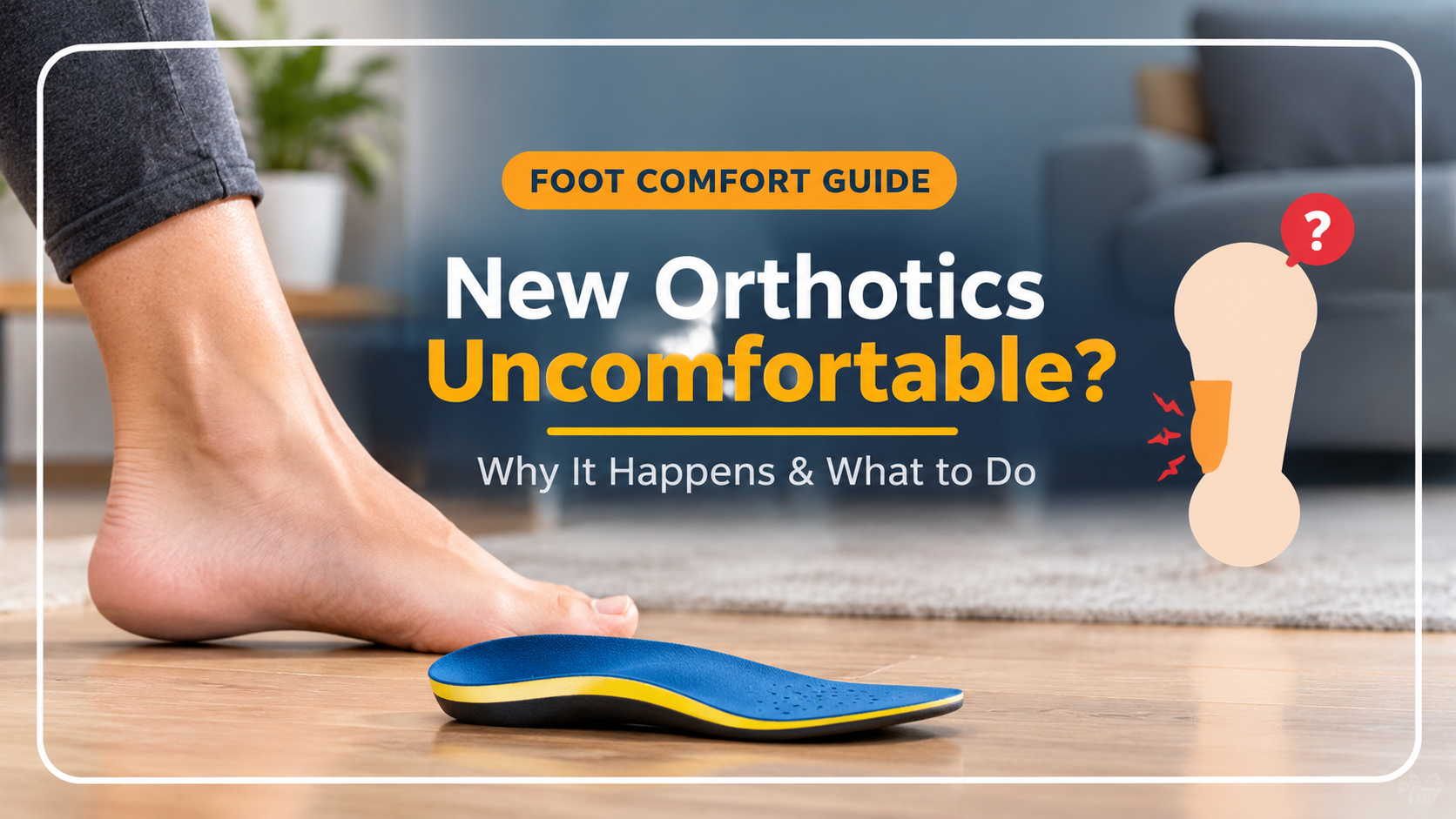
You bought or received new orthotics expecting relief, and instead your feet ache, your arches feel strange, or every step is a reminder that something is not right. If your new orthotics are uncomfortable, you are far from alone. Many people go through a rough adjustment stage, and in many cases the problem can be solved with a better break-in routine, a small fit change, or a different design. This guide explains what is normal, what is not, why new orthotics feel uncomfortable, and exactly what to do about it.
Is It Normal for New Orthotics to Feel Uncomfortable?
Yes, to a degree. Orthotics change how your foot is positioned and how your weight moves through it. Your muscles, ligaments, and tendons have adapted to your old movement pattern, so a new pattern can feel odd or slightly sore at first. This is similar to how new shoes or a new workout routine can feel at the beginning.
The key is knowing the difference between adjustment discomfort and a real problem.

How Long Does It Take to Get Used to Orthotics?
Most people adapt over about one to two weeks of gradual wear. Firmer or custom orthotics may take longer, sometimes a few weeks, and your provider may give you a specific schedule. If you have prescription orthotics, follow their instructions first. If discomfort is not getting better after the adjustment period, that is a sign the fit or design may need to change.
Why Are My New Orthotics Uncomfortable?
1. Your Feet Have Not Adapted Yet
Your foot is being held in a new position, which asks muscles and soft tissue to work differently. Mild soreness in the arch, heel, or even the calves and lower legs can appear while your body adjusts.
2. You Wore Them Too Much, Too Soon
This is the most common reason. Wearing new orthotics all day from the very first day is like jumping into a long run without training. A gradual schedule gives your body time to adapt.
3. There Is Not Enough Room in Your Shoes
Orthotics take up space. In a snug or shallow shoe, they can push your foot upward, causing tight toes, pressure on the top of the foot, heel rubbing, or blisters. Shoes with a removable insole and a roomy, deep fit work best.
4. The Arch Support Is Too High or Too Firm
If the support is taller or more rigid than your foot needs, it can press hard into the arch and create pressure points. More correction is not always better, and some feet do best with moderate support.
5. The Design Does Not Match Your Foot or Activity
A design made for flat feet may not suit a high arch, and a rigid orthotic made for walking may not feel right for running. Your foot type, shoe type, and daily activity all matter.
6. The Orthotic Is Not Sitting Correctly
An insole that is crooked, curled at the edges, or sitting on top of the old factory insole can feel uncomfortable and may slip around while you walk.

Common Symptoms and What They Often Mean
| Symptom | Possible Cause | First Thing to Try |
|---|---|---|
| Arch ache or cramping | Foot still adapting or support too high | Reduce wear time and build up slowly |
| Heel pain or bruised feeling | Thin heel padding or poor placement | Check that the heel cup sits flat |
| Ball-of-foot soreness | Insole shifting or tight shoe | Secure the insole and check shoe room |
| Tight toes | Not enough room in the shoe | Remove factory insole or try a roomier shoe |
| Blisters or rubbing | Friction from fit problems | Fix fit and protect the spot early |
| Knee, hip, or lower back ache | Body adjusting to new alignment | Slow down and mention it to your provider |
How to Break In New Orthotics Safely
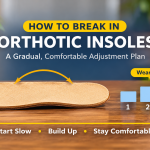
A slow, steady break-in is the most important step. Use a plan like this, adjusting it if your provider gave different instructions:

- Days 1 to 3: Wear them for one to two hours, ideally during light activity.
- Days 4 to 6: Increase to three or four hours if your feet feel comfortable.
- Days 7 to 10: Move up to five or six hours.
- Days 11 to 14: Work toward a full day of wear.
If your feet feel sore, stay at the same level or go back a step for a day or two. Take the orthotics out if you feel sharp pain. Avoid starting with long walks, intense workouts, or travel days.
How to Fix Uncomfortable Orthotics

Check Your Shoes First
Take out the shoe’s original insole and replace it with your orthotic. Stacking one on top of the other usually makes the shoe too tight. Make sure the shoe has enough depth, a roomy toe box, and a firm heel counter. Laced shoes with removable insoles usually work best.
Make Sure the Orthotic Sits Properly
The heel of the orthotic should sit against the back of the shoe, with no curling or bunching. If it is slightly too long, trim it a little at a time using the shoe’s original insole as a template, unless it is a prescription device, in which case ask your provider first.
Choose the Right Socks
Thin, moisture-wicking socks usually work best. Very thick socks can add pressure, and loose or wrinkled socks can cause rubbing.
Protect Sore Spots
Use soft blister patches or anti-friction balm on any area that is getting red. Do not wait for a blister to form.
Add Gentle Foot and Calf Care
Calf stretches, rolling the arch gently over a ball, and light foot strengthening exercises can help while your body adjusts. Stop any activity that increases your pain.
Consider a Different Design
If discomfort continues, the orthotic may simply be the wrong match. A lower arch height, a softer material, a three-quarter length design, or a different shape may suit your foot better.
Prescription Orthotics vs Over-the-Counter Insoles
| Feature | Prescription / Custom | Over-the-Counter |
|---|---|---|
| Fit | Made for your specific feet | Standard shapes and sizes |
| Adjustment period | Often longer, follow provider instructions | Usually shorter |
| Modifications | Done by your provider | Trimming or swapping for a different model |
| If uncomfortable | Return for a follow-up adjustment | Try a different arch height or style |
Common Mistakes to Avoid
- Wearing new orthotics all day right away
- Pushing through sharp pain instead of reducing wear time
- Leaving the factory insole in and stacking another on top
- Wearing shoes that are too tight or too shallow
- Modifying prescription orthotics without asking your provider
- Giving up too early, or waiting too long to ask for help
When to Go Back to Your Provider
Contact a podiatrist, physical therapist, or the provider who gave you the orthotics if you notice any of the following:
- Sharp, stabbing, or worsening pain
- Numbness, tingling, or burning
- Skin damage, bruising, or blisters that keep returning
- Swelling in the foot or ankle
- Pain that has not improved after the adjustment period
- A medical condition affecting your feet or circulation, such as diabetes
Most providers expect follow-up visits and can adjust the orthotics for a better fit. Many retailers also have return or exchange windows, so check the terms that came with your purchase.
Frequently Asked Questions
Why do my new orthotics hurt my arches?
Your arch may still be adjusting, or the support may be too high or firm for your foot. Reduce wear time and build up slowly. If pain continues, ask about a lower or softer design.
Should orthotics hurt at first?
They can feel unusual, and mild soreness may appear. Sharp pain, numbness, or discomfort that gets worse is not normal.
How long should I wear new orthotics each day?
Start with one to two hours and increase gradually over one to two weeks, unless your provider tells you otherwise.
Can orthotics cause knee or back pain at first?
Some people notice mild aches in the knees, hips, or lower back while the body adjusts to a new alignment. If it is more than mild or does not settle, talk to your provider.
Do I need bigger shoes for orthotics?
Not always, but you need enough depth and room. Replacing the factory insole often solves the problem without changing size.
What if my orthotics still hurt after two weeks?
Stop using them if pain is significant, and get them checked. They may need an adjustment or may not be right for your foot.
Can I return orthotics that are uncomfortable?
That depends on the seller or provider. Many offer a trial period, exchange, or follow-up adjustment, so check your purchase terms.
Final Thoughts
New orthotics that feel uncomfortable are not necessarily a failure. In many cases they just need time, a gentler break-in, and a better fit with your shoes. Learn the difference between normal adjustment and warning signs, fix the simple things first, and do not hesitate to go back to your provider or try a different design if the problem continues. With the right match, orthotics should support your feet and help you move more comfortably.
Disclaimer: This article is for general information only and is not a substitute for professional medical advice. If you have ongoing foot pain, numbness, diabetes, or use prescribed orthotics, please consult a qualified healthcare professional.