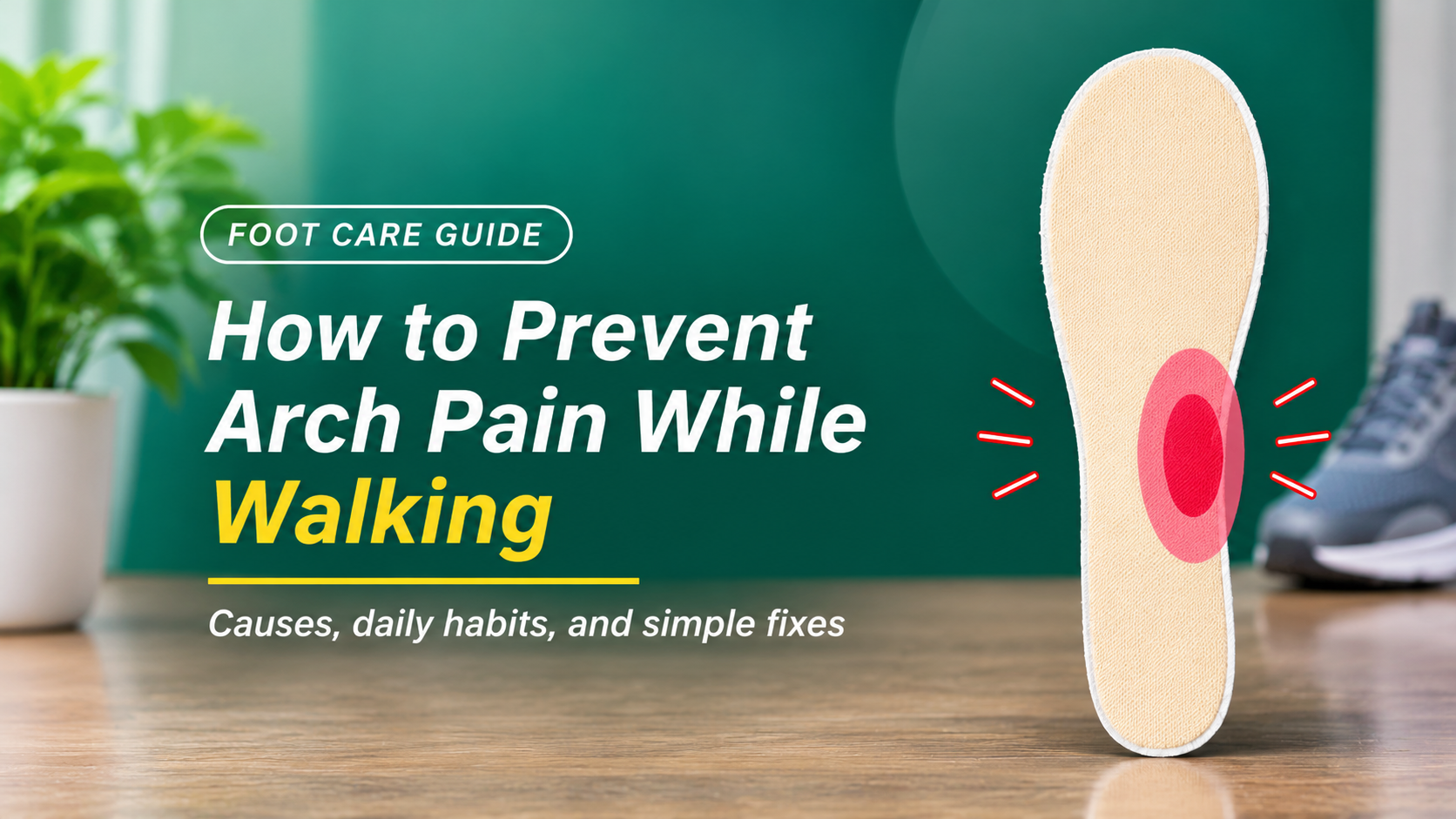

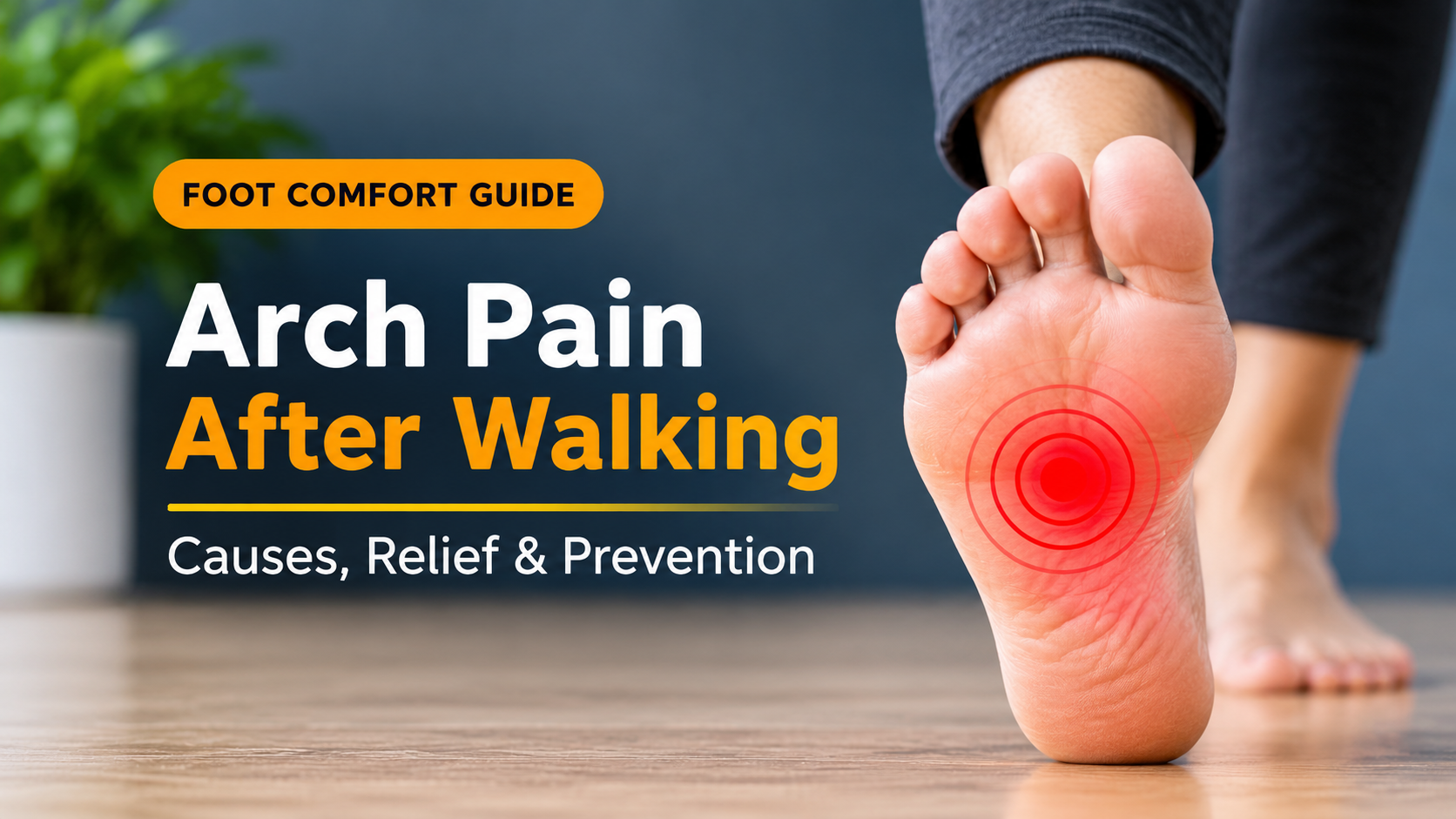
A good walk should leave you feeling energized, not limping because of an aching arch. If your arch hurts after walking, you are not alone. Arch pain is one of the most common foot complaints, and it can range from a mild ache at the end of the day to a sharp pain that makes every step uncomfortable. The good news is that most cases have clear causes and practical solutions. In this guide you will learn why arch pain happens after walking, how to relieve it at home, how to prevent it, and when it is time to get professional advice.
What Is the Arch of the Foot?
The arch is the curved structure along the inside of your foot between the heel and the ball. It is formed by bones, ligaments, tendons, and muscles working together. The arch acts like a spring: it absorbs shock when your foot hits the ground and helps push you forward when you walk. A thick band of tissue called the plantar fascia runs along the bottom of the foot from the heel to the toes and helps hold the arch in place.
When this system is overloaded or strained, pain can appear in the arch, often after long walks or on hard surfaces.

Why Does My Arch Hurt After Walking?

1. Plantar Fasciitis
Irritation of the plantar fascia is one of the most common causes of arch and heel pain. It often causes a stabbing or aching pain in the arch or near the heel, and is frequently worse with the first steps in the morning or after sitting for a while.
2. Flat Feet or Fallen Arches
If your arch is low or collapses when you stand, the muscles and ligaments of the foot may work harder with each step. Over a long walk, that extra effort can lead to fatigue and aching.
3. High Arches
A very high arch can be stiff and may not absorb shock as well. More force is concentrated on the heel and ball of the foot, and the arch itself can feel strained.
4. Overpronation
Overpronation means the foot rolls inward too much as you walk. This can put extra stress on the arch and on the tendon that supports it, particularly after long distances.
5. Worn-Out or Unsuitable Shoes
Shoes lose cushioning and structure over time. Flat, flimsy, or worn shoes offer little support, and shoes that are too narrow, too soft, or the wrong shape for your foot can strain the arch.
6. Overuse and Sudden Increases in Activity
Walking much farther, faster, or more often than you are used to can overload the foot. Hard surfaces, hills, and long periods standing can add to the strain.
7. Tight Calf Muscles
Tight calves and Achilles tendons can increase the pull on the plantar fascia and arch, making strain more likely.
8. Other Possible Causes
Less commonly, arch pain can come from tendon problems on the inner ankle, nerve irritation, arthritis, or stress injuries in the foot bones. These tend to need a professional assessment, especially if the pain is severe, constant, or comes with swelling or numbness.
Common Arch Pain Patterns
| Pattern | Possible Cause |
|---|---|
| Pain in the arch and heel, worst in the morning | Plantar fascia irritation |
| Dull ache that builds during long walks | Fatigue, flat feet, or overuse |
| Pain along the inner side of the foot and ankle | Overpronation or tendon strain |
| Sore arch with heel and ball-of-foot pain | High arches or poor shock absorption |
| Pain that appears after switching shoes | Unsuitable or worn footwear |
How to Relieve Arch Pain After Walking

Rest and Reduce Load
Give your foot a break from the activity that triggered the pain. Reduce walking distance or switch to lower-impact activities like swimming or cycling for a few days. Complete rest is rarely needed, but pushing through pain can make things worse.
Use Ice
Apply a cold pack wrapped in a thin cloth to the arch for about 10 to 15 minutes, a few times a day. Rolling the foot gently over a cold water bottle can also feel soothing.
Stretch the Calves and Plantar Fascia
- Calf stretch: Stand facing a wall, step one foot back, keep the heel down, and lean forward gently. Hold for 30 seconds and repeat on both sides.
- Plantar fascia stretch: Sit, cross one foot over the opposite knee, pull the toes back toward the shin, and hold for 20 to 30 seconds.
- Arch roll: Roll the arch gently over a ball or bottle for a couple of minutes.
Stretches should feel like a mild pull, not sharp pain.
Strengthen the Foot Muscles
Once pain starts to settle, simple exercises like towel scrunches, picking up small objects with your toes, and slow calf raises can help build strength. Start gently and increase gradually.
Wear Supportive Shoes
Choose shoes with a firm heel, some cushioning, and a sole that bends at the toes but not in the middle of the foot. Make sure there is enough room for your toes. Replace walking shoes that are worn out, since collapsed cushioning is a common hidden cause of arch pain.
Consider Arch Support
Many people find that over-the-counter arch supports reduce arch strain. The right support depends on your foot type: flat feet usually need firm, stable support, high arches often do better with cushioned, contoured support, and neutral arches do well with moderate support. Introduce them gradually and make sure they fit your shoes. If you have ongoing pain, a podiatrist can recommend or prescribe custom orthotics.
Manage Pain Sensibly
Some people use over-the-counter pain relief for short periods. If you are unsure what is safe for you, ask a pharmacist or doctor.
How to Prevent Arch Pain When Walking
- Build up gradually. Increase distance and speed slowly, rather than making big jumps.
- Warm up and stretch. A few minutes of gentle movement and calf stretching before a walk can reduce strain.
- Choose the right shoes. Make sure they fit well and suit your foot type and activity.
- Replace shoes regularly. Cushioning and structure wear out, often before the upper looks damaged.
- Vary surfaces. Mix hard pavement with softer paths when possible.
- Avoid walking barefoot on hard floors for long periods if it makes your arch ache.
- Maintain a healthy weight. Extra body weight increases the load through the feet.
- Strengthen your feet and calves with regular, gentle exercises.
Best Practices for Long Walks
- Wear well-fitting socks that reduce friction and keep feet dry.
- Take short breaks to rest your feet on longer outings.
- Loosen or retie laces if your feet swell during the day.
- Stretch your calves and feet after you finish.
Common Mistakes to Avoid
- Ignoring early arch pain and pushing through it
- Walking in worn-out or flimsy shoes
- Stretching aggressively into sharp pain
- Buying arch support without matching it to your foot type
- Increasing walking distance too quickly
- Assuming all arch pain is the same, when different causes need different approaches
When to See a Professional

A podiatrist, physical therapist, or doctor can examine your foot, check your walking pattern, and recommend the right treatment. Prompt advice is especially important if you have diabetes, circulation problems, or reduced feeling in your feet, since even small problems can become serious.
Frequently Asked Questions
Why does my arch hurt after walking but not before?
Pain that builds during or after walking often reflects fatigue or strain in the foot. Flat feet, high arches, worn shoes, and doing too much too soon are common reasons.
Is arch pain the same as plantar fasciitis?
Not always. Plantar fasciitis commonly causes pain in the heel and arch, but arch pain can also come from flat feet, tendon strain, or other causes.
Will arch pain go away on its own?
Mild cases often improve with rest, stretching, and better shoes. If the pain keeps coming back or lasts more than a couple of weeks, get it checked.
Are flat feet the cause of my arch pain?
They can be, especially if your arch flattens when you stand and your foot tires quickly. Not everyone with flat feet has pain, though, so other factors may also play a role.
Should I walk through arch pain?
Mild soreness that eases with movement may be fine, but sharp or worsening pain is a sign to stop and rest. Reduce your walking and build up again slowly.
Do arch supports help with arch pain after walking?
Many people find they help, especially when the support matches the foot type and fits properly in the shoe. They work best alongside good shoes and stretching.
What shoes are best for arch pain?
Look for shoes with a firm heel, adequate cushioning, a roomy toe box, and a sole that does not twist or collapse easily. A removable insole is useful if you plan to use arch supports.
Final Thoughts
Arch pain after walking is a common problem, but it does not have to limit your activity. Understanding the likely cause, whether that is plantar fascia strain, flat feet, worn shoes, or doing too much too soon, helps you choose the right solution. Rest when you need to, stretch and strengthen gently, wear supportive shoes, and consider arch support that matches your foot. If the pain is severe or does not improve, a professional can help you get to the bottom of it, so you can get back to walking comfortably.
Disclaimer: This article is for general information only and is not a substitute for professional medical advice. If you have ongoing foot pain, numbness, diabetes, or circulation problems, please consult a qualified healthcare professional.