

Signs of High Arches in Feet: How to Spot Them and What to Do
Most people never think much about the shape of their feet until something starts to hurt. Then they hear terms like flat feet, fallen arches or high arches and wonder which one applies to them. Flat feet get most of the attention, but the opposite problem is just as real. A foot with an unusually high arch can quietly cause heel pain, sore forefeet, unstable ankles and shoes that wear out in strange ways.
In this guide you will learn exactly what high arches are, the clear signs to look for, simple tests you can do at home, what causes them, and the practical steps that help you stay comfortable and active.
Quick Summary
- High arches (medically called pes cavus) mean the middle of the foot stays raised off the ground when you stand.
- Typical signs include a thin or missing midfoot in a wet footprint, heel or ball-of-foot pain, claw toes, calluses, frequent ankle rolling and outer-edge shoe wear.
- Many people with high arches have no pain at all. Problems appear when the foot cannot spread pressure evenly.
- Cushioned shoes, supportive insoles and gentle stretching help most people. A new or worsening high arch with weakness or numbness should be checked by a doctor.
What Are High Arches?
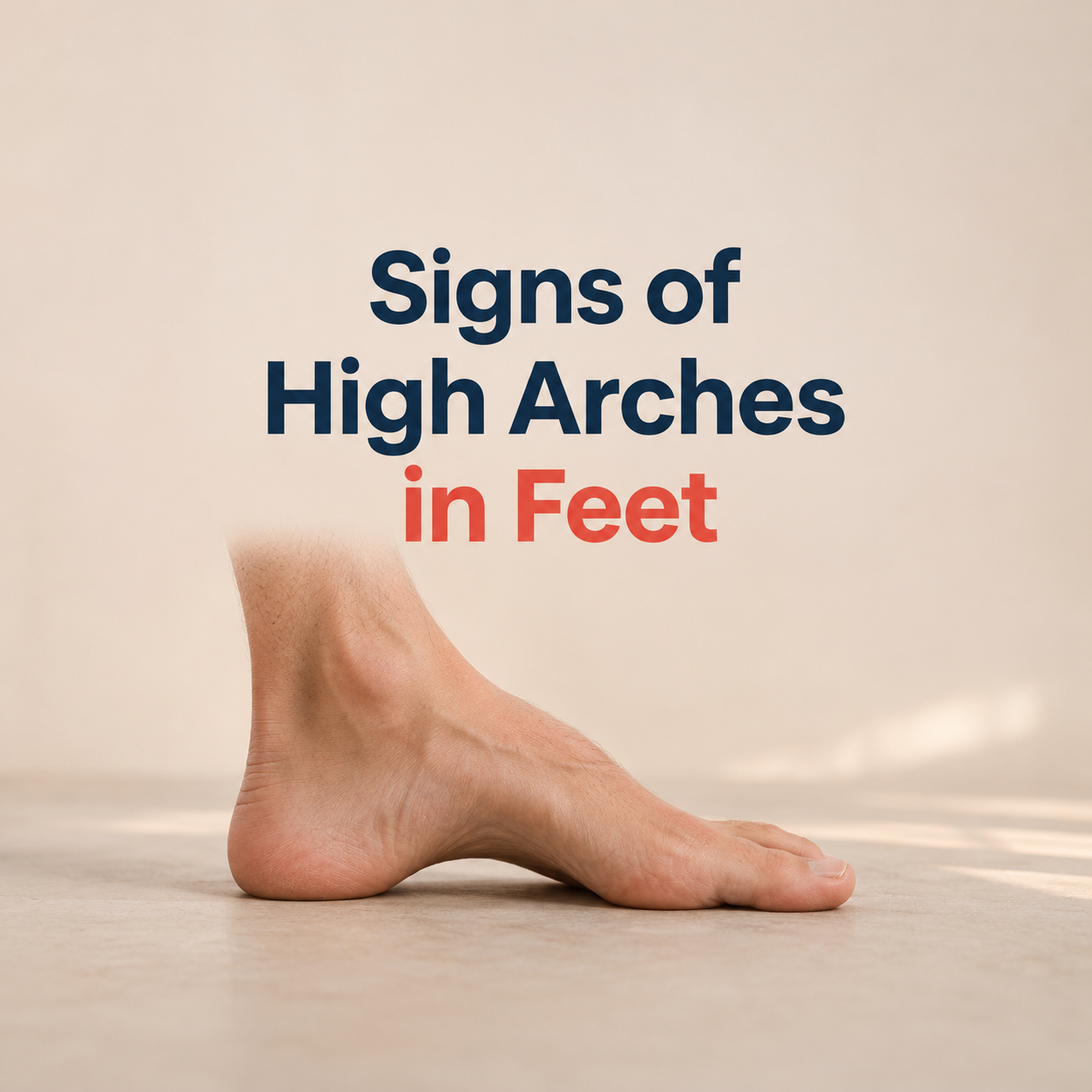
Your foot has three arches: the inner (medial) arch, the outer (lateral) arch and the front (transverse) arch. When people talk about high arches, they usually mean the inner arch, the curve you see along the inside of your foot between the ball and the heel.
In a typical foot, the arch flattens slightly as you stand, acting like a spring. It absorbs shock when your foot lands and then helps push you forward. In a high-arched foot, the arch stays tall and stiff. Less of the sole touches the ground, so body weight is carried mainly by the heel and the ball of the foot.

High arches are common. Some people are simply born with them and never have trouble. Others develop discomfort because the stiff arch does not absorb impact well.
8 Signs of High Arches in Your Feet
No single sign proves you have high arches, but several together make it very likely. Here are the most common ones.

1. A Thin Strip or Missing Midfoot in Your Footprint
This is the classic sign. When you step onto a flat surface with wet feet, a normal foot leaves a print with a visible curve along the inner side. A high-arched foot leaves a print with only the heel and the ball of the foot, joined by a narrow band along the outer edge, or sometimes not joined at all.
2. The Arch Stays Visible When You Stand
Stand naturally on a hard floor and look at the inside of your foot. If you can easily slide your fingers under the arch, and the gap does not change much when you put your weight on it, your arch may be high and rigid. A normal arch lowers noticeably as you load it.
3. Pain in the Heel or the Ball of the Foot
Because weight is concentrated on two small areas, those areas take extra stress. Many people feel a deep ache or burning under the heel, or soreness in the front of the foot after standing, walking or running. Over time this can develop into conditions such as plantar fasciitis or metatarsalgia.
4. Claw Toes or Hammer Toes
When the arch is high, the muscles and tendons in the foot often work harder to keep you balanced. This can pull the toes into a bent or curled position, especially the smaller toes. Toes that look like claws, or that do not lie flat even when you relax, are a common companion of high arches.
5. Calluses on the Heel, Ball or Outer Edge
Thick, hard skin forms where pressure repeats day after day. Calluses under the ball of the foot, on the heel, along the outer border, or on the tops of bent toes often point to pressure that is not being shared across the whole sole.
6. Shoes That Wear Out on the Outer Edge
Look at the soles of your most-used shoes. High-arched feet tend to roll slightly outward, so the outer edge of the heel and forefoot wears down faster than the rest of the sole. This can happen with running shoes, work boots and everyday sneakers alike.

7. Frequent Ankle Rolling or Instability
A high arch often goes together with a heel that tilts inward. Because the foot sits on a narrower base, ankles can roll outward more easily on uneven ground. If you have repeated ankle sprains or a general feeling of wobbliness, your arch shape may be part of the story.
8. A Stiff, Rigid Foot With Poor Shock Absorption
Some people describe their feet as hard, tight or unforgiving. Walking on pavement can feel harsh, and the lower legs, knees or even hips may feel the impact. A rigid arch simply does not cushion landing forces as well as a flexible one.
Simple Tests You Can Do at Home
You do not need special equipment to get a good idea of your arch type. These quick checks take just a few minutes.
The Wet Footprint Test
- Wet the sole of one foot with water.
- Step onto a dry, flat surface that shows marks well, such as a paper bag or a dark tile.
- Step off and look at the print you left behind.
- Compare the print with the three examples below.

The Standing Side-View Check
Stand relaxed with your weight evenly on both feet. Ask someone to look at your foot from the inside, or take a photo at floor level. A high arch looks like a clear, tall curve with a large gap under the middle of the foot, and the curve barely changes when you shift your weight.
The Shoe Wear Check
Place an old pair of shoes sole-up on a table. Compare the wear on the inner and outer edges. Strong outer-edge wear, especially at the heel and under the little-toe side, fits a high-arch pattern.
Keep in Mind
Home tests are only a guide. They cannot tell you why your arch is high or whether it is causing problems. A podiatrist or physical therapist can measure your foot properly and check your strength, flexibility and balance.
Why High Arches Can Cause Problems
Think of the arch as a built-in shock absorber. When it is flexible, it flattens a little on landing and then springs back. When it is stiff and tall, three things tend to happen:
- Pressure gets concentrated. The heel and ball of the foot carry most of the load, so those spots take more stress per step.
- Impact travels upward. With less cushioning from the arch, forces reach the ankles, shins, knees and lower back more directly.
- Balance is harder to maintain. The foot has a smaller area in contact with the ground, and the heel often tilts inward, so the ankle works harder to stay steady.
That is why people with high arches are more likely to notice certain overuse problems, which are listed in the next section.
Conditions Often Linked to High Arches
What Causes High Arches?
Inherited Foot Shape
For many people, high arches simply run in the family. If your parents or siblings have the same foot shape and you have no other symptoms, this is the most likely explanation.
Neurological and Muscle Conditions
In some cases, high arches are a sign of an underlying nerve or muscle condition. These include Charcot-Marie-Tooth disease, cerebral palsy, spina bifida, muscular dystrophy, polio and some other conditions that affect how nerves and muscles work together. When the muscles of the foot and lower leg are unevenly weak or tight, they gradually pull the foot into a high arch.
This is the main reason why a doctor should evaluate high arches that appear suddenly, change quickly, or come with other symptoms.
Injury or Past Damage
Fractures, nerve injury, or conditions that leave scar tissue in the foot or lower leg can change the way the foot is shaped. In children, untreated clubfoot can also lead to a high-arched foot later on.
Unknown Causes
Sometimes no cause can be found even after a thorough check. This is called an idiopathic high arch, and it is generally not a cause for concern when there are no other signs.
When Should You See a Doctor?
Many people with high arches manage well on their own. However, it is wise to get professional advice if you notice any of the following:
- Foot pain that lasts more than a few weeks or keeps coming back
- Repeated ankle sprains or a feeling that your ankle “gives way”
- Numbness, tingling or burning in the feet
- Weakness in the foot or ankle, tripping, or dragging the toes
- A foot shape that has changed noticeably over months, or an arch that rises in only one foot
- Toes that are becoming stiff or fixed in a bent position
- Calluses or skin breakdown that will not heal, especially if you have diabetes or poor circulation
A podiatrist, orthopedic specialist or neurologist may check your walking pattern, test your muscle strength and reflexes, and use a simple posture test to see if your heel and arch are flexible. In some cases they order X-rays or nerve tests.
How to Manage and Care for High Arches
The goal is simple: spread pressure over more of the sole, cushion impact and keep the foot and calf muscles flexible and strong.

Choose the Right Footwear
- Pick shoes with a cushioned midsole that absorbs shock instead of feeling hard and flat.
- Look for a wide, deep toe box so curled toes are not squeezed.
- Choose a supportive heel counter (the firm cup around the heel) to improve stability.
- Avoid very flat, thin-soled shoes for long walks or standing, and avoid high heels when possible.
- Replace shoes when the cushioning is compressed or the outer edge is clearly worn down.
Use Supportive Insoles
Insoles that fill the gap under the arch help share pressure with the midfoot instead of leaving it all to the heel and forefoot. Soft, cushioned insoles with a contoured shape suit most people. If you have significant pain, a custom orthotic made from a professional assessment can be worth considering. Very rigid, aggressive arch supports are often uncomfortable for high arches, so comfort should guide your choice.
Stretch Regularly
Tight calves and a tight plantar fascia increase strain on the arch. Spend a few minutes a day on these gentle stretches:
Build Strength and Balance
Stronger lower legs and feet help control the foot and ankle. Simple exercises such as calf raises, towel scrunches with the toes, and standing on one leg for 30 seconds can improve stability. Start gently and build slowly. If an exercise causes sharp pain, stop and get advice.
Protect Your Ankles
If you roll your ankle often, balance training and a lace-up or semi-rigid ankle brace during sports can reduce the chance of another sprain. Heel cushioning and a stable shoe also help.
Look After Your Skin and Toes
Moisturize dry heels, trim nails straight across, and have calluses managed by a professional rather than cutting them yourself. Silicone toe sleeves or soft pads can protect curled toes from rubbing.
Advanced Options
When pain does not improve with these steps, a specialist may suggest custom orthotics, physical therapy, bracing or a short period of reduced activity. Surgery is only considered for severe, rigid deformities or those caused by a progressive condition, and it is rarely the first step.
Quick Checklist for Buying Shoes if You Have High Arches
- Shop in the afternoon, when feet are slightly larger.
- Press on the midsole. It should feel cushioned, not rock hard.
- Check that you can wiggle your toes freely, with about a thumb’s width of space in front of the longest toe.
- Hold the shoe and try twisting it. A shoe that bends in the middle and twists easily gives little support.
- Walk and jog a few steps in the store. The shoe should feel stable on the outer edge, with no slipping at the heel.
- If you use insoles, bring them and try them inside the shoes.
Common Myths About High Arches
Myth: High arches mean strong feet
A high arch is not the same as a strong arch. It is often stiff, which can reduce shock absorption. Strength and flexibility matter more than arch height.
Myth: Everyone with high arches will have pain
Not at all. Plenty of people with high arches never have a problem. Pain usually appears when other factors combine, such as hard surfaces, unsuitable shoes, tight calves, or a lot of walking and running.
Myth: Stretching alone will fix high arches
Stretching improves flexibility and comfort, but it does not change the bone structure of the foot. It works best together with good footwear and, when needed, supportive insoles.
Frequently Asked Questions
How do I know if I have high arches?
Check for the signs above: a wet footprint with a thin or missing midfoot, a visible arch when standing, outer-edge shoe wear, claw toes, calluses and pain in the heel or ball of the foot. For a firm answer, ask a podiatrist.
Are high arches bad?
Not necessarily. High arches are a normal variation for many people. They become a concern when they cause pain, instability or when they are linked to a nerve or muscle condition.
Can high arches cause knee or back pain?
They can contribute. A stiff foot absorbs less shock, so more impact reaches the knees, hips and lower back. Good footwear and insoles often reduce this.
Can high arches be corrected?
The bony shape cannot be changed with exercise, but symptoms can usually be managed very well with cushioning, support, stretching and strengthening. Surgery is reserved for severe cases.
Do high arches get worse with age?
An arch that is naturally high usually stays much the same, although feet can become stiffer with age. A rapidly changing arch is different and should be checked by a doctor.
Is it normal for only one foot to have a high arch?
Small differences between feet are normal, but a clearly higher arch in one foot, especially with weakness or numbness, deserves medical attention.
Which exercises are best for high arches?
Calf stretches, plantar fascia stretches, calf raises, toe scrunches and single-leg balance work are the most commonly recommended starting points. A physical therapist can tailor a plan to your feet.
Final Thoughts
High arches are a common foot type, and plenty of people live with them comfortably. The key is to recognize the signs early: a thin footprint, tough calluses, heel or forefoot soreness, curled toes, an unsteady ankle and shoes that wear out on the outer edge. With cushioned footwear, supportive insoles, regular stretching and a little strengthening, most people keep their feet comfortable and active for years.
If your symptoms are persistent, getting worse, or come with weakness or numbness, do not wait. A professional assessment can find the cause and give you a plan that fits your feet.
Disclaimer: This article is for general information only and is not a substitute for professional medical advice, diagnosis or treatment. Always consult a qualified healthcare provider about foot pain or any health concern.