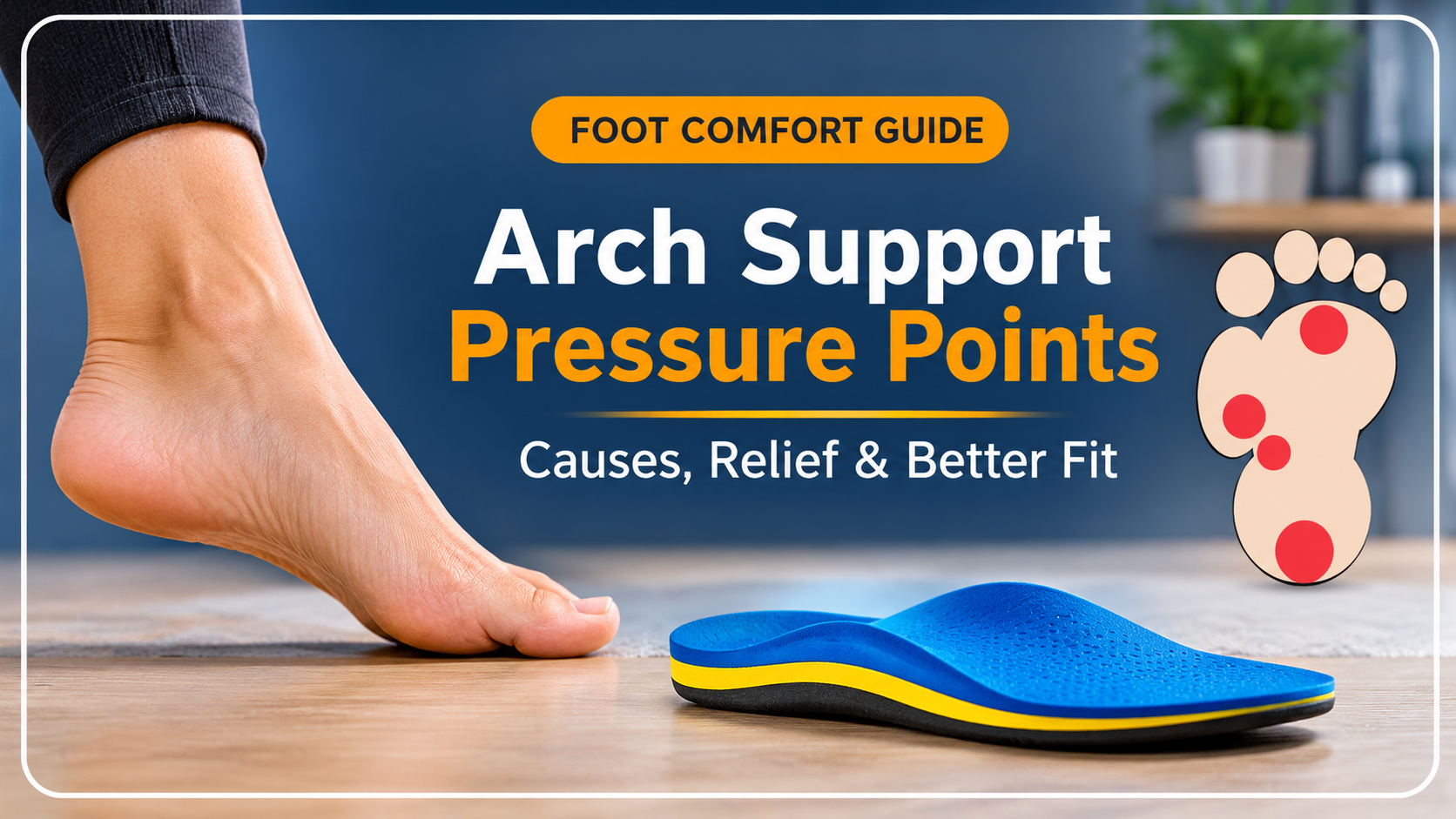
Arch supports are meant to make your feet feel better, so it is frustrating when they create sore, aching, or burning spots instead. Pressure points under the arch, heel, or ball of the foot are one of the most common complaints among people who use insoles and orthotics. The good news is that these problems usually have clear causes and practical fixes. In this guide you will learn where arch support pressure points appear, why they happen, how to match support to your arch type, and what to do to get relief.
What Are Arch Support Pressure Points?
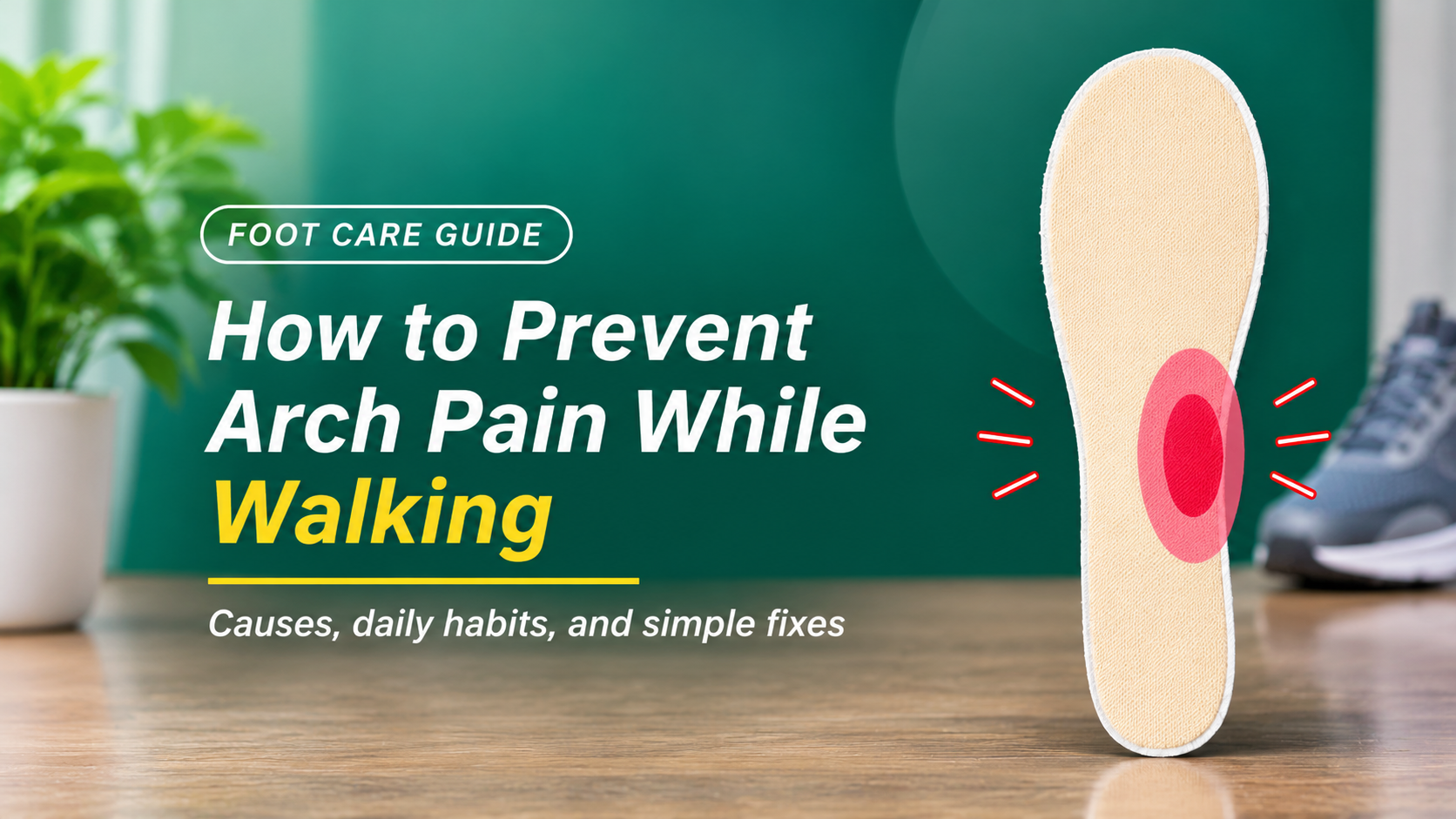
A pressure point is a spot where the insole presses into your foot harder than the surrounding area. Instead of spreading your weight evenly, the support concentrates force in one place. That can feel like a hard lump, a dull ache, a pinch, or a burning sensation after walking or standing.
A small amount of awareness in the arch is normal when you start using supports, because your foot is being held in a new position. Sharp pain, numbness, or soreness that gets worse over time is a sign that the support does not fit properly.

Where Pressure Points Usually Appear
| Location | What It Often Feels Like | Common Cause |
|---|---|---|
| Inner arch edge | Aching or a pinching line along the inside | Support too high or firm along the inner side |
| Arch peak | A hard lump pressing upward | Arch height does not match your foot |
| Heel center | Bruise-like soreness | Thin heel padding or a shifted heel cup |
| Ball of the foot | Burning or tenderness under the toes | Insole sliding forward or foot pushed forward |
| Outer edge | Soreness along the side of the foot | Foot rolling outward or insole too narrow |
Why Do Arch Supports Cause Pressure Points?
1. The Arch Support Is Too High
This is the most common reason. If the support is taller than your natural arch, it pushes into the soft tissue instead of gently filling the space. More support is not always better, and some people do best with a low or moderate arch.
2. The Material Is Too Rigid
Firm plastic or composite shells provide strong structure, but they do not give much when pressure builds. If your foot is sensitive or you are new to supports, a rigid design can feel harsh.
3. The Insole Is Not Sitting Correctly
If the insole is slightly crooked, shifted forward, or bunched under your foot, the arch no longer lines up with your arch. This creates uneven pressure and hot spots.
4. You Did Not Break Them In Gradually
Your foot muscles, ligaments, and skin need time to adjust to a new shape. Wearing new insoles all day right away is a common way to cause soreness.
5. The Support Does Not Match Your Foot Type
Flat feet, neutral arches, and high arches all respond differently to support. A design made for one foot type can feel uncomfortable on another.
6. Your Shoes Are Too Tight or Too Shallow
Insoles take up space. In a shoe with little depth, the insole pushes your foot upward, increasing pressure on the top of the foot and making the arch feel more aggressive.

How to Find Your Arch Type
Knowing your arch type helps you choose support that fits instead of fighting your foot. Try this simple wet footprint test at home:
- Wet the bottom of your foot and step onto a flat piece of dark paper or a dry towel.
- Step off and look at the print you left behind.
- A print showing almost your whole foot suggests a low arch or flat foot.
- A print with a clear curve along the inside suggests a neutral arch.
- A print showing very little between the heel and ball suggests a high arch.
This test is only a rough guide. A podiatrist or physical therapist can give you a more accurate assessment.

How to Relieve Arch Support Pressure Points

Step 1: Slow Down the Break-In
Go back to short wear times. Start with one hour a day and increase slowly over one to two weeks. If a spot becomes sore, stop and give your feet a rest before trying again.
Step 2: Check Placement and Fit in the Shoe
Remove the shoe’s original insole and use it as a template to trim the new one if needed. Make sure the insole sits flat, with the heel cup against the back of the shoe and no curling at the edges. Check that your shoe has enough depth for your foot plus the insole.
Step 3: Add a Softer Top Layer
A thin cushioned cover or a soft top-layer insole can spread pressure more evenly. Choose a thin option so you do not make the shoe too tight.
Step 4: Choose a Lower-Profile or More Flexible Support
If the arch still feels too aggressive, try a lower arch height or a semi-rigid design with a little give. Three-quarter length insoles, which sit under the heel and arch, can also help in tight shoes.
Step 5: Use Padding Where Needed
For a specific sore spot, a small piece of soft padding or a relief cut-out may help reduce pressure. Avoid stacking multiple pads, which can change the shape of the support and cause new problems.
Step 6: Rotate Shoes and Check Their Condition
Worn-out shoes with collapsed midsoles can make orthotics feel uneven. Alternating between two pairs gives each pair time to recover and changes pressure slightly from day to day.
Step 7: Support Your Feet With Simple Exercises
Gentle foot exercises such as toe curls, towel scrunches, and calf stretches can help your feet adapt. Stop if any exercise increases your pain.
Choosing Arch Support That Avoids Pressure Points
- Match your arch height. Flat feet usually need firm, stable support. High arches usually do better with cushioned, contoured support. Neutral arches need moderate support.
- Look for a gradual contour. A smooth, gently rising arch spreads pressure better than a sharp ridge.
- Consider the material. Foam offers comfort, semi-rigid designs balance support and give, and rigid shells offer maximum structure.
- Check the heel cup. A deep, well-shaped heel cup holds the foot steady, but it needs a shoe with enough room.
- Pick the right length. Full-length insoles replace the footbed, while three-quarter length insoles leave more toe room.
- Test inside your actual shoes. Try them with the socks and shoes you normally wear.
| Support Type | Pressure Risk | Best Use |
|---|---|---|
| Soft foam | Low | Light support and sensitive feet |
| Semi-rigid | Medium | Everyday walking and standing |
| Rigid shell | Higher | Structural support, usually with professional guidance |
| Custom orthotic | Varies | Specific foot conditions, with adjustments from your provider |
Common Mistakes to Avoid
- Choosing the highest arch support, thinking it is the best
- Wearing new insoles for a full day right away
- Ignoring sharp pain and trying to push through it
- Leaving the factory insole in and stacking another on top
- Using worn-out insoles that have lost their shape
- Skipping a check of your shoe size and depth
When to See a Professional
If you use prescription or custom orthotics, talk to the provider who prescribed them before modifying or replacing them. Seek advice if you experience:
- Pain that gets worse or does not improve after a couple of weeks
- Numbness, tingling, or burning
- Swelling, bruising, or skin damage at the pressure spot
- Pain that affects your walking or sleep
- A medical condition that affects foot sensation or circulation, such as diabetes
Frequently Asked Questions
Why does my arch support hurt my arch?
The support may be too high or firm for your foot, placed incorrectly, or introduced too quickly. A gradual break-in and the right arch height usually help.
Is it normal for arch supports to feel uncomfortable at first?
Mild awareness or tiredness in the arch can be normal for a short time. Sharp pain, numbness, or growing soreness is not normal.
How long should it take to adjust to arch supports?
Many people adjust over one to two weeks of gradual wear. Firmer or custom orthotics may take longer, so follow any instructions you were given.
Can arch supports cause pain on the ball of the foot?
Yes. If the insole slides forward or pushes your foot ahead in the shoe, extra pressure can fall on the ball of the foot.
Should I stop using arch supports if they cause pressure points?
Reduce wear time and fix the fit before trying again. If pain continues after adjustments, stop using them and ask a healthcare professional.
Do arch supports work for flat feet?
Many people with flat feet find supports helpful, usually with a firm and stable design. The support should still fit your arch rather than force it upward.
Can the wrong shoes cause arch support pressure points?
Yes. Shoes that are too tight, too shallow, or worn out can make even a good insole uncomfortable.
Final Thoughts
Arch support pressure points are a sign that something about the fit needs adjusting, not a reason to give up. Start by identifying your arch type, then break in your supports slowly, check how they sit in your shoes, and choose a height and material that suits your foot. If you still have discomfort, adding a softer layer, trying a lower-profile design, or getting professional advice can make all the difference. With the right match, arch supports should feel like steady comfort, not a sore spot.
Disclaimer: This article is for general information only and is not a substitute for professional medical advice. If you have ongoing foot pain, numbness, diabetes, or use prescribed orthotics, please consult a qualified healthcare professional.