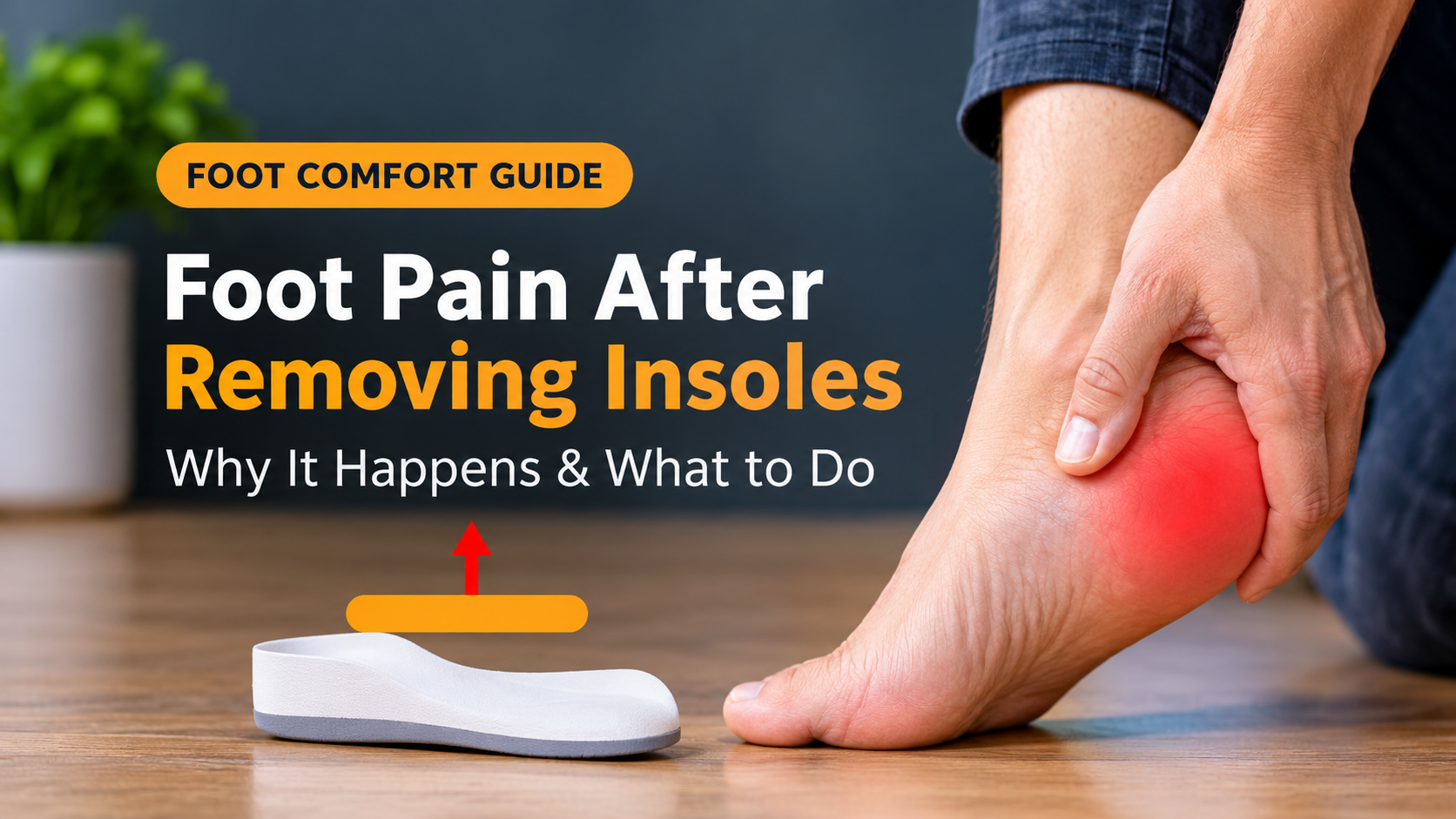
You took out your insoles, maybe because they were uncomfortable, worn out, or you simply wanted to stop using them, and now your feet hurt. It is a confusing and frustrating situation, especially if you expected your feet to feel the same as before. Foot pain after removing insoles is more common than many people realize, and it usually has understandable causes. This guide explains why it happens, what is normal, how to transition safely, and when to get professional help.
Why Does My Foot Hurt After Taking Out My Insoles?
Insoles and orthotics change how force moves through your feet, ankles, and legs. When you remove them, your body has to handle that load in a different way, sometimes all at once. Pain can appear in the arch, heel, ball of the foot, calves, or even knees and hips.

1. A Sudden Change in Support
If you wore insoles daily for weeks, months, or years, your feet became used to a certain position. Going back to a flat footbed all at once is a big change. The tissues that were being supported may feel overloaded or strained.
2. Your Feet May Have Become Used to the Extra Support
Some people find that after long-term use, their foot muscles do less work and feel weaker or tired when support is removed. Research on this topic is mixed, and not everyone experiences it, but a gradual transition is still sensible.
3. Tight Calves, Plantar Fascia, or Achilles Tendon
Insoles with arch height or heel cushioning can change how the foot and calf tissues are stretched during walking. Without them, tight tissues can become irritated, which may show up as heel pain, arch pain, or tightness along the back of the leg.
4. The Original Problem Has Returned
If you started using insoles for a reason, such as heel pain, arch pain, or flat feet, that condition may still be there. The insoles may have been masking symptoms or helping manage them, and pain may come back once they are removed.
5. Your Shoes Do Not Offer Enough Support
Many shoes have thin, flat, or worn-out insoles that provide very little cushioning or structure. Without your insoles, shoes like this may feel hard or unsupportive.
6. Too Much Too Soon
Going from all-day insole use to no insoles, especially on long walking, standing, or workout days, can be a lot for your feet to handle at once.
Where Pain Often Shows Up
| Location | What It Often Feels Like | Possible Reason |
|---|---|---|
| Arch | Aching, cramping, or fatigue | Less support, muscles adjusting |
| Heel | Sharp or bruised feeling, often in the morning | Loss of cushioning, plantar fascia strain |
| Ball of the foot | Burning or tenderness | Loss of padding under the forefoot |
| Calf and Achilles area | Tightness or pulling | Change in heel height and loading |
| Knees, hips, or back | Dull ache | Body adjusting to a different alignment |
Is the Pain Normal?
Mild soreness or tiredness that eases over several days can be part of adjusting. Pain that is sharp, gets worse, lasts for weeks, or comes with swelling, numbness, or limping needs attention. If you were prescribed orthotics for a specific condition, ask the provider who prescribed them before stopping.

How to Transition Away From Insoles Safely
If you want to stop using insoles, or you have already removed them and feel pain, a gradual approach usually works better than stopping suddenly.

Step 1: Step Down Slowly
If your feet hurt without insoles, put them back in for most of the day and reduce wear time gradually over several weeks. A plan like the one above can be adjusted to suit you. Slow down if soreness builds.
Step 2: Wear Supportive Shoes
Choose shoes with a firm heel counter, some cushioning, and a sole that does not bend too easily in the middle. Replace shoes that are worn out, since a collapsed midsole offers very little support.
Step 3: Do Gentle Foot and Calf Exercises
Simple exercises can help your feet adapt. Start with a small number of repetitions and stop if anything causes sharp pain.

Step 4: Stretch the Calves and Plantar Fascia
Gentle calf stretches against a wall and rolling the arch of the foot over a ball can ease tightness. Hold stretches without bouncing, and keep them comfortable rather than painful.
Step 5: Increase Activity Slowly
On days when you are walking, standing, or exercising a lot, keep your insoles in. Add time without them on lighter days first.
Step 6: Manage Discomfort Sensibly
Resting the feet, elevating them, and using a cold pack for short periods can ease sore spots. Over-the-counter pain relief may be an option for some people, but check with a pharmacist or doctor if you are unsure about what is right for you.
Should You Stop Using Insoles at All?
Not necessarily. Some people use insoles only for certain activities, shoes, or long days on their feet. Others find they no longer need them after strengthening and shoe changes. There is no single right answer. Pay attention to how your feet feel, and aim for comfort and function rather than a fixed rule about wearing or not wearing insoles.
Common Mistakes to Avoid
- Stopping long-term insole use suddenly and expecting no reaction
- Going back to old, worn-out shoes
- Ignoring sharp or worsening pain
- Doing too many exercises too quickly
- Stopping prescribed orthotics without talking to your provider
- Assuming the pain means the insoles were harming your feet
When to See a Professional
Get advice from a podiatrist, physical therapist, or doctor if you notice:
- Pain that is sharp, severe, or getting worse
- Pain that lasts more than a couple of weeks
- Swelling, bruising, redness, or warmth
- Numbness, tingling, or burning
- Trouble walking or putting weight on the foot
- A medical condition that affects foot sensation or circulation, such as diabetes
A professional can assess your foot structure, walking pattern, and shoes, and recommend whether you need insoles, a different type, or other treatment.
Frequently Asked Questions
Why do my feet hurt when I stop wearing insoles?
Your feet may be adjusting to a sudden change in support, or the original problem may be coming back. Tight calf and foot tissues and unsupportive shoes can also contribute.
How long does foot pain last after removing insoles?
Mild soreness often settles within days to a couple of weeks. If it lasts longer or is getting worse, get it checked.
Can insoles make your feet weaker?
Evidence is mixed. Some people feel their feet do less work with extra support, while others benefit from insoles for ongoing pain or structural needs. A gradual transition and foot exercises are sensible if you want to reduce reliance on them.
Should I go back to wearing my insoles if my feet hurt?
Many people find it helpful to return to them temporarily and then reduce use more gradually. If you were prescribed orthotics, ask your provider.
What exercises help after removing insoles?
Toe curls, short foot exercises, calf raises, calf stretches, and gentle arch rolling are common choices. Start small and stop if they cause sharp pain.
Is heel pain after removing insoles plantar fasciitis?
It could be, but heel pain has several possible causes. If heel pain is worse in the morning or does not improve, have it assessed by a professional.
Can shoes alone provide enough support?
For some people, yes, especially with a well-structured shoe. Others need extra support, and that is perfectly fine.
Final Thoughts
Foot pain after removing insoles does not always mean something is seriously wrong, but it is your feet’s way of telling you the change was too sudden or that the original problem still needs attention. Go back to a gentler, gradual approach, choose supportive shoes, build foot and calf strength, and pay attention to warning signs. If pain continues, a professional assessment can help you decide whether insoles are still right for you.
Disclaimer: This article is for general information only and is not a substitute for professional medical advice. If you have ongoing foot pain, numbness, diabetes, or use prescribed orthotics, please consult a qualified healthcare professional.