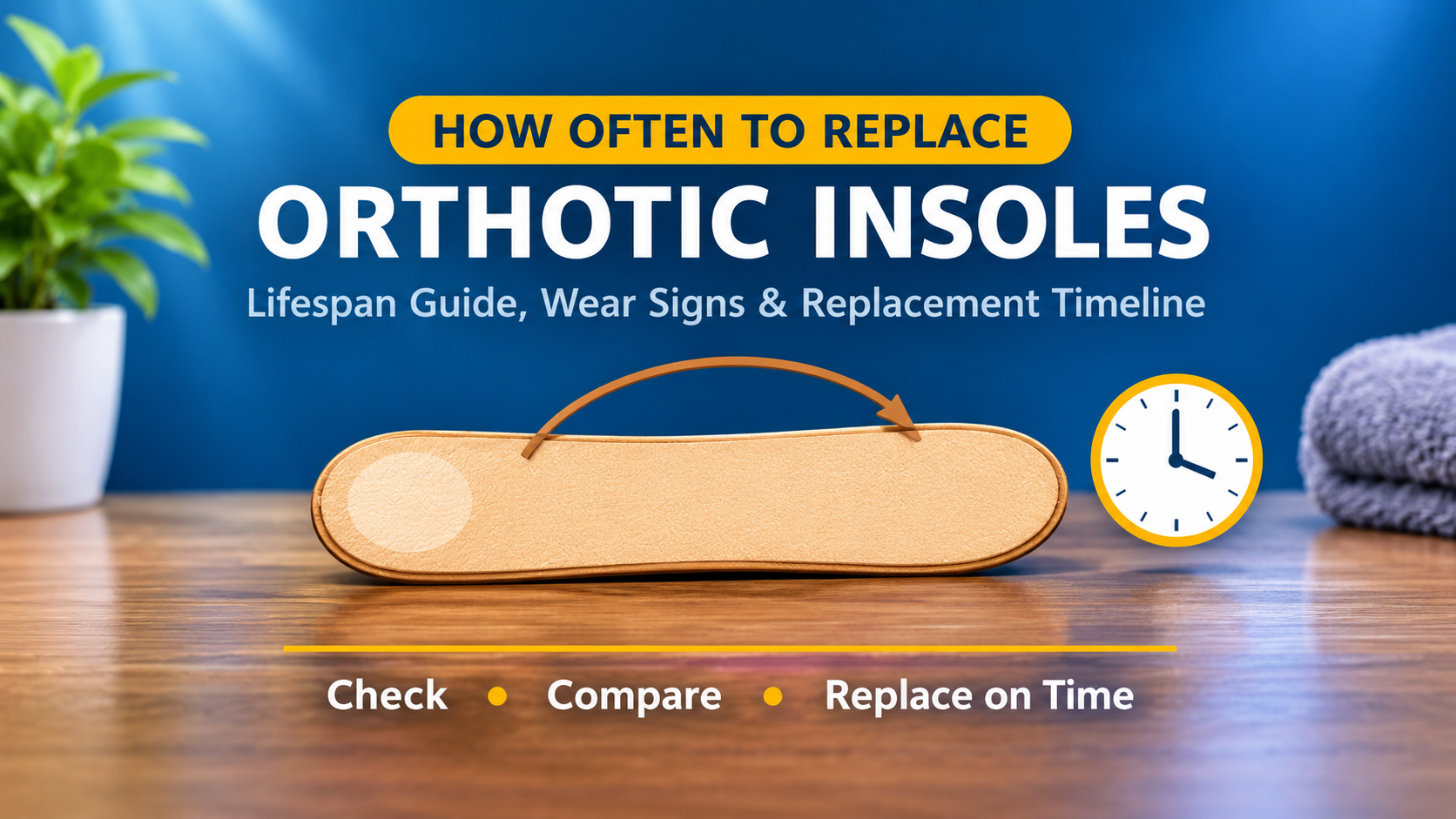

How Often to Replace Orthotic Insoles: A Complete Guide
Orthotic insoles help support your arches, align your feet, and reduce pain in the heels, knees, hips, and lower back. But like any piece of equipment that takes your body weight thousands of times a day, they do not last forever. Wearing orthotics long past their useful life can leave you with the same pain they were meant to fix.
So how often should orthotic insoles be replaced? The answer depends on the type of orthotic, how active you are, and how you care for them. This guide gives you realistic timelines, clear warning signs, and practical tips to get the most out of every pair.
Table of Contents
- The Short Answer
- Typical Lifespan by Orthotic Type
- Factors That Affect Lifespan
- 7 Signs It Is Time to Replace
- How to Check Your Orthotics at Home
- Replacement Timeline for Different Users
- Do You Replace the Whole Orthotic or Just the Cover?
- How to Make Orthotics Last Longer
- Risks of Wearing Worn-Out Orthotics
- Choosing a Replacement
- Frequently Asked Questions
- Final Thoughts
The Short Answer
As a general guide, over-the-counter orthotic insoles are usually replaced every 6 to 12 months, while custom orthotics made by a podiatrist or foot specialist often last 1 to 5 years depending on materials and use. Children’s orthotics are replaced more often because their feet grow quickly.
These are estimates, not rules. Heavy daily use, high-impact activity, and body weight can shorten the lifespan, while good care and lighter use can extend it. Your own signs of wear and how your feet feel matter more than any calendar date.
Typical Lifespan by Orthotic Type

Over-the-Counter Foam or Gel Insoles
These soft cushioning insoles compress quickly. With daily wear, most people replace them every 6 to 12 months, sooner for heavy use such as standing all day or running.
Over-the-Counter Arch Support Insoles
Firmer arch-support insoles typically last somewhat longer, often 9 to 18 months, because they use more structured materials.
Custom Soft or Semi-Rigid Orthotics
Made for your feet, these use a blend of cushioning and support. Many last about 1 to 3 years, though the top cover may wear out sooner.
Custom Rigid Orthotics
Rigid orthotics with a hard shell are the most durable and often last 2 to 5 years or longer. The top layers may still need refreshing along the way.
Children’s Orthotics
Kids outgrow orthotics quickly. Plan to review them every 6 to 12 months, or sooner if your child has a growth spurt or complains of discomfort.
Sports and Running Orthotics
For runners, wear is often measured in distance rather than time. Many runners replace insoles after several hundred miles of use. Your specialist can suggest a schedule based on your training.
Factors That Affect Lifespan

Activity Level
Running, jumping sports, and jobs that keep you on your feet all day wear orthotics out faster than light daily walking.
Body Weight
The more load the insole carries, the faster materials compress and lose shape.
Materials
Soft foam and gel flatten faster. Firmer plastics, carbon fiber, and dense composites hold their shape longer.
Shoe Quality and Fit
Orthotics work best in shoes with good support and the right size. Worn-out shoes can speed up orthotic wear and reduce effectiveness.
Moisture and Heat
Sweat, damp shoes, and heat can break down adhesives and top covers. Letting shoes dry between wears makes a real difference.
How Often You Wear Them
Orthotics worn all day, every day, wear out sooner than those worn only for sports or certain shoes.
Care and Cleaning Habits
Harsh cleaners, machine washing, and drying with heat can damage materials. Gentle care extends life.
7 Signs It Is Time to Replace

1. Visible Wear or Cracks
Look for thin patches, splits, flattened areas, or cracks in the shell or cushioning.
2. Lost Arch Support
If the arch feels lower, softer, or less supportive than when new, the structure is breaking down.
3. Returning Foot Pain
Heel pain, arch pain, shin pain, or knee discomfort that had improved but is coming back is a common sign the orthotics are no longer doing their job.
4. Uneven Wear Pattern
If one side of the insole or shoe is wearing faster than the other, support may be off or the insole may have shifted shape.
5. Persistent Odor
Odor that stays after cleaning suggests bacteria deep in the material, which is difficult to remove.
6. Peeling or Worn Top Cover
A worn top fabric can cause friction and blisters. Sometimes only the cover needs replacing, but check with your provider.
7. Changes in Your Feet or Shoes
Weight change, an injury, pregnancy, or new shoe types can alter how orthotics fit and work. Your prescription may need updating.
How to Check Your Orthotics at Home
- Compare to a new pair. If you have a spare or a new insole, compare the thickness and arch height.
- Press the arch. Press with your thumb. A new arch pushes back firmly. A worn one collapses easily.
- Look at the bottom and edges. Check for cracks, thin spots, or separating layers.
- Set them on a flat surface. They should rest evenly. Rocking or warping signals deformation.
- Notice how your feet feel. Increased tiredness or pain by the end of the day is a strong clue.
Replacement Timeline for Different Users

- Monthly: Quick visual check for cracks, wear, and odor.
- Every 3 months: Test the arch and cushion by pressing and comparing how they feel.
- Every 6 months: If you are very active or on your feet all day, consider a professional review.
- Yearly: See a specialist to check the fit and condition of custom orthotics.
Do You Replace the Whole Orthotic or Just the Cover?
With custom orthotics, the shell often outlasts the top cover. Many providers can replace the top cover or refurbish the orthotic, which costs less than a full new pair. If the shell is cracked, the arch has collapsed, or your feet have changed, a full replacement or new prescription is the better choice. Ask your provider whether your pair can be refurbished.
How to Make Orthotics Last Longer

- Air them out daily. Remove them after wearing so they and your shoes can dry.
- Rotate shoes. Give shoes at least a day to dry between wears.
- Clean gently. Use a damp cloth and mild soap. Avoid soaking, machine washing, and strong chemicals.
- Avoid heat. Do not leave orthotics on heaters, in hot cars, or in direct sun, and do not use a dryer.
- Use proper shoes. Choose shoes with firm heel counters and enough depth for the orthotic.
- Do not fold or force them in. Trim only as instructed by your provider.
- Do not stack insoles. Remove the shoe’s factory insole if recommended.
- Get regular check-ups. Your specialist can spot wear and fit changes early.
Risks of Wearing Worn-Out Orthotics
Worn-out orthotics can do more than lose comfort. They may lead to:
- Return of heel, arch, or ankle pain
- Knee, hip, or lower back discomfort from poor alignment
- Uneven walking patterns
- Blisters or irritation from worn covers
- Foot fatigue by the end of the day
If you experience ongoing pain, speak with a podiatrist or healthcare professional rather than relying on estimates alone.
Choosing a Replacement
- Follow your provider’s advice if you have a prescription or medical condition.
- Pick the right type for your needs: cushioning, arch support, heel support, or sports use.
- Check the fit in your shoes and make sure the insole lies flat.
- Look for quality materials that resist compression and wick moisture.
- Allow a break-in period. Wear new orthotics for a few hours at a time at first, then build up.
- Consider a second pair. Having two pairs to alternate can extend the life of both.
Frequently Asked Questions
How often should custom orthotics be replaced?
Often every 1 to 5 years depending on materials, use, and changes to your feet. Top covers may need replacing sooner.
How often should store-bought orthotic insoles be replaced?
Most are replaced every 6 to 12 months with regular use. Heavy use may call for more frequent replacement.
Can I wear my orthotics every day?
Yes, if they are comfortable and recommended for your needs. Daily wear speeds up wear, so check them regularly.
Do orthotics lose support over time?
Yes. Materials compress and the arch can flatten, which reduces support even if the insole still looks fine.
Should I replace orthotics when I buy new shoes?
Not necessarily, but check the fit. Orthotics should match the shoe type, and some pairs only fit certain shoes.
Can I repair my orthotics?
Some can be refurbished or have the top cover replaced by a specialist. Do not try to repair a cracked shell yourself.
How do I know if my child needs new orthotics?
Review them every 6 to 12 months, or sooner if your child complains of pain, outgrows their shoes, or the orthotics look worn.
Is it bad to keep using old orthotics?
Worn orthotics may no longer give proper support and can allow foot pain to return. Replace them when you notice signs of wear or discomfort.
Final Thoughts
There is no single date that fits everyone, but a good rule is to replace over-the-counter orthotic insoles every 6 to 12 months and review custom orthotics every year or two. Pay attention to wear, arch support, odor, and especially how your feet feel. Good care, rotating shoes, and regular check-ups help you get the most from every pair. When pain returns or support fades, it is time to replace them, and a foot specialist can help you choose the right option.
This article is for general information only and is not medical advice. If you have foot pain or a medical condition, consult a podiatrist or healthcare professional.