

Caught in the rain, dropped them in a puddle, washed them and they are still dripping, or just worked up a serious sweat? Wet orthotic insoles happen to everyone. What matters is what you do next. Dry them the wrong way and you can warp the arch support, melt the glue between layers or leave moisture trapped inside that turns into odor and mold. Dry them the right way and they will be ready to support your feet again with no loss of shape or comfort.
This guide shows you exactly how to dry wet orthotic insoles safely, how long it takes, which shortcuts to avoid, and how to tell when they are truly dry and ready to wear.
Quick Answer
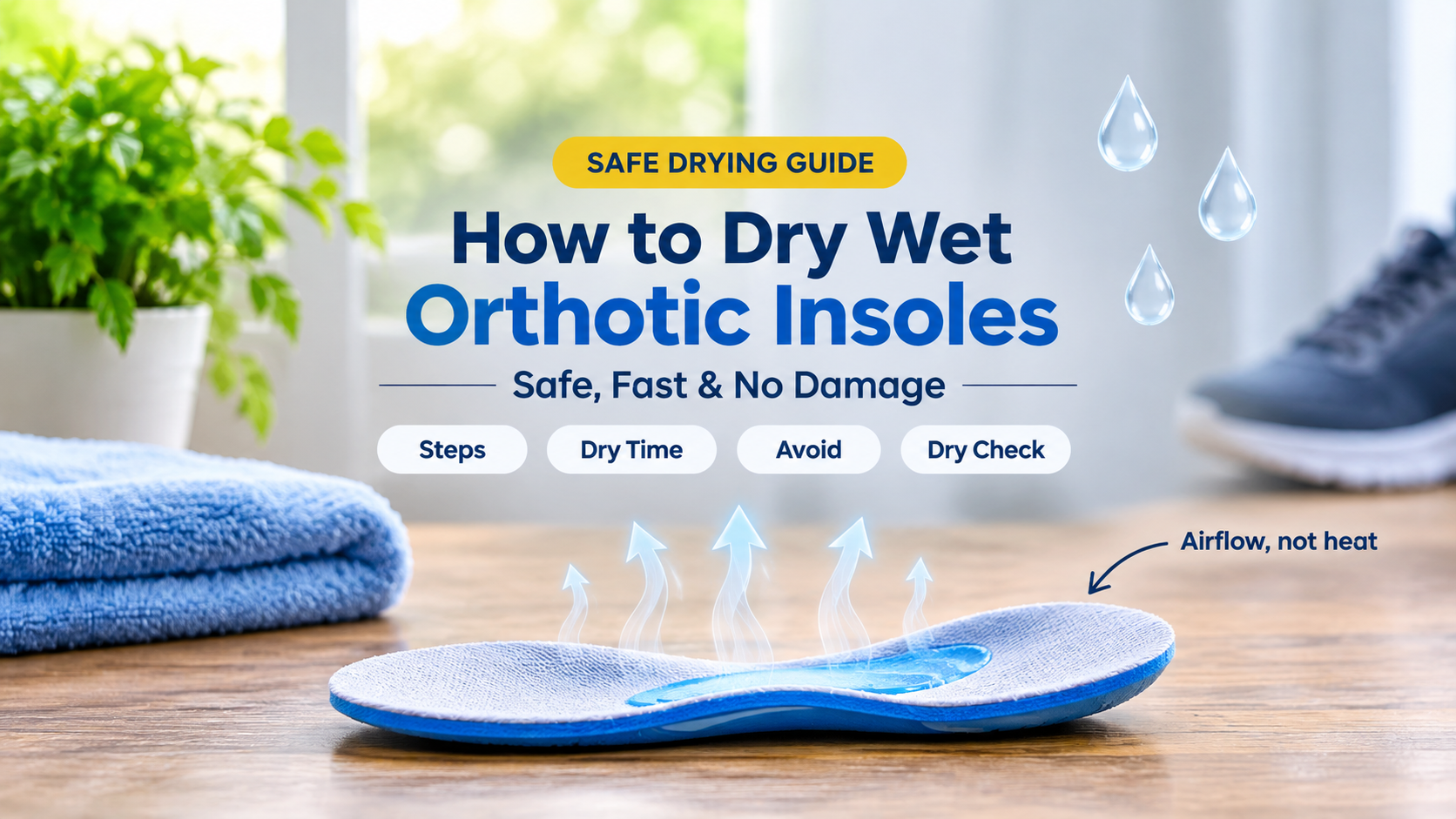
To dry wet orthotic insoles, take them out of your shoes, press out excess water gently, blot both sides with a dry towel, then lay them flat in a well-ventilated room at normal temperature. A fan placed a short distance away speeds things up. Most insoles need 12 to 48 hours. Never use a tumble dryer, radiator, hot hair dryer, oven, microwave or direct sun, because heat can warp the shape and weaken the glue.
Why Proper Drying Matters
It is tempting to slip damp insoles back into your shoes and hope for the best, but drying properly protects both your orthotics and your feet.
- Preserves the shape and support: orthotics are designed with specific contours. Heat or forced drying can distort them and reduce how well they support your arches.
- Protects the adhesive: many insoles have several layers held together with glue. Heat and long soaking can make layers separate.
- Prevents odor and mold: trapped moisture lets bacteria and mold grow. In warm, damp conditions this can start within a day or two.
- Protects your skin: wearing damp insoles keeps your feet wet, which raises the chance of blisters, irritation and fungal problems such as athlete’s foot.
- Saves money: orthotics can be expensive. Drying them correctly helps them last longer.
Check Your Insole Type First
Different materials respond differently to moisture, so identify what you have before you start.
- Foam and EVA insoles: absorb water and can take a while to dry, but handle air drying well. They can compress or warp with heat.
- Memory foam and thick cushioned insoles: hold the most water and take the longest to dry completely.
- Gel insoles: repel water better and dry faster, but heat can distort the gel.
- Hard-shell orthotics (plastic or carbon fiber): the shell itself dries quickly, but the fabric cover and glue underneath can stay damp longer. Some plastics can deform with heat, so keep them away from warm surfaces.
- Leather, cork or suede tops: can stiffen, shrink or crack if dried too fast or with heat. Slow air drying is best.
- Custom prescription orthotics: always check the care instructions from your clinician or the lab that made them.
How to Dry Wet Orthotic Insoles: Step by Step

Step 1: Take Them Out Right Away
The longer wet insoles sit inside shoes, the more time moisture and bacteria have to settle in. Pull the insoles out of your shoes as soon as you can. If the insoles are glued in, dry the whole shoe in the steps below, using airflow inside the shoe.
Step 2: Shake Off and Press Out Excess Water
Give them a gentle shake to get rid of drips. Then press the insole gently between your palms or against a towel on a flat surface to push out water. Do not wring, twist or fold them, since that can crack the shell, crease the foam or break the layers apart.
Step 3: Blot With a Dry Towel
Lay the insole between two dry towels and press down firmly with your hands, or stand on it for a few seconds. Swap the damp towel for a fresh one if it gets soaked. Repeat until the towel no longer picks up much water. This single step can cut drying time significantly.
Step 4: Lay Them Flat in an Airy Spot
Place the insoles on a dry towel or a drying rack in a room with good ventilation and normal temperature. Position them with the arch side facing up so air can reach the inner surface. Placing them on a mesh or rack lets air circulate underneath too. If possible, lift the heel end slightly so moisture can drain away.
Step 5: Add Gentle Airflow
Aim a fan at the insoles from a short distance. Moving air carries moisture away and is one of the safest ways to speed up drying. Flip the insoles every few hours so both sides dry evenly. A dehumidifier in the room helps in humid weather.
Step 6: Check They Are Completely Dry
Do not rush this step. Insoles can feel dry on the surface while the inside remains damp. Use the checklist later in this article before wearing them again.
Faster (But Still Safe) Ways to Speed Up Drying
If you need insoles ready sooner, these methods help without risking damage:
- Towel press, repeated: use several dry towels in turn. This removes far more water than air drying alone.
- Fan and open window: constant moving air is the most effective safe booster. Keep the fan a short distance away.
- Dehumidifier or air conditioning: lowers moisture in the room and helps insoles dry faster, especially in humid climates.
- Moisture-absorbing packs: placing insoles near silica gel or other desiccant packs in an enclosed container can help draw out moisture. Do not let them touch the packs directly if the packs are not designed for that.
- Dry paper towels or plain absorbent cloth: pressing these against the insole soaks up moisture. Avoid newspaper, because ink can transfer onto the insole and your socks.
- Cool-setting hair dryer used briefly: if you must, use only the cool setting, hold it well away and keep it moving. Skip this for hard-shell, leather and custom orthotics.
- Unheated or low-heat shoe dryers: designed for footwear, these circulate air gently. Check that the product is safe for insoles and orthotics.
What Not to Do: Avoid Heat
When insoles are wet and you need them quickly, heat feels like the obvious answer. It is also the fastest way to ruin them.

Why Heat Damages Orthotics
Foam, gel, plastic and adhesive all react to heat. Foam can compress and shrink, gel can warp, plastics can bend out of their precise shape, and glue can soften and let layers peel apart. The damage often is not visible right away, but you will notice it as reduced support or discomfort later. A slightly longer, gentler dry always beats a fast one that ruins the shape.
Be Careful With Rice, Sand and Other Folk Tricks
Advice about stuffing shoes with rice or using other pantry items shows up often. The results are inconsistent and dust or residue can end up on your insoles. Proper airflow and absorbent towels work better and are far safer.
How Long Do Wet Insoles Take to Dry?
Drying time depends on the material, how wet they got, and the temperature and humidity of your room.

Treat these figures as rough estimates. Humid weather, poor ventilation, very thick foam, or insoles that were fully soaked all increase the time. If the insoles are not dry after two days, keep the airflow going and check for odor or discoloration, which can mean moisture is trapped inside.
How to Tell If Your Insoles Are Completely Dry
Surface dryness can be misleading. Run through this checklist before wearing them:

Another easy test: press a dry paper towel against the insole for a few seconds. If it picks up any moisture, the insole is still damp inside.
Drying Insoles After Different Situations
After Rain or Walking Through Puddles
Remove the insoles and the shoes from your bag or doorway immediately. Dry the shoes as well. Loosen the laces, open the tongue wide, and stand them upright in an airy spot. Dry the insoles separately using the steps above. Putting damp insoles back into damp shoes keeps both wet.
After Washing Your Insoles
If you have just cleaned them, avoid soaking. Blot dry with a towel, then lay flat at room temperature for about 24 hours. Cleaning is best done with a damp cloth and mild soap, rather than submerging them, so there is less water to dry out.
After Heavy Sweat
Take the insoles out after every workout. Wipe them with a dry cloth and let them air out overnight. If you exercise daily, a second pair to rotate means each pair has time to dry fully.
After They Were Fully Submerged
Press out as much water as you can with towels, then dry for longer than usual. Check carefully for layers lifting, swelling or odor. If the shell or glue looks changed, ask the maker or your clinician whether they are still safe to use.
Wet Insoles in Hot, Humid Climates
Humidity slows drying a lot. Use a fan, a dehumidifier or an air-conditioned room, and give insoles extra time. Avoid storing damp insoles in closed bags or lockers.
What If Your Insoles Still Smell or Look Moldy?
If you notice a musty smell, dark spots or fuzzy patches, moisture stayed in the insoles too long. Light odor can often be handled by cleaning gently with mild soap and water, drying thoroughly again and sprinkling baking soda over completely dry insoles overnight, then brushing it off. Visible mold, a smell that keeps returning, or foam that has gone soft is a sign to replace them rather than keep wearing them, especially if you have sensitive skin or foot conditions.
Signs Your Insoles Were Damaged by Moisture or Heat
- Edges curling, peeling or separating
- Foam that stays compressed or feels thinner than before
- Arch support that feels flatter or less firm
- Cracks in the shell or cover
- A shape that no longer matches the contour of your foot
- New pain or discomfort when wearing them
If you notice any of these in custom orthotics, contact your clinician. Many can be repaired, re-covered or remade.
How to Prevent Insoles From Getting Soaked
- Remove insoles after use: let both the shoe and insole air out every day.
- Keep a spare pair: rotating two pairs of insoles gives each time to dry completely.
- Use waterproof or water-resistant shoes on rainy days.
- Wear moisture-wicking socks: they move sweat away from the insole.
- Store shoes in a dry, ventilated place, not in a closed bag or damp cupboard.
- Carry a small towel or spare socks when you know you will be exposed to water.
Handy Products for Drying Insoles
You can dry insoles with a towel and a fan, but these items can make the job faster and safer.
- Absorbent microfiber towels: pull water out of foam quickly with a firm press.
- Small fan and mesh drying rack: keep air moving around both sides of the insole.
- Gentle shoe dryers (unheated or low-heat): dry the shoes overnight without harsh heat.
- Silica gel or moisture-absorbing packs: help keep shoes and storage areas dry.
- A spare pair of insoles: rotate pairs so you never have to wear damp ones.
- Moisture-wicking socks: keep sweat from soaking into the insole in the first place.
Common Mistakes to Avoid
- Using heat to rush drying: the number one cause of warped insoles.
- Wringing or folding them: breaks layers and can crack shells.
- Putting them back damp: invites odor, mold and skin problems.
- Leaving them inside wet shoes: moisture stays trapped on both sides.
- Drying them in a closed space: without airflow, moisture just lingers.
- Judging by the surface: thick foam may feel dry outside while the core is still wet.
- Ignoring care instructions: some materials need special handling.
Frequently Asked Questions
How long does it take for wet insoles to dry?
Typically 12 to 24 hours for thin foam, gel and hard-shell types, and 24 to 48 hours for thick foam or leather and cork tops, in a room with good airflow. Humid conditions and heavy soaking add time.
Can I put orthotic insoles in the dryer?
No. Tumbling and heat can bend the arch support, shrink foam and melt adhesive. Always air dry at room temperature.
Can I use a hair dryer on wet insoles?
Only on the cool setting, for short bursts, held well away from the insole, and not on hard-shell, leather or custom orthotics. A fan and towels are safer.
Can I dry insoles in the sun?
It is better not to. Direct sun and hot cars can dry them unevenly, fade covers and make materials brittle. A shaded, breezy spot is safer.
Is it okay to wear slightly damp insoles?
It is best to avoid it. Damp insoles keep your feet wet, which increases the chance of blisters, odor and fungal problems. A spare pair helps if you need to get going quickly.
Does stuffing shoes with newspaper help?
Crumpled paper can absorb moisture from shoes, but ink can transfer to insoles and socks. Plain absorbent paper towels or a cloth are a better choice, and they should be changed when damp.
Can wet insoles grow mold?
Yes. If they stay damp for a long time, especially in warm, enclosed places, mold and mildew can grow. Dry them promptly and fully, and replace them if mold appears.
How can I dry insoles overnight?
Press out water with towels, lay the insoles flat in a ventilated room with a fan blowing nearby, and flip them once or twice. Thin insoles often dry overnight this way, while thicker ones may need longer.
Final Thoughts
Knowing how to dry wet orthotic insoles is simple: remove them, press and blot out the water, lay them flat in a ventilated space and add gentle airflow. Skip the heat, be patient, and always make sure they are dry all the way through before wearing them again. With a spare pair and a few good habits, wet insoles will never leave you stuck, and your orthotics will keep giving you the support they were made to provide.
Disclaimer: This article is for general information only. Always follow the care instructions from the manufacturer of your insoles or from your healthcare provider, especially for custom prescription orthotics. If you have persistent foot pain, skin problems or signs of infection, consult a qualified healthcare professional.