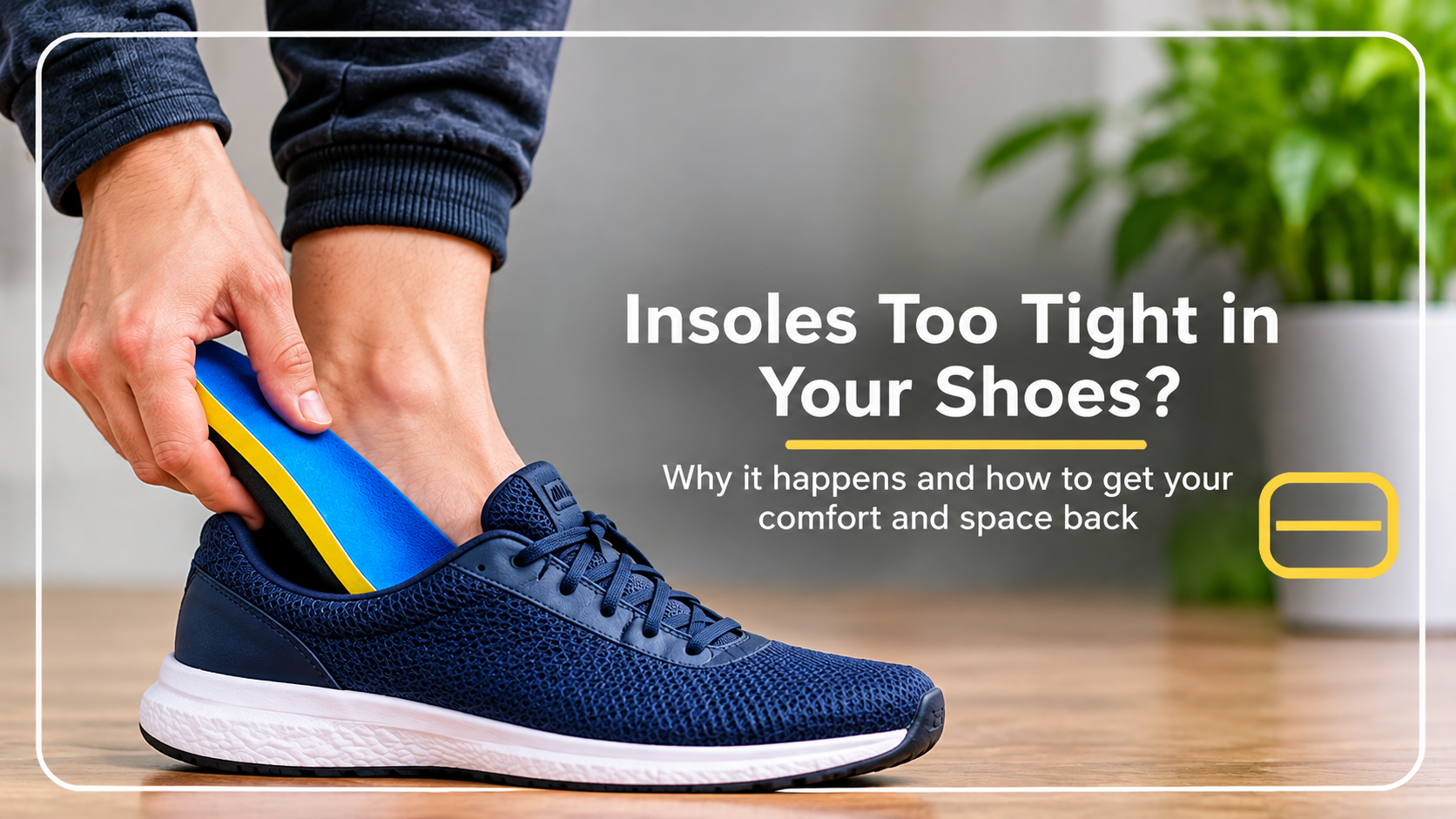
You bought new insoles to feel better, but now your shoes feel cramped, your toes are pressed together, and your foot seems to be pushed up against the top of the shoe. If your insoles feel too tight in your shoes, you are dealing with a very common fit problem, and it is usually easy to solve.
This guide explains why insoles make shoes feel tight, how to recognize a poor fit, and the best ways to restore comfort without giving up the support you want.
Why Do Insoles Make Shoes Feel Tight?
Every shoe has a limited internal volume. When you add an insole, you take up some of that space, usually from the height of the shoe. Your foot sits higher, so there is less room between the top of your foot and the upper part of the shoe. In a shoe that was already snug, even a small increase in thickness can feel like a big change.

Main Causes of Tight-Feeling Insoles
1. The Insole Is Too Thick for the Shoe
Thick cushioned or high-arch insoles take up a lot of volume. Dress shoes, flats, and slim sneakers have little extra space, so they feel tight quickly.
2. You Left the Original Insole In
Stacking a new insole over the factory insole nearly doubles the added height. Whenever the original insole is removable, take it out first.
3. The Shoe Has a Narrow or Low Toe Box
Shoes with tapered or shallow toe areas do not leave room for toes to spread. A thicker insole makes this worse by pushing toes toward the roof of the shoe.
4. The Insole Is Wider Than the Shoe
If the edges of the insole climb up the sides of the shoe or fold, they create pressure along the sides of the foot. The shape should match the shoe footbed closely.
5. Your Feet Swell During the Day
Feet naturally expand as the day goes on, especially after standing or walking. A shoe that feels fine in the morning may feel tight with insoles by afternoon.
6. Wrong Shoe Size or Shoe Style
Some shoes were never designed to hold insoles. Sandals, low-cut flats, and narrow fashion shoes often lack depth and cannot accommodate extra support.
7. Thick Socks
The combination of a bulky sock and a new insole can quickly use up all the extra room in the shoe.
Signs Your Insoles Are Making Shoes Too Tight

Mild awareness of a new insole is normal at first, but persistent tightness, numbness, or pain is not. If you notice any of the signs above, it is a signal to adjust the fit instead of pushing through the discomfort.
How to Fix Insoles That Feel Too Tight
1. Remove the Factory Insole
This single step often provides the extra room you need. Use the original insole as a size guide and replace it with your new one.
2. Choose a Lower-Profile Insole
Slim, flexible insoles add support with minimal height. They are the best choice for dress shoes, flats, and snug sneakers.

3. Try a Three-Quarter Length Insole
These stop behind the toes, so your toes keep all of their room. They are useful when forefoot space is limited.
4. Use the Thumb-Width Test
With the insole installed, stand up and press down on the toe area of the shoe. You should have about a thumb’s width of space between your longest toe and the front of the shoe, and your toes should be able to wiggle freely.
5. Loosen or Adjust Your Lacing
Leave the lower laces a little looser, or skip an eyelet over the area where you feel pressure. This can relieve tightness across the top of the foot without losing heel stability.
6. Wear Thinner Socks
Switch to thin, moisture-wicking socks to free up space. Avoid thick cotton or padded socks when testing a new insole.
7. Go Up Half a Size or Choose a Wider Fit
If you wear insoles every day, buying shoes with a bit more room is often the best long-term fix. Try shoes in the afternoon, when feet are at their largest, and always test with your insole inside.
8. Pick Shoes With Removable Insoles and Extra Depth
Running shoes, walking shoes, work boots, and orthopedic-style shoes generally have a deeper interior and a roomy toe box, which makes them more insole-friendly.
9. Have the Shoes Professionally Stretched
For leather shoes that are tight in specific areas, a shoe repair shop can stretch the material. This should be done carefully and is not suitable for every shoe type.
10. Break In Gradually
Wear your shoes and insoles for short periods first. Inserts compress slightly and shoes soften with use, which can improve the fit within a week or two.
What to Avoid
- Do not force your foot into a tight shoe. This can cause blisters, nerve irritation, and toe pain.
- Do not trim insoles randomly. Cut only along manufacturer guides, because poor trimming can change the support.
- Do not ignore numbness or tingling. These signs mean pressure is too high.
- Do not stack several insoles. This almost always creates a tight fit.
When to See a Podiatrist
If your feet remain uncomfortable even after changing insole thickness and shoes, or if you have swelling, persistent numbness, circulation problems, or diabetes, consult a foot specialist. A professional can recommend slim custom orthotics or footwear designed for your foot shape.
Frequently Asked Questions
Why do my shoes feel tighter with insoles?
The insole adds height and takes up volume, leaving less space for your foot, especially in shoes with a low or narrow toe box.
Should I buy shoes a size bigger for insoles?
Not always. Often a half size larger or a shoe with a deeper toe box is enough. Try shoes on with your insoles and check the toe space.
Is it okay to wear insoles in dress shoes?
Yes, if you choose thin or three-quarter length insoles made for dress shoes and the shoes still feel comfortable.
Can insoles stretch out and feel less tight over time?
Soft foam insoles can compress slightly with wear, but a very tight fit usually will not disappear without changes to thickness or shoe size.
How much room should I have at the front of the shoe?
About a thumb’s width between your longest toe and the end of the shoe, with the ability to wiggle your toes comfortably.
Final Thoughts
Insoles that feel too tight in your shoes are almost always a volume problem, not a sign that insoles are wrong for you. Remove the factory insole, choose a lower-profile style, use appropriate socks, and pick shoes with enough depth and width. When your insole, socks, and shoes work together, you get the support you want along with the room your feet need.
Disclaimer: This article is for general information only and is not a substitute for professional medical advice. If you have persistent foot pain, numbness, or a medical foot condition, consult a qualified healthcare provider.