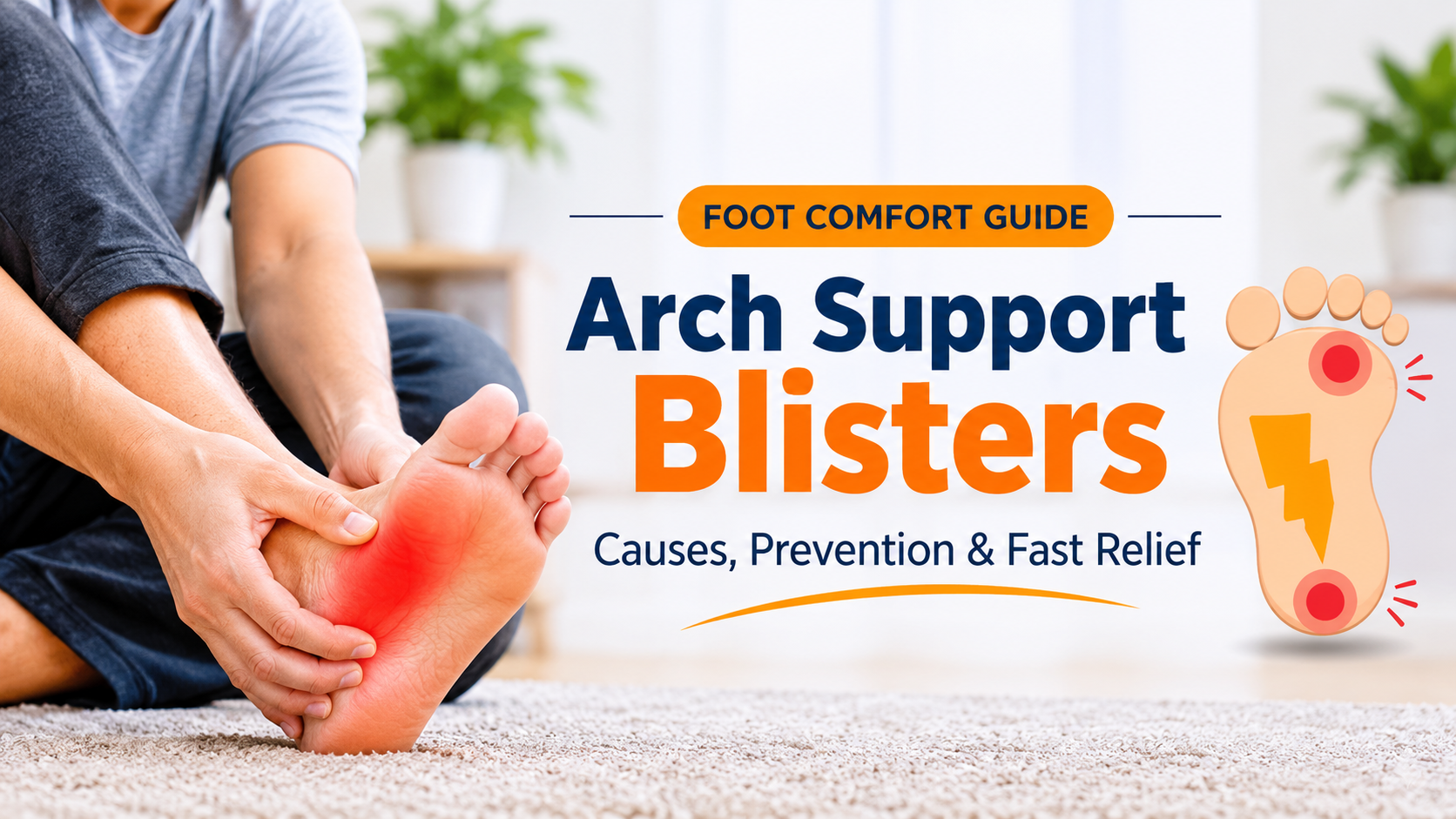
You finally bought arch supports to ease foot pain, and instead of comfort you got a painful blister. It is frustrating, and it is more common than most people realize. The good news is that arch support blisters are almost always preventable once you understand what causes them. In this guide you will learn why arch supports can cause blisters, where they usually appear, how to break in new insoles the right way, how to treat a blister safely, and how to choose insoles that fit your feet and shoes.
What Are Arch Support Blisters?
A blister is a small pocket of fluid that forms between the layers of your skin when it is damaged by repeated rubbing, pressure, or heat. Arch support blisters are simply blisters that develop because of an insole, orthotic, or built-in arch support in your shoe. The insole may be rubbing directly against your skin or sock, or it may change how your foot sits in the shoe so that other areas rub instead.
Blisters from arch supports are not a sign that you should give up on them. They are usually a sign of one of three things: the insole is new and your foot has not adapted yet, the fit is wrong, or something else in your shoe-and-sock setup needs adjusting.

Why Do Arch Supports Cause Blisters?
Blisters form when friction, pressure, and moisture combine. Arch supports can add to all three. Here are the most common reasons.
1. Breaking Them In Too Quickly
This is the number one cause. Your foot is used to a certain shape. A new arch support changes how your weight is distributed, and your skin and soft tissue need time to adjust. Wearing new insoles for a full day right away is a common way to get blisters.
2. The Wrong Arch Height or Too Rigid a Design
An arch support that is too high or too firm for your foot presses hard into the arch and shifts your foot position. This increases pressure at the edge of the arch and can make your heel or forefoot slide and rub. Not every foot needs a high, rigid support, and flat feet, neutral arches, and high arches each respond differently.
3. Insoles That Do Not Fit the Shoe
If the insole is too long, too wide, or the wrong shape, its edges can curl, bunch up, or press into your foot. An insole that is too short can leave part of your foot unsupported while the edge rubs against your arch.
4. Less Room Inside the Shoe
Insoles take up space. When you add a thick arch support on top of a factory insole, your foot sits higher and the shoe feels tighter. That extra tightness is a classic cause of heel rub, toe rub, and blisters on top of the toes.
5. Moisture and Heat
Sweaty feet are more prone to blisters because wet skin becomes softer and rubs more easily. Some insole materials trap heat and moisture, especially in non-breathable shoes.
6. Slipping and Shifting
If the insole slides forward or sideways while you walk, it creates constant friction. Loose insoles in shoes that are slightly too large are a frequent culprit.
7. The Wrong Socks
Thick cotton socks hold sweat and wrinkle easily. Socks that bunch up under the arch can create pressure points that turn into blisters quickly.
8. Worn-Out or Damaged Insoles
Old insoles can develop cracks, rough spots, or uneven wear. Their support is also less reliable, so your foot may move more than it should.

Where Arch Support Blisters Usually Appear
Blisters do not always form directly on the arch. In fact, many show up in other places because the insole changes how your foot moves. Use this table as a quick guide.
| Blister Location | Likely Cause |
|---|---|
| Edge of the arch | Arch support too high, too firm, or an edge that digs in |
| Back of the heel | Foot sits higher in the shoe, or the heel slips up and down |
| Ball of the foot | Insole shifted forward, bunched socks, or shifted pressure |
| Toes and toe tips | Shoe now feels too tight or the foot slides forward |
| Inner side of the big toe | Narrow toe box combined with extra insole thickness |
How to Break In Arch Supports the Right Way
A slow, steady break-in is the single best way to avoid blisters. Your foot muscles, ligaments, and skin all need time to adapt. A simple schedule works well for most people.

- Start with short sessions. Wear the insoles for about one hour on the first days, ideally while doing light activity.
- Increase gradually. Add one to two hours every couple of days if your feet feel fine.
- Check your feet. After each session, look for red spots. Redness that does not fade within a short time is an early warning sign.
- Do not start with long walks, workouts, or travel days. Save those for after the break-in period.
- Slow down if you feel soreness. Mild muscle tiredness in the arch can be normal. Sharp, burning, or rubbing pain is not.
Some firmer or custom orthotics may need a longer adjustment period. If you were given orthotics by a podiatrist or physical therapist, follow their break-in instructions first.
How to Prevent Blisters from Arch Supports
Choose the Correct Size and Trim If Needed
Take out the shoe’s original insole and use it as a template. Lay it on top of the new arch support and trim the new one to match if it is too long. Trim a little at a time, because you cannot add material back. Make sure the insole sits flat with no curling or bunching.
Replace the Factory Insole When Appropriate
Stacking a thick arch support on top of a removable factory insole can leave your foot cramped. In most cases it works better to remove the original insole and replace it with the new one, which gives your foot the same amount of room it had before.
Wear Moisture-Wicking Socks
Choose socks made from synthetic blends or merino wool that move sweat away from the skin. Avoid thick cotton socks for long days of walking. Make sure your socks fit snugly without wrinkles, especially under the arch and across the heel.
Use Anti-Friction Products
Anti-chafe balm or stick applied to hot spots can reduce rubbing. Soft blister-prevention patches or moleskin can protect the heel, toes, or arch edge. Apply them before you feel pain, since prevention works much better than treatment.
Keep Your Feet Dry
If your feet sweat heavily, carry a spare pair of socks and change them midday. Foot powder can also help, and letting your shoes and insoles air out fully between wears prevents moisture build-up.
Use a Better Lacing Method
If your heel slips, a heel-lock lacing technique can hold your foot in place and reduce friction. Lacing too tightly across the top of the foot can also create pressure, so aim for a snug but comfortable hold.
Rotate Your Shoes
Alternating between two pairs of shoes gives each pair time to dry out. It also changes pressure points slightly from day to day, which helps your skin recover.
How to Choose the Right Arch Support
The best arch support is the one that matches your foot type, your activity, and your shoes. Keep these points in mind when you shop.
- Match your arch type. Low arches and flat feet usually need firm, stable support. High arches often do better with cushioned, contoured support. Neutral arches do well with moderate support.
- Look for the right thickness. Thin, low-profile insoles suit dress shoes and tight sneakers. Thicker insoles suit roomy work boots and running shoes with removable liners.
- Consider materials. Foam gives cushioning, firmer plastic or composite shells give structure, and a smooth, breathable top cover reduces friction and moisture.
- Check the shape. Full-length insoles replace the footbed, while three-quarter-length ones sit under the heel and arch and leave more room at the toes. Choose the style that fits your shoe.
- Pick a design for the activity. Running, hiking, standing at work, and everyday walking all place different demands on your feet.
- Try before committing when possible. Test insoles inside the shoes you will actually wear them in, with the socks you normally use.
| Arch Support Type | Best For | Blister Risk Tip |
|---|---|---|
| Soft foam | Light cushioning, everyday wear | Can compress and shift, so check for slipping |
| Semi-rigid | Walking, standing, general support | Needs a gradual break-in |
| Rigid or custom orthotic | Specific foot conditions, with professional guidance | Longest break-in, so follow professional advice |
| Three-quarter length | Tight shoes and dress shoes | Leaves toe room, which lowers toe rub |
Make Sure Your Shoes Are Part of the Solution
Even the best arch support will cause problems in the wrong shoe. Shoes should have enough depth and width for your foot plus the insole. A good test is to put the insole in the shoe and stand up. You should still be able to wiggle your toes, and your heel should feel held without being squeezed. If your foot feels pushed up or crowded, try a lower-profile insole or a shoe with a deeper, roomier design.
Also remember that shoes wear out. A shoe with a collapsed heel counter or a worn-out midsole can undo the benefit of any insole and increase friction.
How to Treat a Blister Caused by Arch Supports
If a blister has already formed, stop wearing the insole and shoes that caused it until the area has healed or you have fixed the fit. Here is how to care for it safely.

If the Blister Is Small and Intact
- Leave it alone. The skin on top is a natural barrier against germs.
- Wash your hands and gently clean the area with mild soap and water.
- Cover it with a hydrocolloid blister bandage or a soft, non-stick dressing.
- Use a donut-shaped pad around it to take pressure off the area.
If the Blister Is Large, Painful, or Likely to Burst
Many people choose to leave even large blisters alone. If one is very painful or in a spot where it will certainly burst, you can drain it carefully:
- Wash your hands and clean the blister with antiseptic.
- Sterilize a needle with rubbing alcohol.
- Make a small puncture near the edge and gently press out the fluid.
- Leave the roof of the skin in place, apply antibiotic ointment, and cover with a clean bandage.
- Change the dressing daily and keep it clean and dry.
Never peel off the loose skin, since doing so exposes raw tissue and raises the risk of infection.
If the Blister Has Already Burst
Wash the area gently, apply antibiotic ointment, and cover it with a clean bandage. Keep the skin flap in place if it is still attached, and change the dressing daily.
When to See a Doctor
Most blisters heal on their own within a week or so, but get medical advice if you notice any of the following:
- Increasing redness, warmth, swelling, or pus
- Red streaks spreading from the blister
- Fever or feeling unwell
- Blisters that keep returning even after you fix the fit
- Blisters that are very large or extremely painful
Extra care is important if you have diabetes, poor circulation, or reduced feeling in your feet. In these cases, even a small blister should be checked early. If you have ongoing foot pain, a podiatrist or physical therapist can assess your foot type and recommend the right support.
Common Mistakes to Avoid
- Wearing new insoles all day from the very first day
- Stacking insoles on top of a factory insole in an already snug shoe
- Choosing an arch height by guesswork instead of foot type
- Ignoring early redness or hot spots
- Wearing thick cotton socks for long walks
- Continuing to wear worn-out or cracked insoles
- Popping blisters or peeling the skin off
Frequently Asked Questions
Why do my arch supports give me blisters on my heel?
Arch supports raise your foot slightly. If the shoe was already snug, your heel may sit higher and rub against the back of the shoe. A heel slipping up and down can also cause friction. Try a lower-profile insole, a heel-lock lacing method, and well-fitting socks.
How long does it take to break in arch supports?
Most people need about one to two weeks of gradual wear. Firmer or custom orthotics may take longer. Increase wear time slowly rather than rushing the process.
Is it normal for arch supports to hurt at first?
Mild awareness or tiredness in the arch can be normal while your foot adapts. Sharp pain, burning, or rubbing is not normal. If discomfort continues beyond the break-in period, the arch height or fit may be wrong for you.
Can the wrong arch support cause blisters on my toes?
Yes. If the insole makes the shoe tighter or lets your foot slide forward, your toes can rub against the front of the shoe, leading to blisters on or between the toes.
Should I wear socks with arch supports?
In most cases, yes. A moisture-wicking sock reduces friction and keeps your foot drier. Make sure the socks are smooth and not too thick for your shoes.
Can I keep wearing my arch supports with a blister?
It is best to rest the area and avoid the shoe or insole that caused the blister until it heals. If you must wear them, protect the blister with a hydrocolloid bandage and padding, and fix the underlying fit problem.
Do expensive arch supports prevent blisters?
Not necessarily. A good fit for your foot, your shoe, and your activity matters more than price. A well-fitted, affordable insole can work better than an expensive one that is the wrong shape or height.
Final Thoughts
Arch support blisters are frustrating, but they are rarely a sign that arch supports are wrong for you. In most cases, a slower break-in, a better fit, moisture control, and smart use of protective products solve the problem. Pay attention to early warning signs, treat blisters gently, and choose insoles that match your foot type and shoes. With a little patience, you can enjoy the support and comfort you were looking for, without the pain of blisters.
Disclaimer: This article is for general information only and is not a substitute for professional medical advice. If you have ongoing foot pain, diabetes, circulation problems, or signs of infection, please consult a qualified healthcare professional.