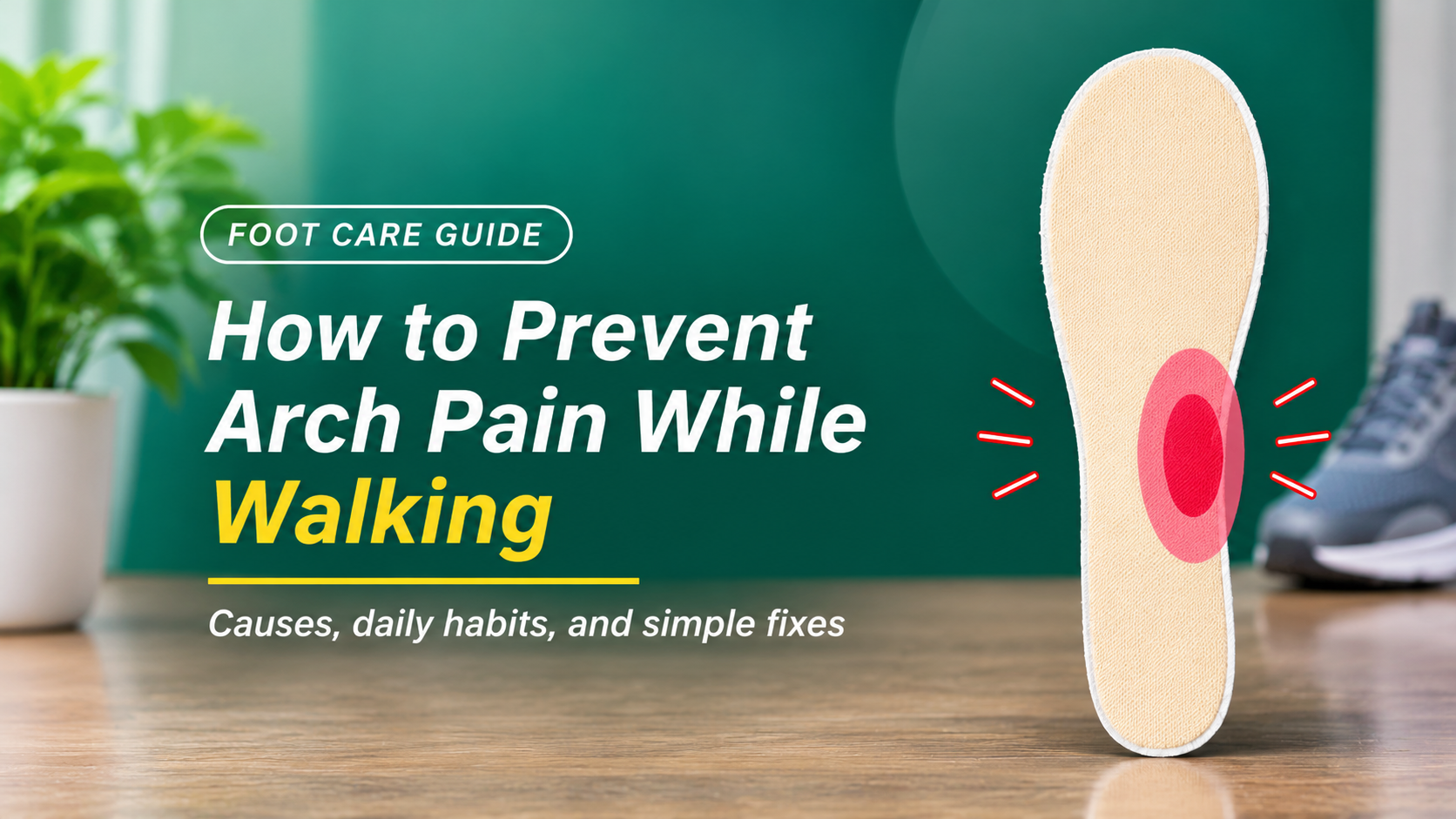
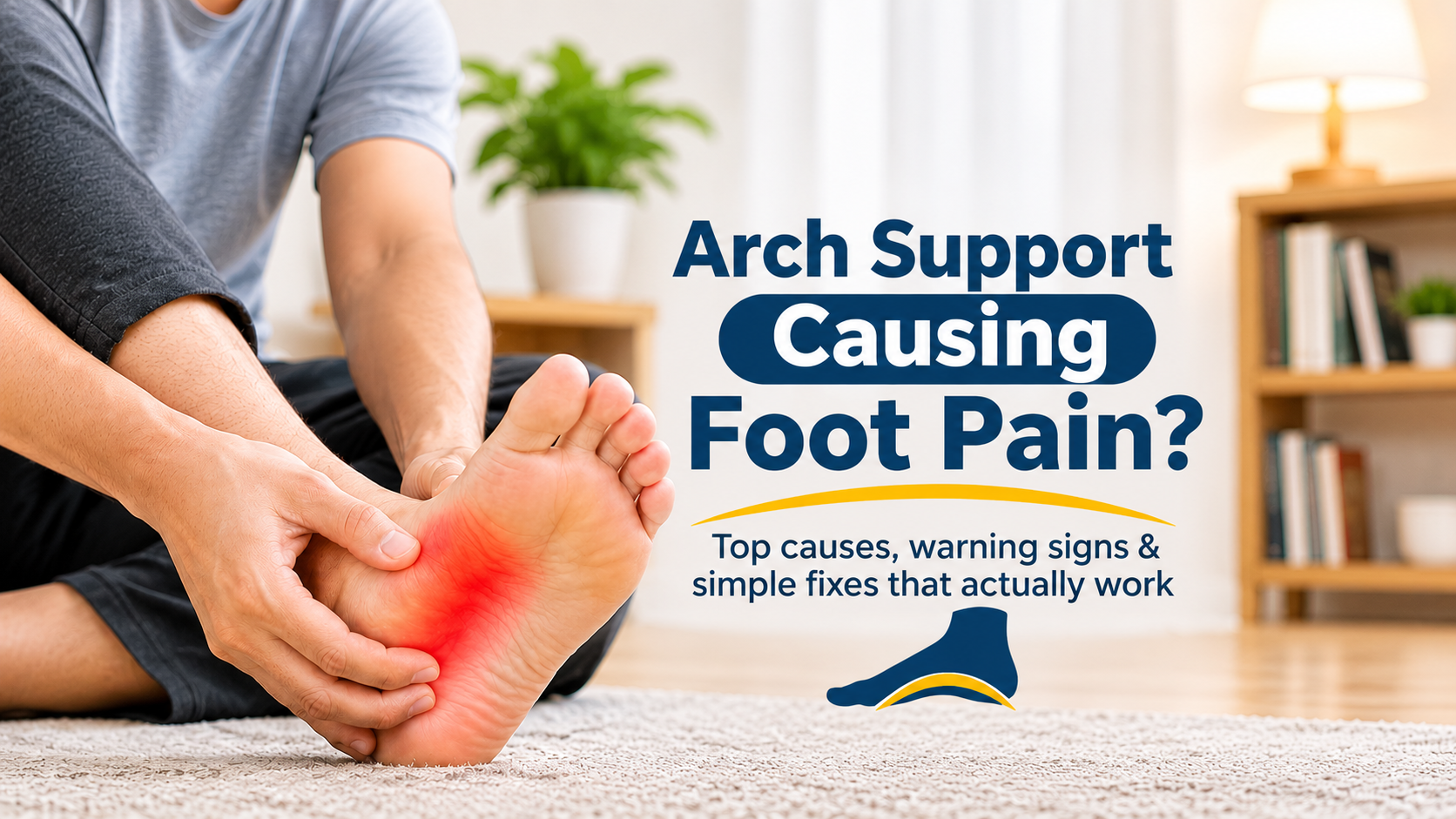
You bought arch support to feel better, so why do your feet hurt even more? If you are dealing with arch support causing foot pain, you are not alone. It is one of the most common complaints among people who start wearing insoles, orthotics, or shoes with built-in support. The good news is that the problem is usually fixable once you understand the cause.
In this guide you will learn why arch support can hurt, how to spot warning signs, what to do about it, and how to choose a support that truly suits your feet.
What Does Arch Support Actually Do?
Arch support lifts and stabilizes the middle part of your foot. It spreads body weight more evenly across the heel, arch, and ball of the foot, which can reduce strain on muscles, ligaments, and the plantar fascia (the thick band under your foot). Used correctly, it can ease heel pain, flat-foot fatigue, and discomfort in the knees and lower back.

The key point: support that is right for one person can be wrong for another. Your arch type, foot shape, weight, and daily activity all matter.
Why Is Arch Support Causing Foot Pain?
Pain after starting arch support usually comes from a mismatch between the insert and your foot. These are the most common reasons.

1. The Support Is Too High
If the arch of the insert sits higher than your natural arch, it presses into the soft tissue of your foot. This can feel like a hard lump under the arch and may cause aching, cramping, or bruise-like soreness.
2. Wrong Size or Shape
An insert that is too long bunches up inside the shoe, while one that is too short leaves the support in the wrong spot. The highest point should sit directly under your natural arch, not under the heel or ball of the foot.
3. No Break-In Period
Your feet and the muscles inside them have adapted to your old posture. A sudden change in position can strain tendons and muscles, especially if you wear the insert all day from the very first day.
4. Too Firm or Too Soft
Very rigid supports can feel harsh, particularly for people with sensitive or high-arched feet. Very soft supports may collapse and fail to give the stability you need, leaving you with fatigue instead of relief.
5. Worn-Out Inserts
Over time, inserts flatten and lose their shape. A worn insert can alter foot alignment unevenly and lead to new pain. Most inserts last roughly 6 to 12 months, depending on use.
6. Your Shoes Do Not Fit the Insert
Adding an insert to a tight shoe pushes your foot upward and squeezes the toes. This can cause pressure on the top of the foot, toe numbness, and blisters.
Common Symptoms of Poorly Fitting Arch Support
- Sharp or aching pain under the arch
- Pain or tenderness on the inner side of the foot
- Heel pain that gets worse after wearing the insert
- Foot cramps or muscle fatigue
- Blisters or red pressure spots
- Pain in the ankles, knees, or lower back
- Numbness or tingling in the toes
Mild soreness during the first few days can be normal. Pain that is sharp, gets worse each day, or lasts longer than two weeks is a sign that something is wrong.
Who Is More Likely to Have This Problem?
- People with high arches: They often feel too much pressure from standard inserts.
- People with flat feet who switch suddenly: Their feet need time to adjust.
- Runners and athletes: High impact exposes poor fit quickly.
- People who stand all day: Nurses, teachers, and retail workers feel pressure build up.
- Anyone using one-size-fits-all inserts: Generic shapes do not match every foot.
How to Fix Arch Support Foot Pain
Step 1: Slow Down and Break In Gradually
Wear the support for only one or two hours at first, then increase a little each day. Give your feet around two weeks to adapt.

Step 2: Check the Fit
Remove the factory insole from your shoe and place the arch support inside. Make sure it lies flat, matches the shoe shape, and does not slide or bunch. Trim only if the manufacturer says it is safe to do so.
Step 3: Match Support to Your Arch Type
Wet your foot and step on a dry piece of paper. A full footprint suggests a flat arch, a thin band connecting heel and ball suggests a normal arch, and a very narrow or broken print suggests a high arch. Choose low-to-medium support for high arches with extra cushioning, and firmer stability for flat feet.
Step 4: Try a Softer or Lower Profile
If the insert feels like it is jabbing your arch, switch to a lower, more flexible model. Comfort should come first. Support that hurts is not helping.
Step 5: Use Proper Shoes
Choose shoes with a firm heel counter, a roomy toe box, and removable insoles. Shoes that are worn out or too narrow will make any insert uncomfortable.
Step 6: Add Gentle Foot Care
- Stretch your calves and plantar fascia daily.
- Roll your foot over a tennis ball for a few minutes.
- Strengthen your feet by picking up a towel with your toes.
- Rest and use a cold pack if pain flares up.
Step 7: Replace Old Inserts
If the foam looks flat, cracked, or uneven, it is time for a new pair. Fresh support restores proper alignment.
How to Choose the Right Arch Support
- Know your arch type before you buy.
- Look for a contoured, not overly aggressive, shape that follows your natural arch.
- Pick the right material: foam for comfort, firmer plastic or cork for stability, gel for cushioning.
- Check the length and width and compare to your shoe size.
- Consider your activity: walking, running, work shifts, or casual wear.
- Read return policies so you can swap if the fit is wrong.
When Should You See a Doctor or Podiatrist?
Seek professional help if you notice any of the following:
- Pain that does not improve after two weeks of gradual use
- Swelling, redness, or warmth in the foot
- Numbness or burning sensations
- Difficulty walking
- You have diabetes, poor circulation, or nerve problems
A podiatrist can examine your gait and foot structure and may recommend custom orthotics made for your exact feet.
Frequently Asked Questions
Is it normal for arch support to hurt at first?
Mild soreness for a few days can be normal as your feet adjust. Sharp or worsening pain is not normal and means you should stop and reassess the fit.
How long does it take to get used to arch support?
Most people adapt within one to two weeks when they increase wear time gradually.
Can the wrong arch support make flat feet worse?
Poorly fitting support can cause new pain, but properly chosen support usually helps by improving stability. Fit is what matters.
Should I stop using arch support if it hurts?
Reduce wear time or stop temporarily if the pain is significant. Then check size, height, and firmness, and consult a professional if it continues.
How often should I replace arch support inserts?
Typically every 6 to 12 months, sooner if you are very active or the insert looks flattened.
Final Thoughts
Arch support causing foot pain is frustrating, but it does not mean arch support is bad for you. In most cases the issue is simple: the wrong height, wrong fit, or too much too soon. By choosing a support that matches your arch, breaking it in slowly, and wearing the right shoes, you can enjoy the comfort and stability it is meant to provide.
Disclaimer: This article is for general information only and is not a substitute for professional medical advice. If your pain is severe or persistent, please consult a qualified healthcare provider.